What is Candidate Experience? 5 Ways to Improve Your Hiring Process

Karen Axelton
Author
Table of Contents
- What is candidate experience?
- Why is a great candidate experience important?
- What is considered a positive candidate experience journey?
- How to improve the candidate experience during the hiring process
- Top metrics to measure candidate experience
- Continue creating a positive candidate experience with Checkr
- Frequently asked questions
Ready to run background checks the modern way?
The hiring process is a two-way street. While organizations evaluate candidates for a position, candidates also form an opinion about the company—this is where candidate experience comes into play. Candidate experience refers to the overall perception a candidate forms about an organization throughout the hiring process. A positive candidate experience is crucial for building a strong employer brand, attracting top talent, and increasing the chance of successful hires.
Join 140,000+ employers running faster background checks with Checkr
Not an employer? Run a background check on yourself here >
What is candidate experience?
Candidate experience encompasses every interaction a job candidate has with an employer, from the initial job search and application process to the final hiring decision and beyond. It includes all touchpoints between an employer and a job candidate, such as the job description, application process, interviews, background check, and onboarding. A positive candidate experience is one in which the candidate feels valued, respected, and informed throughout the hiring process.
Candidate experience is not just about filling job positions; it's about building relationships and creating a positive impression of your company. A well-crafted candidate experience can serve as a powerful tool for employer branding, showcasing the company's values, culture, and commitment to diversity and inclusion. By prioritizing candidate experience, employers can not only attract and hire the best talent but also foster a positive employer brand that resonates with job seekers and the broader community.
Why is a great candidate experience important?
A positive candidate experience is integral to an organization's success in talent acquisition and overall employer branding. Here are several reasons why candidate experience is important:
Competitive advantage
In a competitive job market, a positive candidate experience can give an organization a significant advantage in attracting and retaining top talent. Candidates who have a positive experience are more likely to accept job offers, become loyal employees, and serve as brand ambassadors for the company.
Reduced time-to-fill positions
A positive candidate experience can help reduce the time it takes to fill open positions. When candidates have a positive experience, they are more likely to move quickly through the hiring process and accept job offers. This can save organizations time and resources in the long run.
Enhanced employer brand reputation
A positive candidate experience can significantly enhance an organization's employer brand reputation. Candidates who have a positive experience are more likely to share their positive experiences with others, including potential candidates, employees, and customers. This can help organizations attract top talent and build a strong employer brand.
Increased likelihood of accepted offer
Candidates who have a positive experience are more likely to accept job offers. When candidates feel valued, respected, and informed throughout the hiring process, they are more likely to be excited about the opportunity to work for the organization.
Build positive relationships with candidates
A positive candidate experience can help organizations build positive relationships with candidates, even if they are not ultimately hired. Candidates who have a positive experience are more likely to stay in touch with the organization and may be interested in future opportunities. This can help organizations build a strong talent pipeline and maintain a positive employer brand.
On the other hand, a poor candidate experience can damage an employer's reputation, making it challenging to attract top talent. Poor experiences can also lead to candidates sharing their dissatisfaction with others, deterring potential candidates. Additionally, a poor candidate experience could result in legal consequences, especially if the hiring process is perceived as discriminatory or unfair.
Join 140,000+ employers running faster background checks with Checkr
Not an employer? Run a background check on yourself here >
What is considered a positive candidate experience journey?
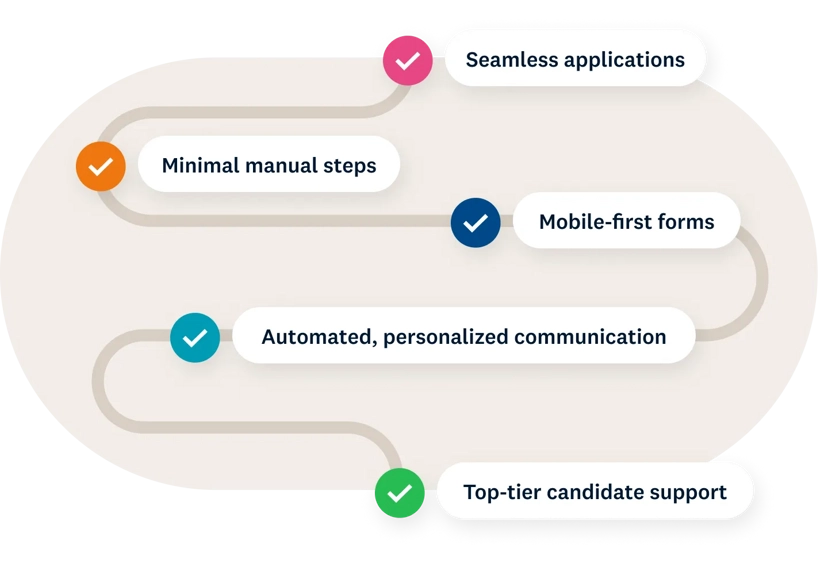
A positive candidate experience journey is one in which the candidate feels valued, respected, and informed throughout the hiring process. This includes clear and consistent communication throughout the process, a streamlined and efficient application process, opportunities for candidates to showcase their skills and experiences, a timely and transparent decision-making process, efficient pre-employment background checks, and professional onboarding experience.
How to improve the candidate experience during the hiring process
One of the most important aspects of creating a positive candidate experience is ensuring that job postings are accurate and informative. This means providing clear and concise information about the position, the company, and the hiring process.
There are several other candidate experience best practices to consider. For example, providing a clear and easy-to-follow application process. This means having a user-friendly online application form and providing clear instructions on how to complete it. It is also important to make sure that the application process is not too complex, as this can deter candidates from applying.
A positive and professional interview experience is also important for creating a positive candidate experience. This means creating a welcoming and comfortable environment for candidates and asking relevant and appropriate questions. It is also important to be respectful of candidates' time and to make sure the interview process is not too lengthy.
Finally, it is important to get feedback from candidates through candidate experience surveys. This feedback can be used to identify areas where the hiring process can be improved. It is also important to take the time to thank candidates for their feedback and to let them know how their input will be considered.
Join 140,000+ employers running faster background checks with Checkr
Not an employer? Run a background check on yourself here >
Top metrics to measure candidate experience
How to measure candidate experience may include several metrics, such as application completion rate, time-to-fill, candidate satisfaction, and offer acceptance rate. By tracking these candidate experience metrics, employers can identify how to improve candidate experience to attract and hire the best possible talent.
- Application complete rate measures the percentage of candidates who start an application and complete it. A high application completion rate indicates that candidates are finding the application process easy and user-friendly. A low application completion rate could indicate that the application process needs to be shorter or less complex.
- Time-to-fill measures the amount of time it takes to fill a job opening, from the time the job is posted to the time an offer is accepted. A short time-to-fill indicates that the employer is efficient in the hiring process and is able to quickly identify and hire qualified candidates. A long time-to-fill could indicate the employer is not effectively reaching its target audience or the hiring process is inefficient or disorganized.
- Candidate satisfaction measures the level of satisfaction that candidates have with the hiring process, which can be measured through surveys, interviews, or other methods. High candidate satisfaction indicates that candidates are having a positive experience with the hiring process and are likely to recommend the company to others. Low candidate satisfaction could indicate that the hiring process is not meeting the needs of candidates.
- Offer acceptance rate measures the percentage of candidates who accept job offers. A high offer acceptance rate indicates that candidates are interested in the job and the company and are confident in their ability to succeed in the role. A low offer acceptance rate could indicate that candidates are not interested in the job or the company, or that they are not confident in their ability to succeed in the role.
Employers can gain valuable insights into the candidate experience and identify areas where they can improve. This can help employers to attract and hire the best possible talent and to create a positive employer brand.
Continue creating a positive candidate experience with Checkr
Checkr can help you create a positive candidate experience with fast, accurate background checks. We offer a candidate-friendly screening process to help employers make a great first impression and build a trusted team. With an intuitive interface, responsive customer support, and real-time report updates, we help save you time and resources. Plus, our integrations with your current HRIS and ATS hiring tools streamline the hiring process and reduce time-to-hire for qualified candidates. Get started today.
Join 140,000+ employers running faster background checks with Checkr
Not an employer? Run a background check on yourself here >
Frequently asked questions
What is candidate experience?
Candidate experience encompasses every interaction a job candidate has with an employer, from the initial job search and application process to the final hiring decision and onboarding. This includes touchpoints like job descriptions, career site navigation, application forms, responsiveness, interviews, background checks, and job offers. A positive candidate experience strengthens your employer brand, increases offer acceptance rates, and improves quality of hire.
How do you measure candidate experience?
Organizations measure candidate experience through several key metrics:
- The percentage of candidates who complete applications
- Number of days from the initial job posting to an accepted offer
- Candidate satisfaction surveys, typically using Net Promoter Scores
- Offer acceptance rate
- Candidate feedback scores
Post-interview surveys and Glassdoor reviews also provide valuable insights. Tracking these metrics helps identify friction points in your hiring process and opportunities for improvement.
What are red flags during an HR interview?
Potential concerns in a job interview include:
- Poor communication skills
- Lack of preparation or research about the company
- Dishonesty or evasive answers
- Negative attitudes about previous employers
- Inconsistencies in skills or qualifications
- Inability to provide specific examples
- Misalignment with company culture and team dynamics
Other warning signs include arriving late without notice, inappropriate behavior or comments, and having no questions about the company or role.
What are red flags on a resume?
Potential concerns on a resume include:
- Frequent job changes (job hopping)
- Inconsistencies in dates or job titles
- Vague or generic job descriptions
- Spelling and grammar errors
- Qualifications that don't match position requirements
- No measurable achievements
While some concerns warrant further investigation, others may have legitimate explanations. Complement resume screening with thorough employment verification to validate the information candidates provide.
Why is candidate experience important?
Candidate experience directly impacts your employer brand, talent acquisition, and bottom line. Positive experiences increase offer acceptance rates, while negative experiences may lead candidates to share their dissatisfaction publicly. In a competitive talent market, many candidates have choices and often evaluate multiple opportunities at once. A streamlined, considerate hiring process differentiates your organization, attracts top talent, and reduces your time-to-hire.
How can background checks improve candidate experience?
Modern background check solutions improve candidate experience through mobile-friendly applications, transparent communication, faster turnaround times, and clear explanations of the screening process. Candidates appreciate knowing what to expect, receiving timely updates, and having easy access to their reports.
Automated workflows reduce delays and manual errors, while compliance features help hiring teams treat their candidates fairly and consistently. Choosing the right background check partner demonstrates professionalism and respect for candidates' time. Learn how Checkr's platform prioritizes candidate experience.
How long should the hiring process take?
The ideal hiring process typically takes 2-4 weeks from initial application to offer acceptance, though this varies by role complexity, seniority level, and industry. It can also depend on candidates’ and hiring managers’ availability, including vacations or other life events. Hiring processes that last more than 6 weeks or have multiple days between email correspondence increase candidate drop-off rates and risk losing top talent to competitors.
Streamline your hiring timeline by maintaining regular communication, coordinating interview schedules efficiently, making timely decisions, and conducting background checks quickly. Balance thoroughness with speed to hire quality candidates without sacrificing their experience.
What should be included in candidate communication?
Effective candidate communication includes:
- Confirmation that you’ve received their application
- A realistic timeline
- Providing interview details, including any guidance for preparing
- Following up quickly after interviews and giving clear next steps
- Sending background checks and explaining anything they need to know
- Offering the job with clearly stated details, including pay and potentially the start date
Communication should be timely, personalized, transparent, and consistent for all candidates. Even rejections should be respectful and constructive. Automated updates when a candidate’s application status changes keeps them informed without overwhelming recruiters. Strong communication builds trust and keeps candidates engaged throughout the hiring journey.
How does your business recover when a candidate has a negative experience with you?
Recovering from negative candidate experiences requires your team to acknowledge the issue, apologize sincerely, gather specific feedback, improve your hiring process, and follow up with affected candidates when it’s appropriate. You may also want to share what changes you've made based on their feedback, if it makes sense for the situation.
Your team may want to consider re-engaging strong candidates who had poor experiences due to problems with the hiring process rather than concerns. Publicly addressing common complaints, whether that’s through brand content or retooling your hiring process, shows commitment to improvement when you follow through on changes.
Disclaimer
The resources and information provided here are for educational and informational purposes only and do not constitute legal advice. Always consult your own counsel for up-to-date legal advice and guidance related to your practices, needs, and compliance with applicable laws.

About the author
Karen Axelton writes about business topics and best practices. She has written hundreds of articles on business subjects, including background screening, hiring and employment trends, human resource management, and the use of technology in the workplace. Her work includes educational articles, e-books, white papers, and case studies.