
Table of Contents
- What is a mouth swab drug test?
- What do mouth swab drug tests detect?
- How accurate is a mouth swab drug test?
- How far back can mouth swab drug tests detect substances?
- Oral drug testing laws to know
- How to order mouth swab drug tests
- Choose Checkr for compliant saliva drug testing services
- Frequently asked questions
Ready to run background checks the modern way?
Many employers conduct pre-employment drug testing of job candidates and routine drug testing of employees. Drug screening can be performed by testing a sample of a subject’s saliva, hair, urine, or blood. One of the fastest, easiest, and least invasive methods is an oral fluid drug test, which swabs the inside of the mouth for a saliva sample.
Join 140,000+ employers running faster background checks with Checkr
Not an employer? Run a background check on yourself here >
In some industries or positions, such as transportation, drug testing may be required by law. In others, employers may use drug screening to prevent on-the-job drug use, identify employees struggling with substance abuse, and promote the safety of employees and customers.
What is a mouth swab drug test?
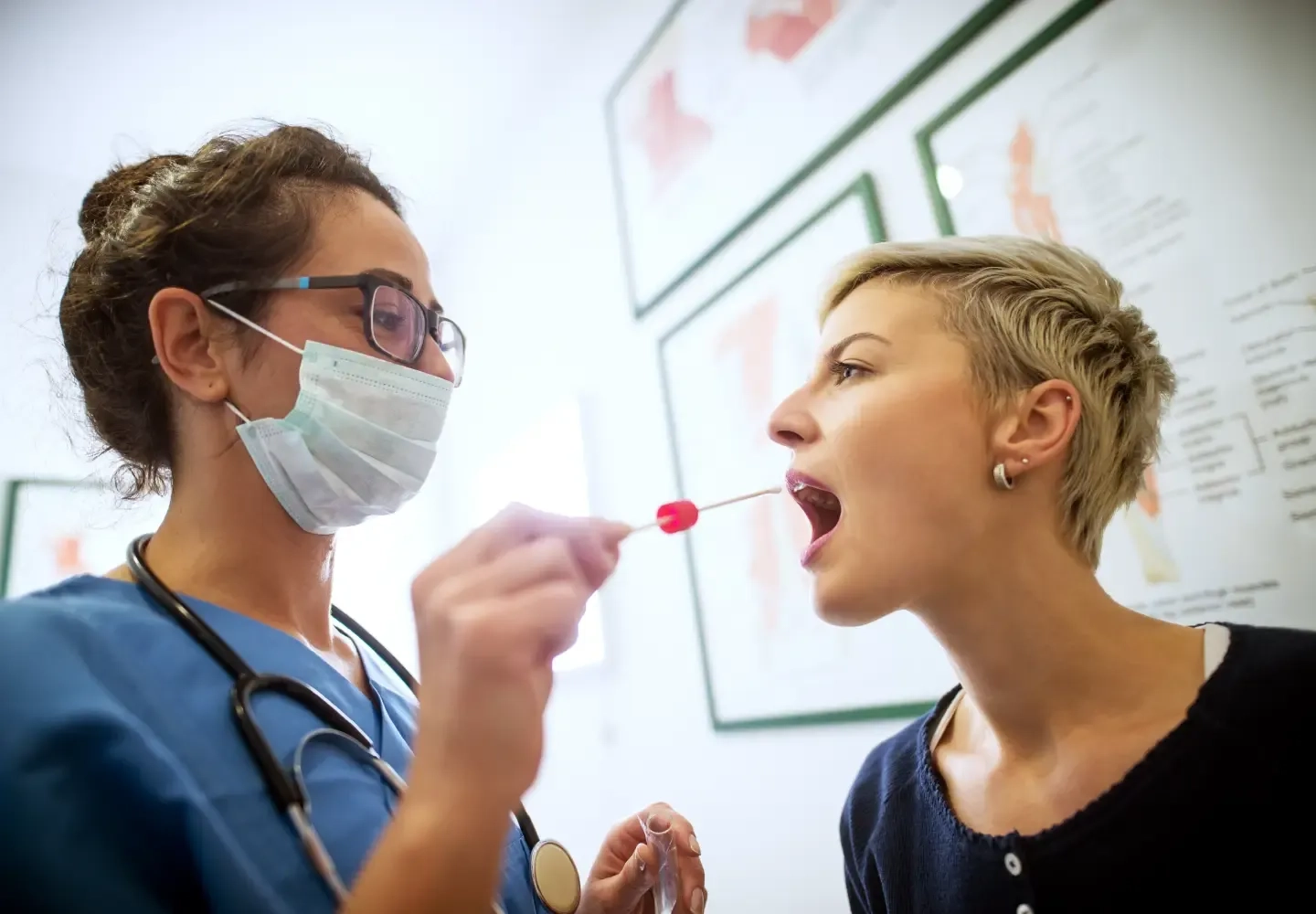
Mouth swab drug tests are a type of drug screening that detect substances in someone’s saliva to identify the presence of certain prescription or illicit drugs or alcohol in their system. They may also be referred to as oral drug tests, saliva drug tests or cotton swab drug tests.
How does a mouth swab drug test work?
- Saliva is collected using a cotton swab, absorbent pad, or sponge attached to a small stick to swab the inside of the cheek.
- Because food and beverages can affect the sample, the test subject is usually asked not to eat or drink for 10 minutes prior to the test.
- Mouth swab drug tests can be conducted on site (such as at the employer’s location or at the scene of an auto accident) or at an outside laboratory.
- Oral fluid samples can either be analyzed on site, usually in a matter of minutes, or sent to a laboratory for testing.
What is an oral drug test’s advantage? There are several reasons employers may opt for a saliva drug test over other drug testing methods. Conducting mouth drug tests is fast and cost-effective, while also being less invasive than methods such as blood or urine drug tests. In addition, the candidate is always in sight, which may reduce concerns about tampering with the sample.
What do mouth swab drug tests detect?
What a mouth swab tests for depends on the type of test you order, but mouth swab tests can detect a wide range of substances such as cocaine, opiates, and amphetamines. Employers may test for one type of drug (such as conducting a marijuana swab test) or several, and can order different screenings, or “panels,” to check for the presence of specific drugs.
For example, a 5-panel screening checks for these substances:
- Marijuana/THC
- Cocaine
- Amphetamines (including MDMA, MDA, and methamphetamine)
- Opiates*
- Phencyclidine (PCP)
A 10-panel screening checks for:
- Marijuana/THC
- Cocaine
- Amphetamines
- Opiates*
- Phencyclidine (PCP)
- Barbiturates
- Benzodiazepines
- Propoxyphene
- Methadone
- Methaqualone (Quaaludes)
*Depending on your testing provider, you may have to order an extended panel for a comprehensive test of all opiates.
Join 140,000+ employers running faster background checks with Checkr
Not an employer? Run a background check on yourself here >
How accurate is a mouth swab drug test?
The accuracy of a mouth swab drug test can vary depending on a variety of factors, including:
- What type of testing kit or device is used
- Whether the test is performed and analyzed instantly on-site or in a lab
- Whether the proper mouth swab collection procedures are followed
- Whether the person stimulated their saliva (for instance, by chewing gum), which can dilute concentration of drugs
In general, a saliva drug test is less accurate than a blood or urine drug test. However, a mouth swab drug test can not only detect the presence of THC, but may also help determine whether the person recently smoked cannabis themselves or was just exposed to secondhand smoke. In general, evidence of secondhand smoke in saliva dissipates within one hour of being exposed, while evidence of smoking cannabis stays in saliva up to 12 hours after smoking.
How far back can mouth swab drug tests detect substances?
If you’re trying to screen for long-term drug abuse or previous drug use, saliva drug tests aren’t necessarily the best option. Drugs generally stay in saliva for only about 5 to 48 hours, although the mouth swab drug test detection time can vary depending on the substance. For instance:
- Heroin is detectable in saliva for about an hour.
- Ecstasy and cocaine are detectable in saliva for up to 48 hours.
- The THC swab test detection time is up to 72 hours.
- Morphine can be detected in saliva for up to 72 hours.
- Methadone is detectable in saliva for up to 10 days.
In comparison, the drug test detection period for urine drug tests can detect drug use for up to 7 days, while hair drug tests can detect drug use for as long as 90 days.
Due to limitations on how long drugs stay in saliva, oral fluid drug testing is well suited to test for recent drug use. For example, in the event of a workplace accident, you might conduct mouth swab drug tests immediately to assess if anyone involved was under the influence.
Join 140,000+ employers running faster background checks with Checkr
Not an employer? Run a background check on yourself here >
Oral drug testing laws to know
What laws affect saliva drug testing in the workplace?
Federal drug testing laws
Federal law does not prohibit private employers from drug testing. However, state laws may regulate drug testing, and federal drug testing regulations may apply to federal employees, contractors, and grantees. For example, under the Drug-free Workplace Act, some federal contractors and grantees are required to create a formal drug-free workplace policy.
Drug testing may be required for jobs in certain safety-sensitive or security-sensitive industries, such as companies regulated by the Department of Transportation (DOT). New rules issued by the DOT in May 2023 and effective June 1, 2023, allow covered employers to use lab-based oral fluid drug testing.
Other federal employment laws you should consider when developing a drug testing program include:
- Title VII of the Civil Rights Act which prohibits employers from using drug testing in a discriminatory fashion against people in protected classes, including race, sex, religion, or nationality.
- Americans with Disabilities Act (ADA) which forbids employers from terminating, refusing to hire, or refusing to promote someone because they’re in a rehabilitation program or have a history of substance abuse.
- Family and Medical Leave Act (FMLA) that requires covered employers to give eligible employees time off to treat a drug or alcohol addiction, related illness or injury, or care for a close family member who is in a program.
- National Labor Relations Act (NRLA) requires employers to negotiate and agree on their drug-testing programs for unionized workers in a formal collective bargaining process.
While these protections apply, they do not negate required drug testing for certain industries that have non-negotiable drug testing requirements.
Employers who partner with a consumer reporting agency (CRA) for drug testing must also comply with the federal Fair Credit Reporting Act (FCRA). Under the FCRA, employers must provide a candidate with proper disclosure of their intent to conduct a pre-employment background check (including drug testing), receive written consent from the candidate, and follow the adverse action process should they decide not to hire the candidate based on the results of a background check (including drug test results).
State and local drug testing laws
In states and cities that prohibit or regulate drug testing, employers must be careful to follow laws regarding how and when drug testing can be conducted and how positive results may be considered when making employment decisions. For instance, in Nevada, employers are prohibited from denying employment due to a positive marijuana test.
Keeping up with changing state laws in this area can be challenging. For instance, with a growing number of states and jurisdictions legalizing recreational or medical marijuana use, laws regarding workplace testing for cannabis are ever changing.
Join 140,000+ employers running faster background checks with Checkr
Not an employer? Run a background check on yourself here >
If you decide to implement a drug-screening policy or are required to do so, you may need to have a written policy in place for a certain period of time (typically 30-60 days, depending on state law) before starting your drug-testing program. If applicable, this requirement also applies to drug-screening services purchased through a background check provider (also known as a CRA). Consulting with legal counsel when drafting your employment drug test policy is the best way to ensure compliance with applicable state and/or federal laws.
How to order mouth swab drug tests
Depending on your needs and preferences, you can choose different ways to get saliva drug tests for your job candidates and employees. How long does it take for mouth swab results? The turnaround time depends on whether you choose onsite or lab-based oral fluid drug tests (Checkr offers onsite oral-fluid testing only).
Onsite oral fluid drug tests give you complete control of the testing process. The test is administered at your workplace or location of choice. The process is quick and easy: The candidate swabs their mouth, then you follow instructions, seal the collection kit, and receive the results in a matter of minutes. Certain results may require further laboratory analysis for confirmation.
Lab-based tests allow candidates and employees to schedule testing at a time and location that works for them. If the initial test returns a positive result that requires further analysis for confirmation, the sample is conveniently already at the lab. However, testing samples in a lab takes longer than on-site testing; expect results in 2 to 10 business days.
Choose Checkr for compliant saliva drug testing services
Employers may choose to conduct drug testing to help determine a candidate’s fit and eligibility for a role, while helping to maintain a safe workplace and comply with regulations. Saliva drug testing is one type of specimen collection that employers may choose for their screening process. No matter the reason for mouth swab drug testing, it’s important to ensure your screening processes comply with all relevant laws. Generally the easiest way to do so is by consulting with your legal counsel and working with an experienced background check provider that offers a variety of drug screening packages.
Checkr enables employers to easily manage their drug testing program with numerous options for onsite oral fluid drug testing, including standard 5-panel, 7-panel, 9-panel, and 10-panel drug screenings. Checkr’s instant onsite solution helps you conduct comprehensive checks with speed and convenience, while also supporting compliance with applicable federal and state laws. For more details about our drug testing services, talk to sales.
Join 140,000+ employers running faster background checks with Checkr
Not an employer? Run a background check on yourself here >
Frequently asked questions
How long after drug use can a mouth swab drug test work?
Mouth swab drug tests, also known as oral fluid tests, typically detect substances in saliva for up to 48 hours after use. This varies depending on the specific substance. For example, marijuana (THC) can be detected only four to ten hours after use, and methamphetamine may remain detectable for up to 10 hours.
The detection window also depends on factors like frequency of use, metabolism, and the sensitivity of the testing method. Saliva tests are particularly effective for detecting recent drug use, making them a popular choice for post-accident testing and reasonable suspicion scenarios.
What can throw off a mouth swab drug test?
Several factors can potentially interfere with the accuracy of a mouth swab drug test
- Consuming food or beverages within ten minutes before the test can dilute the saliva sample and affect drug concentrations.
- Chewing gum or eating acidic foods may also alter the pH levels in your mouth, potentially impacting results.
- Certain medications, mouthwashes that contain alcohol, and tobacco products can sometimes cause false positives or affect the test's sensitivity.
Proper collection procedures are important: For example, the swab must remain in contact with oral fluids for the specified time period to ensure an adequate sample. Environmental contamination and improperly stored testing materials can also compromise the accuracy of a test.
What should I do before a mouth swab drug test?
To have the most accurate results from a mouth swab drug test, avoid eating, drinking, smoking, or chewing gum for at least ten minutes before the test. This waiting period prevents food particles, beverages, and other substances from contaminating the saliva sample or diluting drug concentrations. You should also avoid using mouthwash or breath mints immediately before testing, as these products can interfere with the results.
During the test itself, follow the administrator's instructions carefully. Typically, you'll need to keep the swab in your mouth for up to five to seven minutes to collect sufficient saliva. Don't touch the swab pad with your hands, as this can contaminate the sample.
How accurate is a mouth swab drug test compared to other methods?
Mouth swab drug tests are generally considered reliable for detecting recent drug use, though their accuracy varies compared to other testing methods. Blood tests are typically the most accurate, but they’re also the most invasive and expensive. Urine tests have longer detection windows and are widely used, though they can more easily be tampered with. Saliva tests offer a non-invasive alternative: Accuracy rates typically range from 97% to 100% when the test is properly administered.
The accuracy of a drug test depends on several factors:
- The quality of the testing kit
- Whether analysis is conducted onsite or in a certified laboratory
- Proper collection techniques
- Adherence to chain-of-custody protocols
Lab-based analysis generally provides more accurate results than instant onsite tests.
Can you pass a mouth swab drug test by using mouthwash?
Using mouthwash immediately before a mouth swab drug test will not help you pass if drugs are present in your system. While some people believe that mouthwash can mask or eliminate drug traces from saliva, this is largely a myth. In fact, certain mouthwashes containing alcohol may actually trigger false positives or interfere with the test’s accuracy. Drug metabolites are present throughout your oral fluids, not just on the surface of your mouth, so rinsing won't remove them.
Modern testing protocols often include measures to detect sample tampering or dilution attempts. The most reliable way to pass a drug test is to abstain from drug use.
How long does it take to get mouth swab drug test results?
The turnaround time for mouth swab drug test results varies depending on whether you're using an instant onsite test or sending samples to a laboratory for analysis. Instant or rapid tests can provide preliminary results within 5-10 minutes, making them convenient for situations that require immediate decisions. However, these rapid results are considered preliminary and may require laboratory confirmation if they’re positive.
When samples are sent to a certified laboratory for analysis, results typically take 24 to 72 hours, though this timeline can take longer depending on the lab's workload and whether confirmatory testing is needed. If a positive result requires additional confirmation, like using more sophisticated methods like gas chromatography-mass spectrometry (GC-MS), the process may take longer. For employers that are managing high-volume screening programs, working with an experienced provider helps streamline the testing process and provide more timely results.
Are mouth swab drug tests better than urine tests?
Whether mouth swab tests are "better" than urine tests depends on your specific testing objectives and circumstances. Saliva tests excel at detecting very recent drug use (within hours to a few days), making them ideal for post-accident testing, reasonable suspicion scenarios, and detecting on-the-job impairment. They're also less invasive, harder to tamper with, and can be observed without privacy concerns, reducing the likelihood of cheating.
Urine tests, however, have longer detection windows (typically two to four days depending on the substance) and are better for detecting patterns of drug use over time. Urine testing is also more established legally and is required for DOT-regulated testing. Cost-wise, both methods are relatively comparable. Many employers may use a combination of both methods.
Can employers randomly conduct mouth swab drug tests?
Yes, employers can generally conduct random mouth swab drug tests, but whether that’s legal and what’s required varies by state, industry, and union rules. In safety-sensitive industries and DOT-regulated positions, random testing is often required or strongly encouraged. For non-regulated employers, random testing is typically permissible if the employer has a clearly written drug testing policy that employees have acknowledged, and if the selection process is truly random and non-discriminatory.
Some states have specific restrictions on when and how random testing may be conducted, particularly for marijuana given the changing laws.
Union contracts may also impose additional requirements or limitations. For unionized workforces, most collective bargaining agreements (CBAs) address drug testing rights directly, and those provisions set the rules regardless of what state laws might otherwise permit. When a CBA doesn’t have information about random testing, company management must bargain with the union before they implement testing: They cannot just make a decision without consulting the union just because the CBA didn’t say anything about it.
To implement random testing legally and effectively, employers should ensure their policies are clearly communicated, consistently applied, and compliant with all federal, state, and local regulations.
What happens if you fail a mouth swab drug test for employment?
If you fail a pre-employment mouth swab drug test, the employer may withdraw the job offer or discontinue the hiring process, depending on company policy and applicable laws. In some cases, a Medical Review Officer (MRO) may contact you to determine whether a valid prescription medication caused the result.
For current employees, consequences can range from required participation in a substance abuse program to disciplinary action or termination. State laws, industry regulations, and the nature of the role may also influence the outcome. Some jurisdictions provide protections for certain off-duty marijuana use. Understanding your rights and your employer’s policies is important.
Disclaimer
The resources provided here are for educational purposes only and do not constitute legal advice. We advise you to consult your own counsel if you have legal questions related to your specific practices and compliance with applicable laws.