Table of Contents
Ready to run background checks the modern way?
Key takeaways
- In hospitality, your staff and your product are inseparable—every hire shapes the guest experience from day one.
- Hiring mistakes in hospitality play out in front of guests in real time, not behind the scenes.
- High turnover and seasonal demand mean hospitality operators are always hiring—speed and quality have to coexist.
- The best hospitality operators don't choose between moving fast and hiring well—they build repeatable processes that let them do both.
- Role-based screening built into your workflow supports faster, more confident decisions without slowing hiring down.
Hiring decisions carry more weight in hospitality. Every open role affects the guest experience, and the impact is immediate.
From housekeeping to food service to guest-facing roles, your employees don’t just support the product—they are the product. When a role goes unfilled, or a hire isn’t the right fit, guests feel it right away.
Here’s how that dynamic shows up in day-to-day hiring, and what it means for building a process that keeps pace while supporting confident decisions.
In hospitality, your people are the experience
In hospitality, your product goes beyond your property and amenities. Without the people behind it, the experience doesn’t exist.
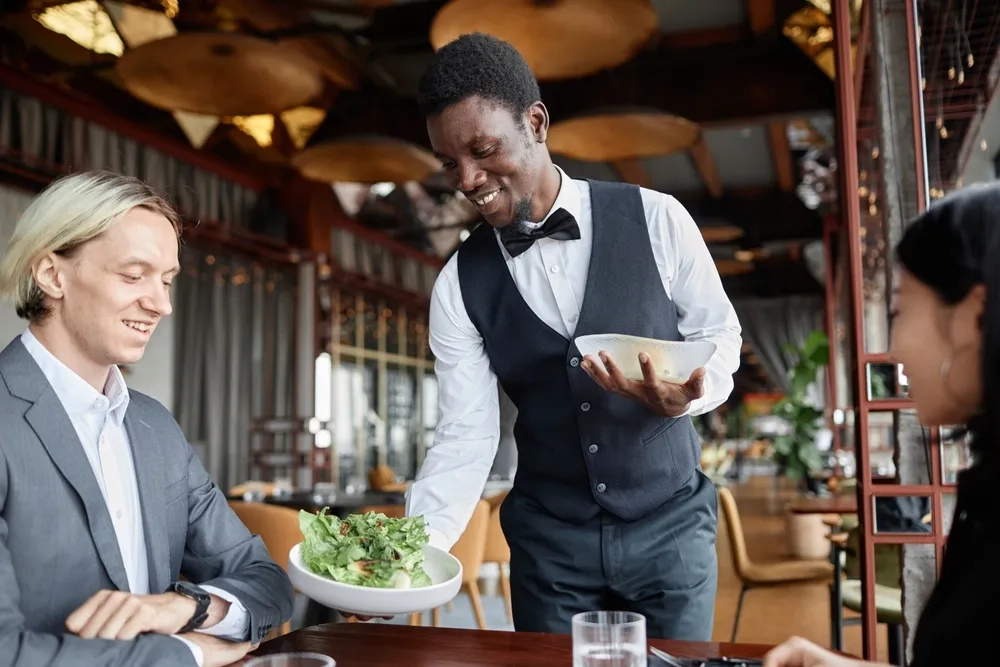
Guests interact with your team constantly and personally: at check-in, in their rooms, in your restaurants, and across the property. They trust your staff with their time, their comfort, and often their personal space—chefs prepare the food for family meals. Resort employees supervise guests’ children. Valets drive their vehicles. It takes the right people in every position to deliver that exceptional experience. As a result, your product and your employees are inseparable in a unique way.
That means that every hire starts shaping guest perception from their first day. There’s no delay between hiring and impact. Every role contributes directly to your business and your guests.
The stakes of a wrong hire are higher here
In many industries, hiring mistakes stay behind the scenes. In hospitality, mistakes play out in front of guests rather than behind the scenes.
A delayed check-in, a missed detail in a room, or an interaction that feels off becomes a part of the guest experience. Even when you recover or smooth things over, you don’t get a do-over. The moment has already happened.
Gaps in service don’t just affect a single stay. They influence word-of-mouth, online reviews, social media posts, and how guests remember your business.
Of course, no operator can prevent mishaps entirely, but hiring well makes a difference. It reduces the likelihood of mistakes and enables your team to respond effectively when issues arise.
High volume and high turnover make this harder
Hospitality hiring doesn’t happen in isolated cycles. The need to hire is constant. High turnover, seasonal demand, and growth across locations mean you’re often filling multiple roles at once. Just as one group completes onboarding, another set of roles needs to be filled. There’s no pause in between cycles.
At the same time, moving slowly comes with consequences. Your competitors are likely always hiring, too. Candidates are applying to multiple roles, and delays increase the risk of candidate ghosting as top talent waits for your response.
The tension is real: You need to move quickly, but you can’t afford to compromise on quality. Every new hire steps directly into the guest experience, with immediate impact.
Ready to hire faster without second-guessing every decision?
The Comprehensive Guide to Hospitality Background Checks walks through what to screen for, when to screen, and how to build it into your workflow.
What ‘hiring right’ actually looks like for hospitality teams under pressure
The goal isn’t to choose between speed and quality. It’s to support both. To explore the space between moving quickly and getting it right, let’s consider the following scenario.
Peak summer season is three weeks out, and a hospitality operator is staring down 40 open roles across three properties. Applications are coming in, but so is everything else a vendor issue at one location, a last-minute event booking at another, and a manager out sick for the week.
This is the moment when hiring processes either hold up or fall apart.
In this case, they hold up—not because the team is unusually experienced or the timing is unusually forgiving, but because the process doesn't depend on either. Candidates are routed to the right hiring managers without manual coordination. Interviews are scheduled the same day applications come in. Screening is initiated immediately after, with role-appropriate checks already defined—deeper criminal history for housekeeping staff with room access, lighter packages for groundskeeping and maintenance.
Results come back fast. Decisions go out the same day. Within two weeks, all forty roles are filled, onboarding is underway, and the team has time to train before the first guests arrive.
From the outside, it looks like a well-run operation getting lucky with timing. From the inside, it's just the process working the way it was built to work.
That's the difference between hiring that depends on things going right and hiring that holds up when they don't. Structure doesn't slow you down—it's what lets you move fast without second-guessing every decision.
To bring more structure to your own process, focus on a few key elements.
How to hire right in hospitality
- Build repeatable workflows. Create a consistent path from application to offer. Standardizing the process reduces confusion and delays, keeping hiring in motion across roles and locations.
- Integrate screening into the process. Align background checks to each role and build them into your workflow. When screening is structured and role-based, it supports decisions without slowing things down. For example, run in-depth state and county criminal background checks on housekeeping staff who have access to guest rooms, and opt for more basic national background checks for groundskeepers.
- Keep communication consistent. Set expectations early and keep candidates informed. Clear communication helps maintain engagement and reduces drop-off in fast-moving hiring cycles.
- Guide decisions with clear criteria. Define what matters for each role before reviewing candidates. Defined criteria allow hiring teams to move quickly without second-guessing decisions.
When these elements are in place, hiring holds up even when everything has to move fast. Teams move quickly, decisions stay consistent, and each hire supports the guest experience.
Hiring with confidence under pressure
Your staff shapes the guest experience, so hiring is one of the most important drivers of your business.
High turnover and seasonality make speed essential, but hiring doesn’t have to feel uncertain. With a clear, repeatable process in place, your team can move quickly while making consistent, confident decisions.
A key part of the process is a screening approach that supports the way you hire. When background checks are built into your workflow and aligned with each role, they provide the context hiring managers need to move forward with clarity, even when hiring needs to happen fast.
See how Checkr works for hospitality teams.
Role-based background checks built for the pace and scale of hospitality hiring.
Disclaimer
The resources and information provided here are for educational and informational purposes only and do not constitute legal advice. Always consult your own counsel for up-to-date legal advice and guidance related to your practices, needs, and compliance with applicable laws.

About the author
Hayley Harrison began her career as a hiring manager at a mid-size regional bank in the Pittsburgh area. She now brings her experience and knowledge of hiring best practices to her work as a freelancer, helping employers refine and improve their processes.