FRAUD DETECTION SUITE
Your next hire might not be real
AI made hiring fraud easier. Checkr catches it using data no other company has: 260 million+ candidate profiles built across 140,000+ employers.
Fraud has changed.
Your defenses should, too.
86% of organizations experienced at least one type of hiring fraud in the past year. A fraudulent hire gets access to your systems, data, and IP, and leaves you with legal liability, regulatory exposure, and lost customer trust.
65%
of hiring managers have caught a candidate lying about their experience
34%
have caught an interview impersonator virtually
68%
say fraudsters outpace companies’ ability to catch them
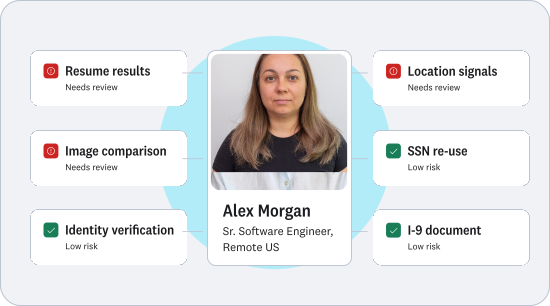
Stop fraud at every stage of the hiring lifecycle
Every handoff in the hiring funnel creates a gap where fraud can slip through. Checkr connects multiple layers of checks to one candidate record, surfacing inconsistencies that any single check can miss.
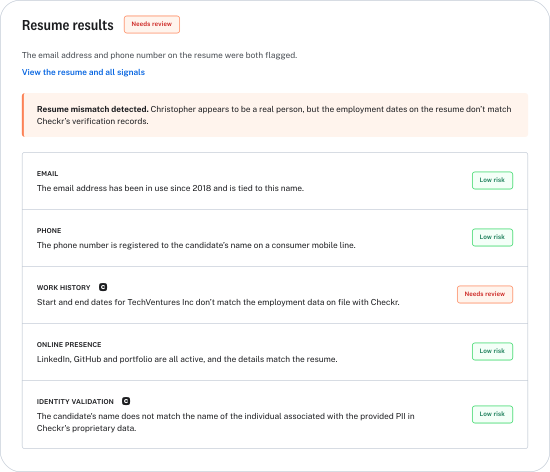
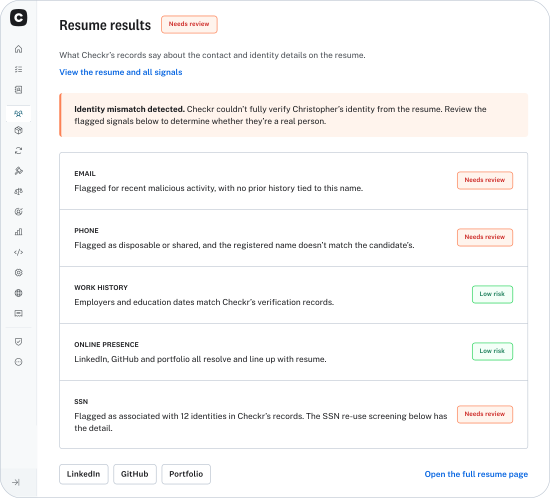
Catch resume fraud early
Checkr flags falsified employment, education, and identity claims that traditional reviews often miss, surfacing discrepancies for your team to check.
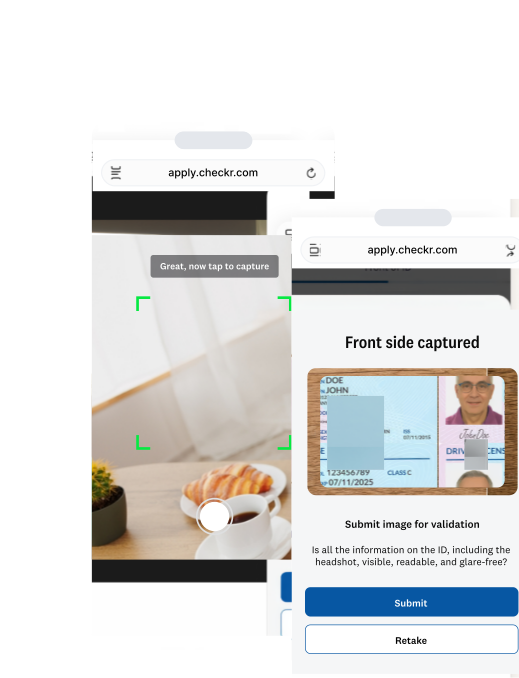
Confirm you’re engaging with a real person
Checkr’s identity verification confirms candidates are who they claim to be, using government-issued ID authentication, live selfie matching, liveness detection, and NIST Level 2–certified deepfake detection.
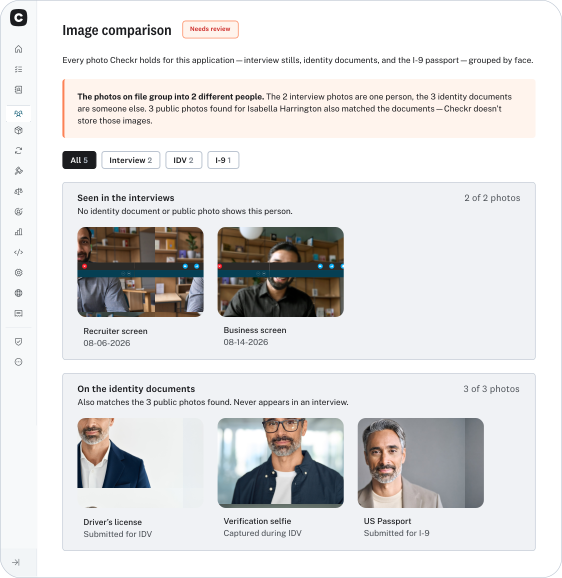
Catch identity swaps
Every stage of your hiring process captures an image, and often each image lands in a different system, seen by a different person, days apart. Checkr’s image comparison allows you to review photos of your candidate side-by-side, so it’s easy to spot inconsistencies.

Uncover deepfakes
Checkr flags synthetic or AI-altered content for your team to review by analyzing video, audio, and photos from remote interviews.
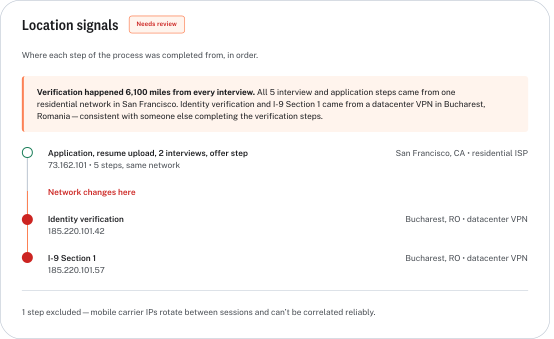
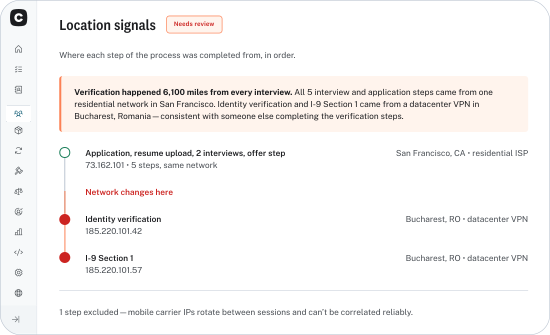
Reveal location contradictions
Compare location signals across hiring stages—from initial application to interview to onboarding—to get a clearer picture of where your candidate is. Checkr’s location comparison flags inconsistencies for your team to review.
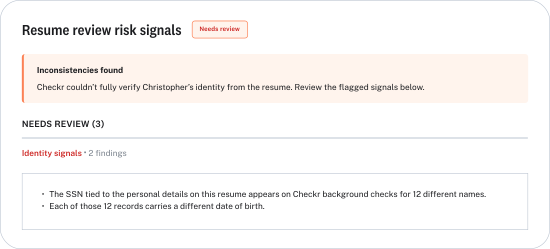
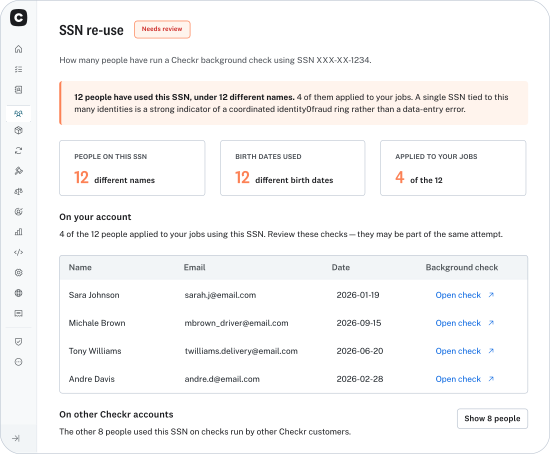
Uncover PII inconsistencies
Checkr automatically flags candidates who provide an SSN that belongs to another person—a signal no single employer can detect alone, powered by Checkr’s 140,000+ employer relationships.
Fraud detection that gets smarter with every hire
Over 140,000 employers already rely on Checkr's intelligent verifications. Now, we're bringing that same intelligence to the front lines of fraud.

“The impact that Checkr has had on fraud for us—we watched it grow, and now we’ve watched it reduce to almost nothing—we’re able to sleep at night.”
Dawn Nash
Director of Recruiting and Enculturation
"After nearly 15 years in recruiting, the rise of AI has fundamentally shifted how candidate information is presented, making traditional vetting instincts less reliable. Checkr’s fraud detection tool provides a critical layer of verification, giving me complete confidence that the candidates I advance are authentic. It's a must. The best way to set your TA team up for success in this world of deepfakes and AI resumes is to have a layered approach with checks and balances at every stage. Checkr's resume fraud tool is a no brainer as a first line of defense."
Megan Baldock
People Operations & Talent Leader, Datavations
“We had hired and started onboarding a new employee, only to discover the hire was fraudulent after finding the real person on LinkedIn. We also noticed the candidate’s IP address was tied to another country. Not long after, we encountered a very similar situation again. That experience pushed us to invest in Checkr for identity verification, and it’s been a huge help.”
Talent Acquisition Partner
HR Services industry
“Having [identity verification] in place gives us an important safeguard to confirm we are hiring the person they claim to be. The cost of a bad hire in that scenario could be significant, from onboarding and HR/benefits administration to potential reputational and operational impact."
Amer
HR Business Partner, Emerald Cloud Lab
"During recruiting we have come into contact with candidates who don't align with who they say they were in the applicant stage. We decided to reach out to Checkr, who already does our background checks, and we were pleasantly surprised they offer identity verification. The process is super easy and guarantees us that who we are hiring is truly who they say they are."
HR Generalist
Market Research industry





Topics
- What is hiring fraud?
- How has AI changed the hiring fraud landscape?
- Is hiring fraud actually happening, or is this a hypothetical risk?
- What types of hiring fraud does Checkr detect?
- What is identity verification, and how is it different from a background check?
- Can Checkr’s fraud detection tools be used for remote hiring?
Ready to run background checks the modern way?
Frequently asked questions
Hiring fraud: Your questions answered
What is hiring fraud?
Hiring fraud occurs when a candidate misrepresents their identity, credentials, or work history to gain employment. It exists on a spectrum: from embellishment (inflating job titles or responsibilities) to misrepresentation (using fake degrees, licenses, or pay stubs) to outright impersonation (creating a synthetic identity or stealing a real person’s).
As AI tools have become widely available, all three forms of fraud have become easier to execute and harder to detect with traditional screening methods.
How has AI changed the hiring fraud landscape?
AI has dramatically lowered the cost and complexity of creating convincing fake personas. Generative AI can produce synthetic resumes and professional profiles that are difficult to distinguish from real ones. Deepfake technology enables bad actors to impersonate candidates during video interviews. And widespread data breaches have made personal information easy to obtain, enabling stolen-identity attacks at scale.
Traditional one-time background checks weren’t designed to detect these threats. That’s the gap Checkr’s fraud detection suite closes.
Is hiring fraud actually happening, or is this a hypothetical risk?
It’s not hypothetical. In August 2026, the Wall Street Journal reported how thousands of North Korean operatives use fake and stolen identities to get and hold jobs at US companies, sending up to $800 million a year back to the DPRK. Fraud also shows up in other ways - embellishing a resume, sharing fake pay stubs or licenses, or impersonation like the DPRK case above.
What types of hiring fraud does Checkr detect?
Checkr’s fraud detection suite addresses the three types of hiring fraud, in ascending order of seriousness: embellishment, misrepresentation, and impersonation.
Type of Hiring Fraud | Description | How Checkr Helps |
|---|---|---|
Embellishment | Candidates elevate job titles, hide employment gaps, exaggerate their prior work responsibilities, etc. | AI resume fraud detection flags inflated credentials and suspicious resume patterns. |
Misrepresentation | Candidates use fake employment paystubs, fake degrees and transcripts, fake professional licenses, fake I-9 work authorization documents, etc. | PII misuse detection surfaces cases where a candidate provides an SSN that belongs to another person. |
Impersonation | Candidates create a synthetic identity or steal another person’s identity. | Identity verification with liveness detection and NIST Level 2–certified deepfake detection confirms the candidate is a real, present person with a verified identity. |
What is identity verification, and how is it different from a background check?
A background check looks at a candidate’s history—criminal records, employment, and education. Identity verification confirms that the person submitting that background check is actually who they claim to be.
Checkr’s identity verification uses government-issued ID authentication, live selfie matching, liveness detection, and NIST Level 2–certified deepfake detection. It can be deployed at any stage of the hiring process—from initial application through onboarding—and takes approximately two minutes of the candidate’s time, with no external accounts required.
Can Checkr’s fraud detection tools be used for remote hiring?
Yes. Checkr’s fraud detection suite was built with the modern, remote-first hiring environment in mind. Identity verification is fully digital—candidates complete it on their own device in approximately two minutes, with no in-person visits or external accounts required.
AI resume fraud detection and PII misuse detection work automatically in the background, regardless of where a candidate is located.
Disclaimer
The resources provided here are for educational purposes only and do not constitute legal advice. We advise you to consult your own counsel if you have legal questions related to your specific practices and compliance with applicable laws.
Hire with confidence.
Leave the fraud detection to us.
Checkr's fraud detection suite protects the full hiring lifecycle. See how it can work for your team.