Social media screening, built into your background check
Surface public social media activity and adverse news in one FCRA-compliant report, reviewed by a human analyst and returned in ~1 business day.
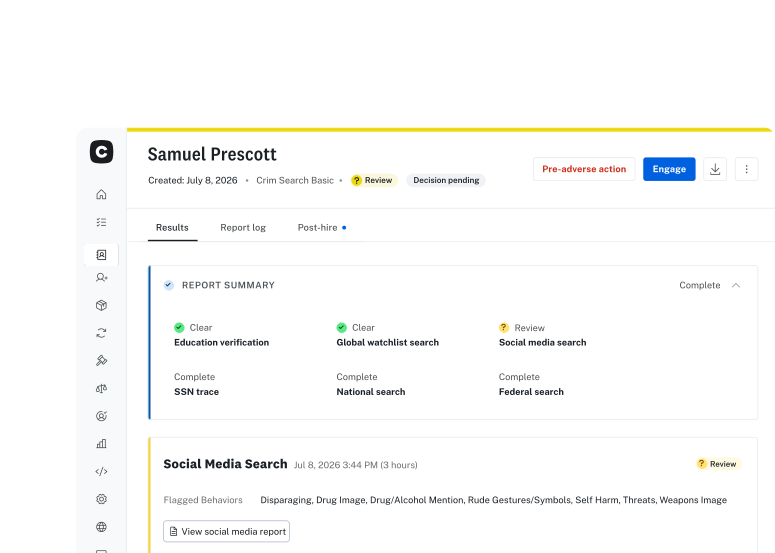
A smarter way to screen social media
Replace manual searching with a consistent, defensible screening that flags risky public content. No candidate usernames required.
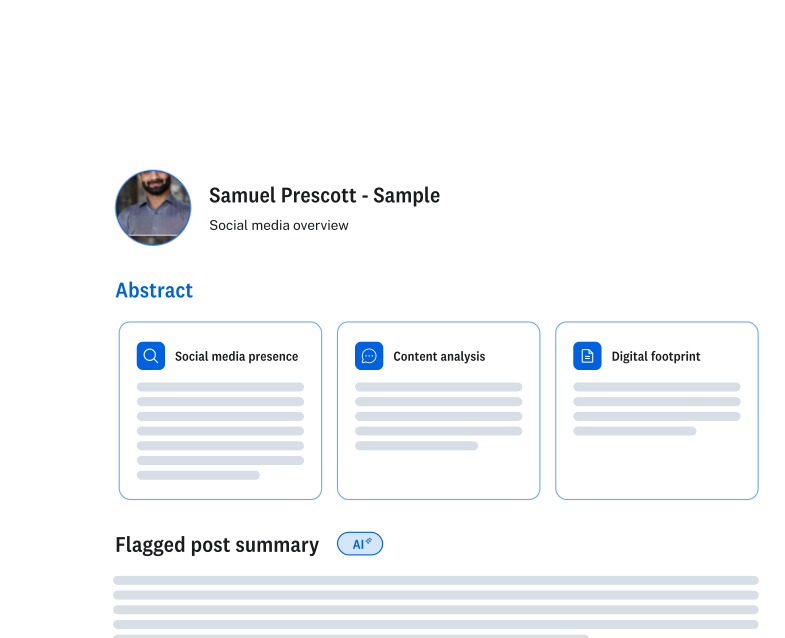
Screen major platforms
Checkr reviews public content across Facebook, Instagram, X, LinkedIn, TikTok, Reddit, Pinterest, and YouTube.
Flag what matters
Content is categorized across risk areas like violence, hate speech, harassment, and drug use.
Human analyst review
Every flagged report is reviewed by a trained human analyst before it reaches you.
Fast, reliable turnaround
About 80% of reports arrive within one business day and 99% within 48 hours.
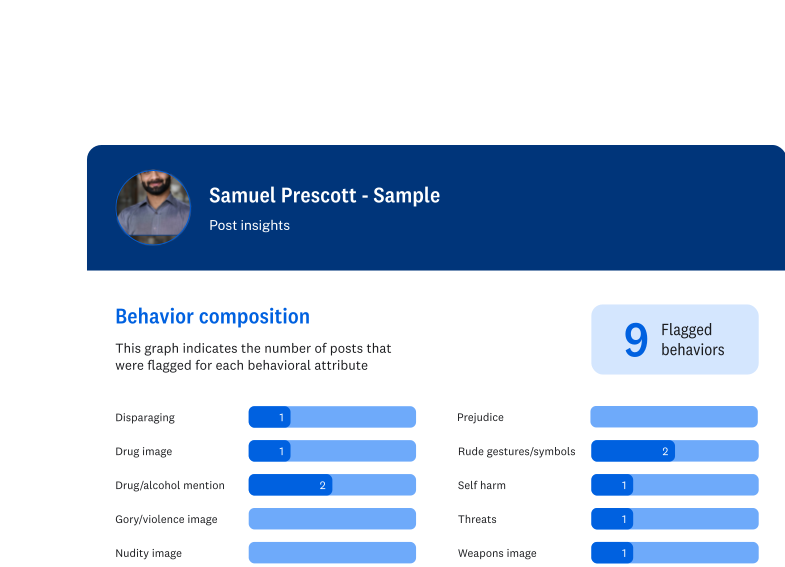
Reputational risk, handled before day one
See what candidates share publicly and act with a defensible, dispute-ready process.
Everything you need for social media screening
One report brings together social media and adverse news screening with the compliance rigor you already expect from Checkr.
FCRA-compliant and adverse-actionable
Unlike a manual search, social media search is a reportable, disputable, adverse-actionable screening with a 7-year, FCRA-aligned lookback. Standard pre-adverse and adverse action workflows apply, and disputes are managed within the 30-day FCRA window.
AI analysis with a human check
AI-powered content analysis categorizes public posts across risk areas, and every flagged report is reviewed by a trained human analyst before delivery. You get a vetted result, not raw AI output.
Social media and adverse news in one report
A single check covers both public social media profiles and adverse news and media coverage—so there's no need to order a separate adverse media check.
No username collection required
We match candidates to public profiles using name, email, and location. Candidates are never asked to hand over social media usernames, which reduces state-level legal exposure.
Seamless dashboard experience
Results appear directly in the Checkr Dashboard with a flagged-item count and a PDF report. No separate logins and no third-party portals.
You set the adjudication policy
Results return as Clear or Review. You review flagged content against your own policy—Checkr surfaces the information but never makes the hire decision.
Add social media screening to your background checks
A consistent, FCRA-compliant view of public social media and adverse news. Human-reviewed and ready in about one business day.
- What is a social media background check?
- Is it legal for employers to check my social media?
- Do employers need my permission before running a social media background check?
- Can an employer ask for my social media passwords?
- What kinds of content do employers look for during a social media review?
- When in the hiring process does a social media background check typically happen?
- What happens if an employer finds something concerning on my social media?
Ready to run background checks the modern way?
Frequently asked questions
Learn more about social media screening
Social media screening, also known as a social media background check, is a review of a candidate’s publicly available social media profiles and activity. Employers use it to look for content that may be relevant to the role, such as evidence of harassment, threats, or behavior that contradicts the information provided during the hiring process.
Yes. Employers are permitted to review publicly available social media content. However, they must follow federal and state regulations, and they can’t use protected-class information, such as race, religion, age, or disability, as a basis for hiring decisions.
It depends on who runs the search. If an employer uses a third-party screening provider, the Fair Credit Reporting Act requires the employer to provide a standalone disclosure and obtain your written authorization first. If the employer conducts the search internally, federal law doesn’t explicitly require consent, though obtaining it is considered best practice.
No. In more than 27 states, it’s illegal for employers to request your login credentials or require you to add them as a friend to access private content. Employers can only review what is publicly visible.
Employers typically focus on content that’s relevant to the role. This can include posts showing harassment, violent threats, illegal activity, or information that conflicts with what a candidate submitted in their application. Protected characteristics, including religion, sexual orientation, and race, legally may not factor into the decision.
After a conditional job offer has been extended is the recommended point for social media screenings. Waiting until then helps reduce the risk of bias and keeps your early hiring decisions focused on a candidate’s qualifications.
If a third-party screening report leads an employer to rescind a job offer, they are required to follow the adverse action process outlined by the Fair Credit Reporting Act. That means providing you with a copy of the report and a summary of your rights under the FCRA, along with a reasonable window of time for you to dispute any inaccurate findings.
Join 140,000+ employers running faster background checks with Checkr
Not an employer? Run personal background checks here
Disclaimer
The resources provided here are for educational purposes only and do not constitute legal advice. We advise you to consult your own counsel if you have legal questions related to your specific practices and compliance with applicable laws.
Ready to upgrade your background checks?
We built the most advanced screening toolset to make hiring fast, smooth, and safe.