Report
Trust, AI, and Human Connection in Manufacturing Hiring
From factory automation to HR transformation
From automation on the factory floor to automation in hiring, manufacturers are adopting new technologies to improve efficiency, reduce time-to-hire, and remain competitive.
At the same time, candidates are navigating a more complex hiring process shaped by AI and shifting expectations.
To better understand how both sides are responding to these changes, Checkr surveyed 1,000 people in the manufacturing industry—500 HR managers and 500 job seekers who recently participated in job interviews.
This report explores their insights, identifies areas of alignment and disconnects, and offers actionable ways manufacturing hiring teams can build a better hiring process.
AI and manufacturing hiring at a glance
AI is used by most HR pros
Candidates are using AI, too
Biggest hiring pain point? Silence.
62% of candidates say not hearing back—including the absence of automated follow-up—is their #1 frustration.
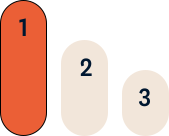
Most impactful AI-powered HR tools
#1
Resume screening and ranking
#2
Interview summaries
#3
Background check automation
Fraud is top of mind
Human connection still matters

candidates believe the majority of hiring should include direct human contact.
Both sides see an upside to AI
Manufacturing HR leaders and job seekers have a shared vision: Hiring should be faster, fairer, and more transparent. Both groups see AI as a helpful tool in reaching that goal—but only if it’s used responsibly, honestly, and ethically.
Where AI can add value
80% of HR managers say AI reduces manual work and improves efficiency. 27% of candidates agree, saying AI enhances communication and speeds up hiring.
Top AI tools used by HR teams
Top automations expected by candidates
Ethics are non-negotiable
When it comes to AI in hiring, privacy is top of mind:
- HR’s #1 concern: Candidate data privacy
- Candidates’ #1 concern: Privacy of personal data
Transparency and fairness are also high priorities for both. Our survey also revealed that AI consent options are ranked as the lowest priority for both groups, while AI transparency sits in the top three. This implies that candidates value being informed about AI use, but aren't necessarily looking to remove themselves from AI assessments.
Top ethical concerns about AI and manufacturing hiring
- Privacy of candidate data
- Fairness across demographic groups
- Transparency into how AI impacts hiring decisions
- Human oversight of AI decisions
- Accuracy and reliability of AI assessments
- Candidate ability to consent/opt-out of AI review
Fraud risks are real—and shared
70% of HR pros are concerned about identity fraud assisted by AI tools, while 61% worry about fake resumes generated with AI. Both candidates and HR managers agree on what constitutes AI fraud.
What do you consider to be AI fraud in hiring?
Where manufacturing HR misses the mark
While AI offers major benefits in efficiency and consistency, manufacturing HR teams and candidates aren’t always on the same page about its use.
Gaps in communication, transparency, and perceived fairness can erode confidence in the hiring process—especially when candidates aren’t sure of AI’s role in key decisions.
Misalignment can mean slower hiring cycles, increased candidate drop-off, and missed opportunities to build trust.
Transparency isn’t quite landing
HR managers aim for transparency
...but the process isn’t clear to candidates
Fairness still feels fuzzy
Most manufacturing HR managers think AI is as fair as human reviewers, but candidates are divided.
Is AI as fair as a human reviewer during hiring?
HR managers
Candidates
Candidates want a human touch
Yet just 26% of HR managers report hearing feedback about lack of human interaction.
That's a pretty significant gap, and it begs a new question: Why is this feedback going unrecorded? Ask your team, "Are we missing this feedback on AI because we aren't asking the right questions, or because we aren't asking for feedback at the right time during recruitment and onboarding?"
Your blueprint for human-first hiring
The disconnects between manufacturing HR managers and candidates may seem subtle, but can have a real impact. As AI becomes more embedded in recruiting, manufacturing employers will need to build trust to attract and retain the best talent.
Building a better hiring process requires implementing AI thoughtfully and intentionally. The questions and action items below will help to more closely align your internal goals and the candidate experience.
Be upfront about AI usage
Ask your team:
Are we being transparent about where and how AI is used?
Do we tell candidates who or what is reviewing their materials?
Take this action:
Use plain-language disclosures in applications and emails.
Publish a short FAQ or outline of your hiring process and AI’s role.
Give hiring the human touch
Ask your team:
Do our emails and communications sound like people or machines?
Are we giving candidates a chance to talk to a real person?
Take this action:
Adjust automated responses to include warm, clear language.
Build in recruiter touchpoints for critical stages.
Personalize interview feedback wherever possible.
Provide proper training
Ask your team:
Are all hiring managers trained on our AI tools?
Can we clearly explain to candidates how AI impacts hiring decisions?
Take this action:
Host AI onboarding and training sessions, led by internal SME and team champions when possible.
Create internal guides or quick-start explainers that empower recruiters to share your AI policies.
Put transparency first
Ask your team:
Do we have an internal policy on AI assessment vs. human review? Are we tracking compliance developments in this area?
Do we have a consistent policy on permitted candidate AI use during hiring?
Take this action:
Create and share an AI code of ethics for your HR team.
Define permitted candidate AI use and share your policy with candidates early in the hiring process.
Trust is the new HR metric
Manufacturing HR leaders are clearly adopting AI with good intentions. But good intentions alone don’t build candidate trust.
The hiring process is still deeply personal, and candidates crave transparency, fairness, and human connection.
By engineering an approach to AI that incorporates ethics and empathy, manufacturing HR pros can build hiring systems that function like a well-oiled machine, while delivering the human-centered experience that today’s top talent demands.
How Checkr can help
Checkr is the data platform that powers safe and fair hiring decisions. Our modern manufacturing background checks integrate seamlessly with your hiring tech stack through 200+ integrations and our custom API, providing transparency, automation, and compliance management at scale. Over 140,000 HR teams use Checkr to inspire trust and deliver an outstanding candidate experience, without losing the human touch.
Ready to unlock manufacturing hiring’s strategic potential with better background checks?
Connect with our team to learn more and take action as a key problem-solver for your HR organization.
More resources for strategic thinkers

Manufacturing HR Tech Playbook
Learn which tools you absolutely need in your manufacturing tech stack to win over modern candidates and fill roles fast.

How to Choose a Background Check Provider for Hiring at Scale
Learn the questions you need to ask and must-have solutions when choosing a provider to help you hire more candidates, faster.
Survey methodology
All data in this report is from a July 2025 survey conducted by Checkr using Pollfish. We surveyed 500 HR professionals and 500 job candidates in the manufacturing industry who had applied and interviewed within the past six months. All responses reflect participants' honest experiences and views.
Disclaimer
The resources and information provided here are for educational and informational purposes only and do not constitute legal advice. Always consult your own counsel for up-to-date legal advice and guidance related to your practices, needs, and compliance with applicable laws.