
Ready to run background checks the modern way?
Checkr analyzed seven weighted metrics—including employment opportunity, cost of living, and access to social opportunities—across 100 US cities to find where new grads are most likely to thrive. The results: the Midwest dominates again, and a handful of smaller markets are quietly becoming the new destinations.
For most recent graduates, choosing where to live is just as important as choosing where to work. The right city can accelerate a career, ease the financial pressure of early-adult life, and provide the social options that make a new place feel like home.
To help new grads and the employers hiring them make more informed decisions, Checkr analyzed economic and demographic data across hundreds of US cities to identify the best cities for young professionals entering the workforce in 2026.
Rankings are based on seven key metrics weighted to reflect the priorities of the 20-27 age group, including employment opportunity, cost of living, and access to social opportunities.
This year's results reveal a familiar pattern with a few notable shifts. The Midwest continues to dominate, driven by strong employment fundamentals and housing costs that don't require two incomes just to cover rent. Additionally, several cities new to the top ten reflect growing momentum in smaller markets that are becoming destinations for new grads.
Key metrics for new college grads (20-27 years old):
- Unemployment rate
- Labor force participation rate
- Income-to-rent ratio
- Percentage of renters paying <30% of income in rent
- Real personal income
- College grads as a portion of the population
- College grads per entertainment establishment
Let’s take a look at the top cities making waves for new college grads in 2026.
America’s best cities for new college grads
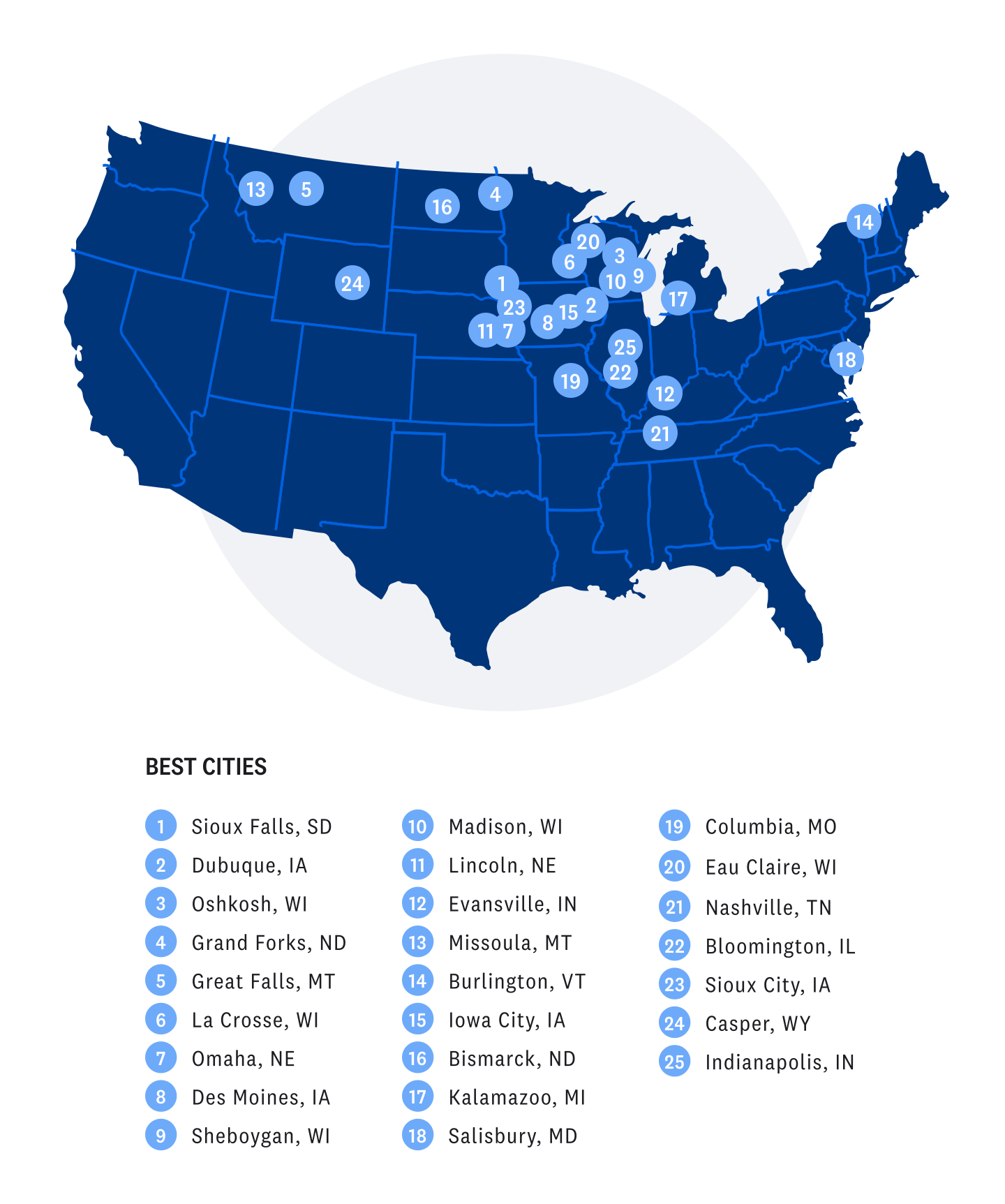
The 2026 overall rankings span all city sizes, and the top ten reflect a Midwest-heavy mix of communities where affordability and employment strength converge. Sioux Falls, SD, leads the list this year, edging out last year's frontrunners. Its top-ten employment ranking, excellent affordability, and solid social scores make it one of the most well-rounded metros in the country for young professionals.
America’s 25 best cities for new college grads in 2025
*Data analyzed by Checkr from the US Census Bureau and the Bureau of Economic Analysis
Dubuque, IA, claims the second spot, propelled by a near-perfect employment rank nationally, reflecting the metro's low unemployment and strong labor force participation among young workers. Oshkosh, WI, rounds out the top three, also posting a third-place employment rank while maintaining affordable housing relative to local wages.
Grand Forks, ND, and Great Falls, MT, bring regional diversity to the top five. Both cities rank well on affordability and offer stable job markets anchored by healthcare, education, and government sectors. In Wisconsin, La Crosse ranks sixth, demonstrating that smaller metros can also showcase grad-friendly opportunities.
The first large city on the list is Omaha, NE, at seventh, which ranks 14th in employment nationally and 14th in affordability, a combination that gives young professionals a genuine financial runway.
Des Moines follows in eighth, continuing its multi-year run as one of the most competitive large metros for recent graduates. Sheboygan, WI, at ninth and Madison, WI, at 10th, round out the overall top ten, with Madison earning strong social marks thanks to its university-town culture and walkable downtown.
Now, let’s take a look at the rankings according to city size.
America’s best large cities for new college grads
Large metros (population 500,000 and above) offer more industries, more networking opportunities, and more amenities. The trade-off is usually cost, which makes the cities at the top of this category particularly compelling. They've managed to maintain strong job markets without the rent burdens that price out young workers in coastal metros.
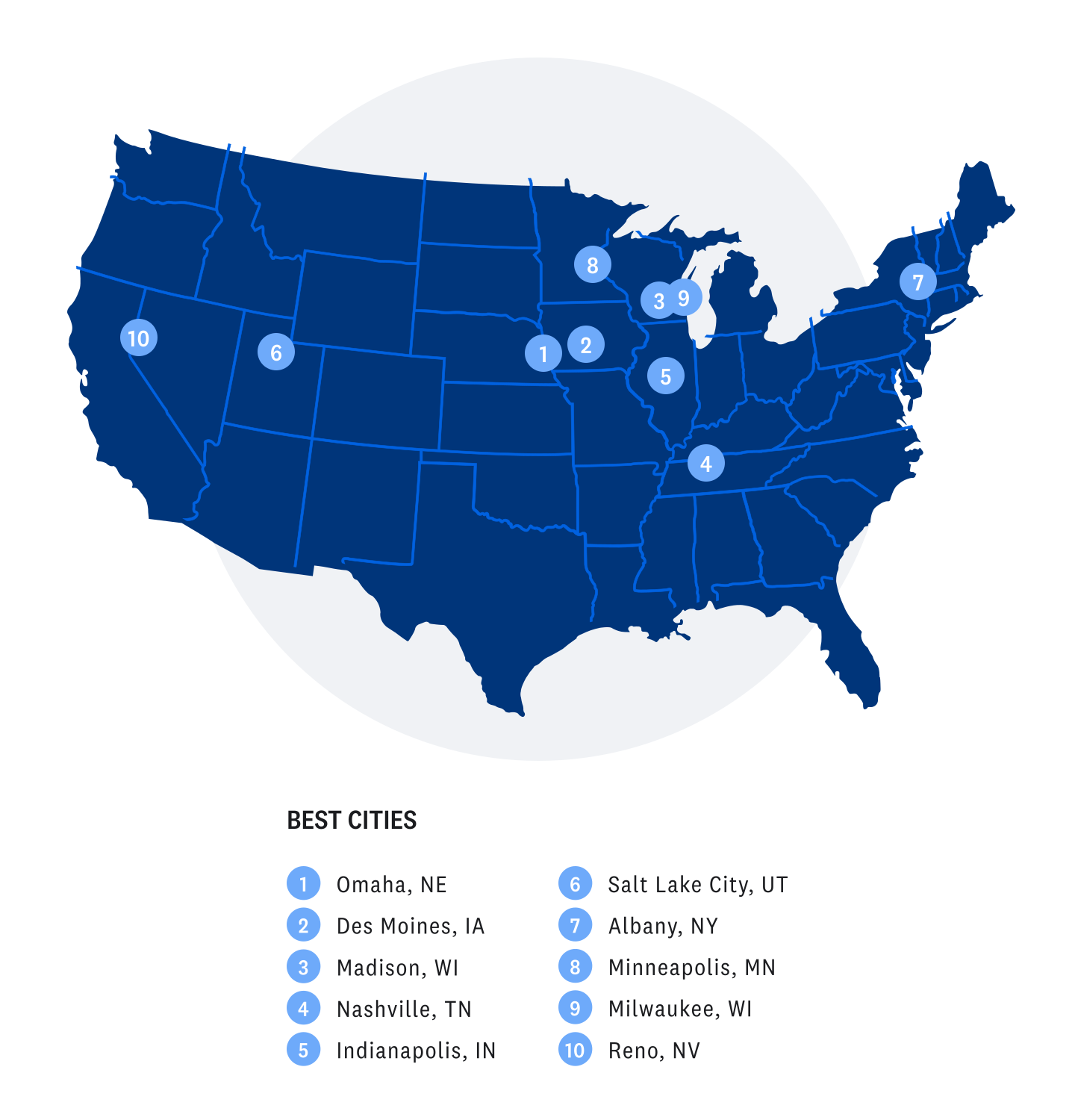
America’s best large cities (500,000+) for new college grads
*Data analyzed by Checkr from the US Census Bureau and the Bureau of Economic Analysis
Omaha leads the large-city category in 2026, with a 14th-place employment rank and 14th-place affordability rank. It's a city that rarely makes national headlines but consistently delivers for young professionals due to a diversified economy anchored in finance, insurance, and logistics, a downtown that has developed meaningfully over the past decade, and housing costs that leave room in a graduate's budget for savings and a life outside of work.
Des Moines ranks second among large cities, posting a 19th-place employment rank and 11th-place affordability rank. The metro's insurance and financial services sectors provide a steady pipeline of early-career roles, while a growing tech presence has added new opportunities for graduates.
Madison, WI, holds third in the large-city rankings, distinguished by its 14th-place social score. The University of Wisconsin anchors a culture that stays engaged well past graduation: live music, outdoor recreation, a walkable isthmus neighborhood, and civic energy that draws young workers seeking more than a paycheck.
Nashville, TN, lands fourth, due to a social rank of 8th nationally. Its job market has diversified considerably beyond the entertainment and hospitality sectors that once defined it, with a growing presence in healthcare, tech, and professional services. Next up, Indianapolis and Salt Lake City round out the large-city top six, each offering competitive affordability and solid employment infrastructure.
Next, Albany, NY, also makes the large-city top ten, with a 29th-place affordability rank that reflects the relative accessibility of upstate New York compared to the broader Northeast. Minneapolis and Milwaukee round out the group, representing the Twin Cities and Wisconsin's largest metro, respectively. Both offer deep job markets, strong affordability relative to coastal peers, and cultural scenes that give graduates reasons to put down roots.
Now, let’s take a look at the best mid-sized cities for new college grads.
America’s best mid-sized cities for new college grads
Mid-sized metros—those with populations between 200,000 and 500,000—occupy an appealing middle ground for new grads. They showcase enough economic density to support real career opportunities, but without the cost and congestion of major urban centers. For graduates who want a manageable city, this category consistently delivers.
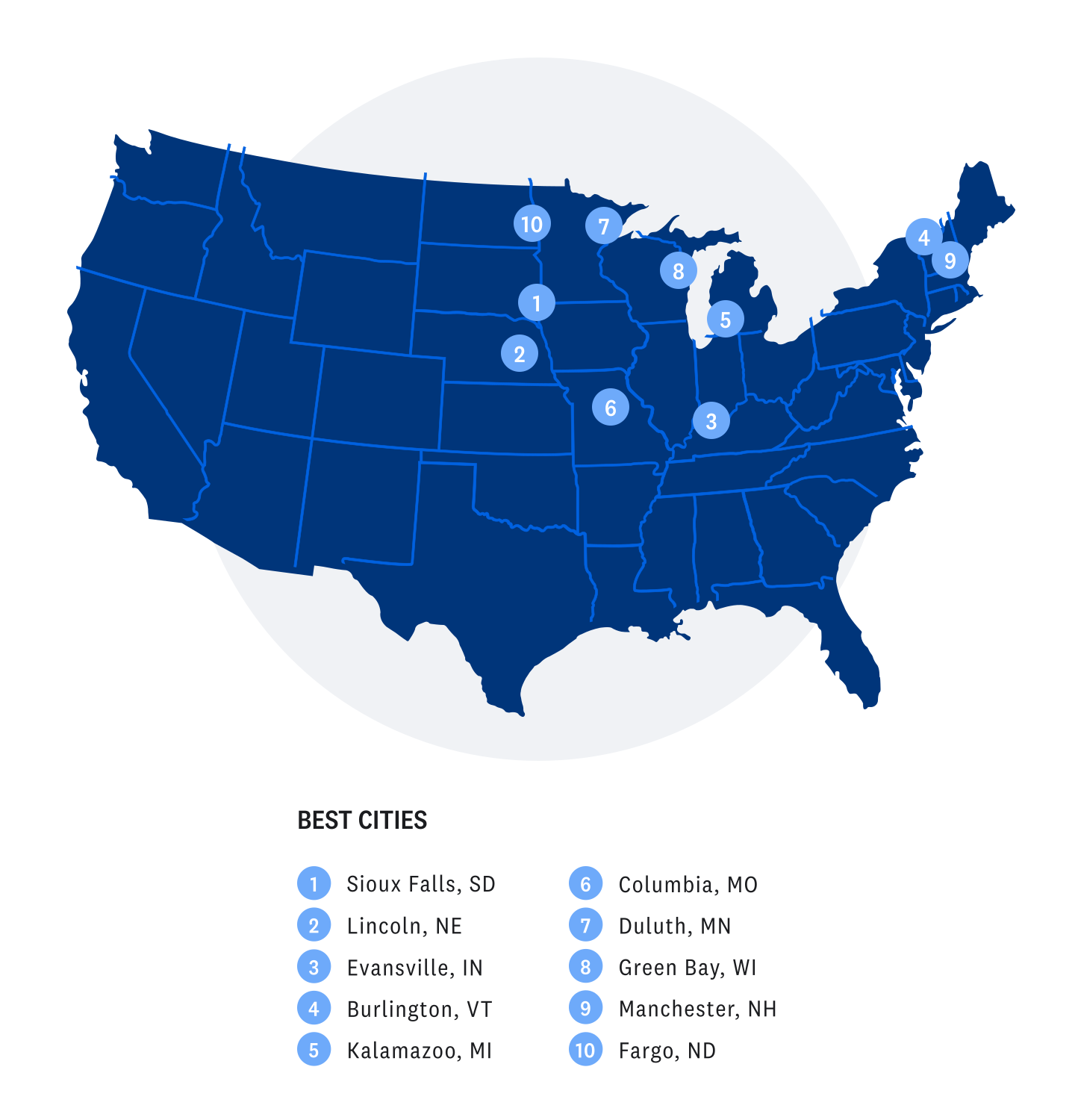
America’s best mid-sized cities (200,000-500,000) for new college grads
*Data analyzed by Checkr from the US Census Bureau and the Bureau of Economic Analysis
Sioux Falls, SD, tops the mid-sized list in 2026, the same metro that leads the overall rankings. Its 10th-place employment rank and 4th-place affordability rank are difficult to match at this population scale. The city has grown steadily over the past decade, driven by a business-friendly environment and a diversified economy spanning healthcare, financial services, and agriculture-related industries.
Lincoln, NE, ranks second in this tier. A consistent presence in this report's top ten, Lincoln continues to benefit from low unemployment, a strong university presence, and a startup ecosystem that has added tech employment to an already solid base of government and education jobs. Cost of living remains well below the national average in Lincoln as well.
Evansville, IN, enters the top three, posting an 8th-place employment rank with solid affordability at 31st nationally. Its manufacturing-anchored economy has broadened into healthcare and retail trade, offering more entry-level stability than many college towns that boom and bust with enrollment cycles.
Burlington, VT, rounds out the top four, holding the highest social rank in the mid-sized tier, ranking fifth nationally. The Burlington metro ranks highly on quality-of-life metrics such as outdoor access, a walkable downtown, strong arts and food scenes, and a concentration of educated young residents who value all of the above.
Kalamazoo, MI; Columbia, MO; Duluth, MN; Green Bay, WI; Manchester, NH; and Fargo, ND complete the mid-sized top ten.
Next, we’ll dive into the best small cities for new college grads in 2026.
America’s best small cities for new college grads
Small cities—those with populations under 200,000— require a particular disposition from the grads who choose them: comfort with a tighter social radius, less variety in nightlife and dining, and an economy often shaped by one or two dominant employers. In exchange, they offer something larger metros rarely offer: affordability that enables real financial progress in the first few years out of school.
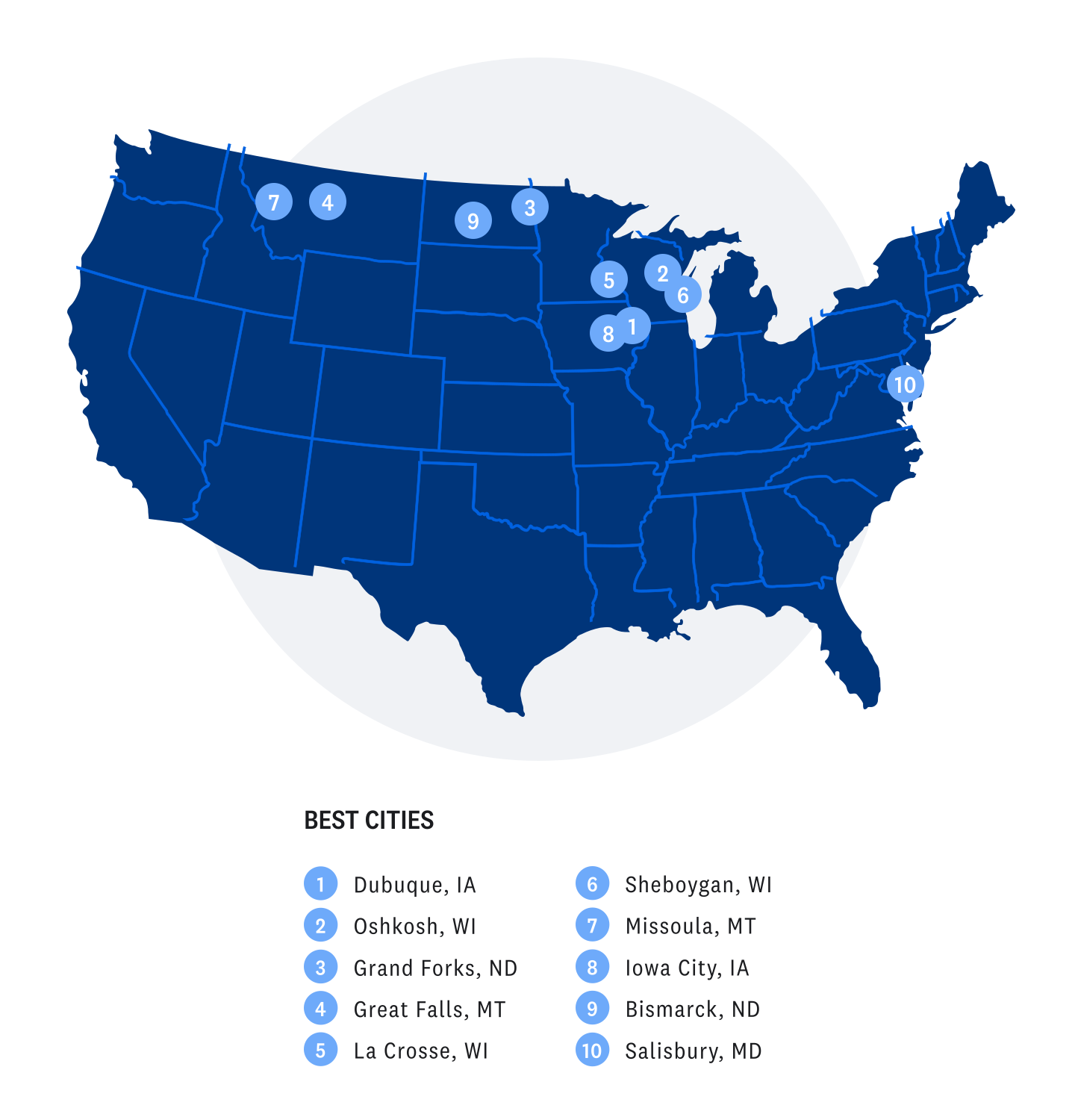
America’s best small cities (>200,000) for new college grads
*Data analyzed by Checkr from the US Census Bureau and the Bureau of Economic Analysis
Dubuque, IA, leads the small-city category in 2026, posting the second-best employment rank nationally. Affordability ranks 8th nationally, and a riverfront revitalization has added genuine quality of life to a city that was once easy to overlook.
Oshkosh, WI, ranks second, with an employment rank of 3rd nationally. The Fox Valley metro's manufacturing economy, particularly in paper, plastics, and specialty equipment, has translated into strong labor force participation and low unemployment among young workers. The University of Wisconsin-Oshkosh adds an educational anchor that keeps the area's professional talent pipeline active.
Grand Forks, ND, claims third in the small-city rankings, with an affordability rank of 11th nationally and a strong social rank of 15th. Home to the University of North Dakota, the city benefits from a research and healthcare economy that provides stable employment well beyond graduation. Its cost of living and community character make it an underrated destination for grads willing to look past better-known markets.
Great Falls, MT, and La Crosse, WI, complete the top five. Great Falls ranks 7th nationally on social metrics, reflecting a tight-knit community culture and access to Montana's outdoor landscape. La Crosse's 16th-place affordability rank, combined with a healthcare-driven job market and a bluff-and-river setting, rounds out a small-city tier defined more by substance than profile.
Sheboygan, WI; Missoula, MT; Iowa City, IA; Bismarck, ND; and Salisbury, MD round out the small-city top ten.
The full list of America’s best cities for new college grads in 2026
Below is the full ranking of United States cities and how they compare across the key metrics that define strong environments for women in the workforce.
Rank | Metro Area | Employment Rank | Affordability Rank | Social Rank |
1 | Sioux Falls, SD-MN Metro Area | 10 | 4 | 34 |
2 | Dubuque, IA Metro Area | 2 | 8 | 37 |
3 | Oshkosh-Neenah, WI Metro Area | 3 | 41 | 33 |
4 | Grand Forks, ND-MN Metro Area | 45 | 11 | 15 |
5 | Great Falls, MT Metro Area | 17 | 57 | 7 |
6 | La Crosse-Onalaska, WI-MN Metro Area | 39 | 16 | 13 |
7 | Omaha, NE-IA Metro Area | 14 | 14 | 60 |
8 | Des Moines-West Des Moines, IA Metro Area | 19 | 11 | 58 |
9 | Sheboygan, WI Metro Area | 7 | 7 | 116 |
10 | Madison, WI Metro Area | 25 | 46 | 14 |
11 | Lincoln, NE Metro Area | 28 | 17 | 44 |
12 | Evansville, IN Metro Area | 8 | 31 | 55 |
13 | Missoula, MT Metro Area | 36 | 124 | 1 |
14 | Burlington-South Burlington, VT Metro Area | 29 | 108 | 5 |
15 | Iowa City, IA Metro Area | 1 | 86 | 41 |
16 | Bismarck, ND Metro Area | 11 | 3 | 252 |
17 | Kalamazoo-Portage, MI Metro Area | 23 | 61 | 31 |
18 | Salisbury, MD Metro Area | 6 | 207 | 3 |
19 | Columbia, MO Metro Area | 21 | 97 | 20 |
20 | Eau Claire, WI Metro Area | 50 | 50 | 24 |
21 | Nashville-Davidson--Murfreesboro--Franklin, TN Metro Area | 42 | 98 | 8 |
22 | Bloomington, IL Metro Area | 75 | 25 | 35 |
23 | Sioux City, IA-NE-SD Metro Area | 89 | 25 | 28 |
24 | Casper, WY Metro Area | 33 | 1 | 274 |
25 | Indianapolis-Carmel-Greenwood, IN Metro Area | 52 | 37 | 53 |
26 | Billings, MT Metro Area | 90 | 6 | 98 |
27 | Duluth, MN-WI Metro Area | 43 | 107 | 22 |
28 | Green Bay, WI Metro Area | 22 | 15 | 204 |
29 | Waterloo-Cedar Falls, IA Metro Area | 61 | 66 | 30 |
30 | Rapid City, SD Metro Area | 58 | 20 | 82 |
31 | Cheyenne, WY Metro Area | 47 | 54 | 62 |
32 | Manchester-Nashua, NH Metro Area | 15 | 103 | 77 |
33 | Salt Lake City-Murray, UT Metro Area | 74 | 100 | 12 |
34 | Fargo, ND-MN Metro Area | 139 | 5 | 52 |
35 | Albany-Schenectady-Troy, NY Metro Area | 105 | 29 | 32 |
36 | Minneapolis-St. Paul-Bloomington, MN-WI Metro Area | 63 | 40 | 81 |
37 | Appleton, WI Metro Area | 32 | 21 | 192 |
38 | Milwaukee-Waukesha, WI Metro Area | 84 | 17 | 137 |
39 | Reno, NV Metro Area | 66 | 119 | 36 |
40 | Fond du Lac, WI Metro Area | 26 | 58 | 204 |
41 | Kansas City, MO-KS Metro Area | 82 | 38 | 139 |
42 | Charlottesville, VA Metro Area | 24 | 101 | 152 |
43 | Cape Girardeau, MO-IL Metro Area | 18 | 71 | 259 |
44 | Lexington-Fayette, KY Metro Area | 71 | 106 | 66 |
45 | Buffalo-Cheektowaga, NY Metro Area | 93 | 87 | 61 |
46 | Mankato, MN Metro Area | 9 | 148 | 156 |
47 | Columbus, IN Metro Area | 27 | 31 | 316 |
48 | Midland, TX Metro Area | 125 | 2 | 280 |
49 | Boston-Cambridge-Newton, MA-NH Metro Area | 141 | 99 | 23 |
50 | Racine-Mount Pleasant, WI Metro Area | 40 | 61 | 255 |
51 | Grand Rapids-Wyoming-Kentwood, MI Metro Area | 61 | 93 | 122 |
52 | Portland-South Portland, ME Metro Area | 53 | 101 | 129 |
53 | Jefferson City, MO Metro Area | 46 | 27 | 301 |
54 | St. Cloud, MN Metro Area | 196 | 71 | 16 |
55 | Davenport-Moline-Rock Island, IA-IL Metro Area | 49 | 36 | 291 |
56 | St. Louis, MO-IL Metro Area | 86 | 10 | 313 |
57 | Springfield, MO Metro Area | 76 | 155 | 64 |
58 | Denver-Aurora-Centennial, CO Metro Area | 111 | 123 | 51 |
59 | Toledo, OH Metro Area | 115 | 49 | 143 |
60 | Altoona, PA Metro Area | 57 | 53 | 268 |
61 | Charleston-North Charleston, SC Metro Area | 85 | 184 | 38 |
62 | Fayetteville-Springdale-Rogers, AR Metro Area | 123 | 19 | 212 |
63 | Flagstaff, AZ Metro Area | 109 | 250 | 4 |
64 | Lynchburg, VA Metro Area | 58 | 196 | 54 |
65 | Grand Island, NE Metro Area | 13 | 28 | 361 |
66 | Cincinnati, OH-KY-IN Metro Area | 118 | 23 | 228 |
67 | Boulder, CO Metro Area | 218 | 145 | 2 |
68 | Oklahoma City, OK Metro Area | 120 | 94 | 75 |
69 | Wichita, KS Metro Area | 143 | 47 | 113 |
70 | Twin Falls, ID Metro Area | 4 | 239 | 160 |
71 | Wausau, WI Metro Area | 134 | 22 | 209 |
72 | Raleigh-Cary, NC Metro Area | 166 | 51 | 83 |
73 | Ann Arbor, MI Metro Area | 171 | 85 | 43 |
74 | Louisville/Jefferson County, KY-IN Metro Area | 149 | 63 | 90 |
75 | Lancaster, PA Metro Area | 67 | 116 | 171 |
76 | Logan, UT-ID Metro Area | 38 | 259 | 41 |
77 | Johnstown, PA Metro Area | 51 | 125 | 195 |
78 | Austin-Round Rock-San Marcos, TX Metro Area | 177 | 109 | 29 |
79 | Huntsville, AL Metro Area | 104 | 59 | 204 |
80 | Lebanon, PA Metro Area | 5 | 167 | 296 |
81 | Pittsburgh, PA Metro Area | 205 | 9 | 187 |
82 | Rochester, MN Metro Area | 178 | 30 | 133 |
83 | Anchorage, AK Metro Area | 130 | 82 | 115 |
84 | Wichita Falls, TX Metro Area | 83 | 131 | 147 |
85 | Fort Wayne, IN Metro Area | 102 | 94 | 154 |
86 | Florence-Muscle Shoals, AL Metro Area | 60 | 143 | 165 |
87 | Hartford-West Hartford-East Hartford, CT Metro Area | 189 | 67 | 74 |
88 | Akron, OH Metro Area | 113 | 78 | 180 |
89 | Winchester, VA-WV Metro Area | 44 | 92 | 304 |
90 | Fort Collins-Loveland, CO Metro Area | 191 | 172 | 9 |
91 | Morgantown, WV Metro Area | 217 | 104 | 27 |
92 | Cedar Rapids, IA Metro Area | 129 | 13 | 315 |
93 | Birmingham, AL Metro Area | 68 | 110 | 250 |
94 | Lawrence, KS Metro Area | 80 | 134 | 172 |
95 | Harrisonburg, VA Metro Area | 20 | 229 | 194 |
96 | Springfield, IL Metro Area | 200 | 44 | 125 |
97 | San Angelo, TX Metro Area | 136 | 165 | 46 |
98 | Columbus, OH Metro Area | 108 | 79 | 229 |
99 | Seattle-Tacoma-Bellevue, WA Metro Area | 244 | 64 | 47 |
100 | New Haven, CT Metro Area | 101 | 169 | 87 |
For more information on Checkr’s research or to request graphics or commentary about this study, please contact press@checkr.com.
Methodology
To rank America’s best cities for new college grads (ages 20-27), Checkr analyzed seven key factors from the US Census Bureau and the Bureau of Economic Analysis. The factors include the unemployment rate among new college grads, the labor force participation rate, the income-to-rent ratio, the percentage of renters paying <30% of their income in rent, real personal income, the share of the population who are new college grads, and the number of new college grad members per entertainment establishment. Each factor was weighted appropriately by Checkr and scaled, resulting in the final rankings of the best cities in the country for new college grads in 2026.
Disclaimer
The resources and information provided here are for educational and informational purposes only and do not constitute legal advice. Always consult your own counsel for up-to-date legal advice and guidance related to your practices, needs, and compliance with applicable laws.

About the author
Ellen Kiehl is the Head of External Communications at Checkr, leading the company's external narrative across media relations, executive thought leadership, data storytelling, and employer brand. With over 12 years of experience at high-growth technology companies, she has held senior roles at Udemy, Step, and Affirm, and began her career at Edelman.