Kaiser Permanente: Hiring, Background Check & Employment Verification FAQs
Want to see what's on your own background check? Run a check today.
Are you a mortgage lender?
Run an employment verification today.
Checkr is trusted by 140k+ businesses and 80 million individuals
Ready to run background checks the modern way?
Frequently asked questions
Kaiser Permanente: Company Profile & Background Check FAQs
Kaiser Permanente draws hundreds of thousands of job applicants each year to one of the nation's largest integrated health care systems. Understanding how the organization screens candidates and what to expect from the Kaiser Permanente background check process can help you prepare when you apply. Below, we cover Kaiser Permanente's history, care model, and straightforward answers to the most-searched questions about the Kaiser Permanente background check process.
Run a personal background check
Are you an organization? Run candidate background checks here >
Kaiser Permanente: Company overview
Kaiser Permanente was founded in 1945 by industrialist Henry J. Kaiser and physician Sidney Garfield, growing out of a prepaid health care program originally developed for shipyard and steel mill workers during World War II. What began as an occupational health model evolved into one of the first large-scale managed care organizations in the United States, pioneering the concept of integrated, prepaid health care delivery.
The organization operates through three interdependent entities: Kaiser Foundation Health Plan, which provides insurance coverage; Kaiser Foundation Hospitals, which owns and operates the medical facilities; and the Permanente Medical Groups, which are physician-led partnerships responsible for clinical care. This structure keeps insurance, hospitals, and physicians under a coordinated framework designed to align financial incentives with patient outcomes. Kaiser Foundation Health Plan and Kaiser Foundation Hospitals are nonprofit entities; the Permanente Medical Groups operate as physician-owned for-profit partnerships or professional corporations.
Today, Kaiser Permanente serves 12.6 million members across eight states and the District of Columbia, including California, Colorado, Georgia, Hawaii, Maryland, Oregon, Virginia, and Washington. The organization operates 40 hospitals and more than 610 medical offices, employing approximately 244,000 people including physicians, nurses, allied health professionals, administrative staff, and support personnel. It ranks among the largest nonprofit health plans in the country by membership and revenue.
Company culture and employee programs: Kaiser Permanente describes its mission as providing high-quality, affordable health care services and improving the health of its members and the communities it serves. The organization has received recognition in workplace rankings and has maintained public commitments to diversity, equity, and inclusion programs. Employee benefits reported publicly include medical coverage, retirement plans, continuing education support, and wellness programs. The organization has also established labor-management partnerships, including a long-standing agreement with the Coalition of Kaiser Permanente Unions representing a significant portion of its workforce.
Kaiser Permanente background check FAQs
Does Kaiser Permanente do background checks?
Yes. Kaiser Permanente conducts background checks on candidates for all positions, including clinical, administrative, and support roles. The scope of the review varies based on job function, state regulations, and whether the role involves direct patient care or access to sensitive systems.
For clinical and licensed roles, the screening typically includes verification of professional licenses and credentials, checks against OIG and SAM exclusion databases, and searches of applicable state abuse and neglect registries. Roles involving access to controlled substances, patient records, or financial systems may involve additional review components. Non-clinical administrative and support roles are generally subject to standard employment screening that includes criminal history, identity verification, and employment history.
How long can a Kaiser Permanente background check take?
Most background checks at large health care employers are returned within three to five business days for standard components. However, healthcare-specific elements can extend that timeline. For more detail on what affects turnaround, see background check turnaround times.
Factors that may extend the timeline include:
- Court records that require manual retrieval from jurisdictions without electronic access
- International criminal history searches for candidates who have lived outside the United States
- Professional license verification delays when licensing boards are slow to respond
- Employment or education verification when institutions do not respond promptly
- Drug screening if the candidate cannot complete the test quickly or results require confirmatory testing
- OIG or SAM exclusion checks that require additional review when a potential match is returned
- High application volume during peak hiring periods, which can slow CRA processing
What can be revealed in a Kaiser Permanente background check?
The components of a Kaiser Permanente background check depend on the role, but may include any of the following:
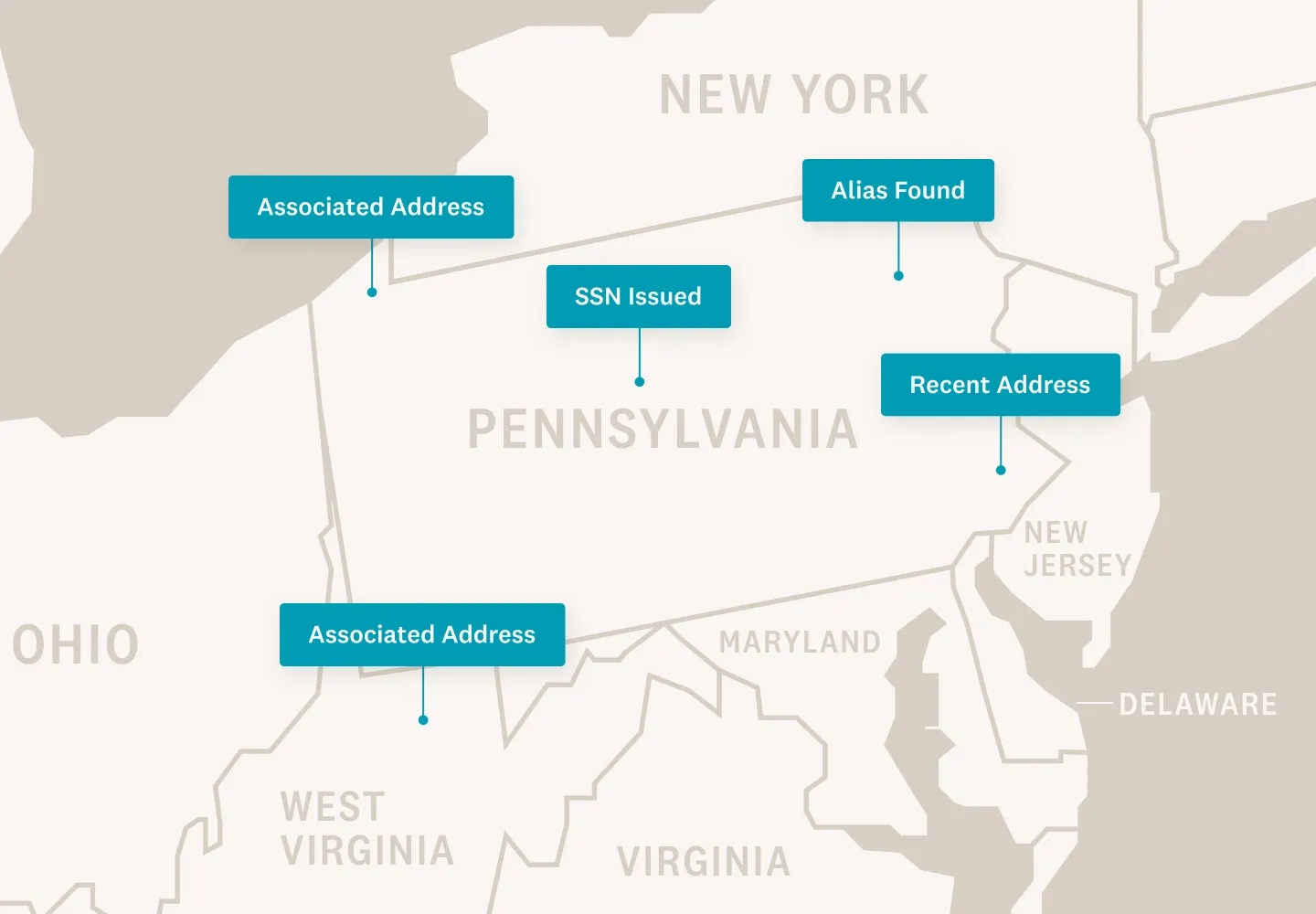
- Identity verification and criminal history: A Social Security Number trace establishes address history and confirms identity. Criminal searches are run at the county, state, and national levels. Searches may also include sex offender registry checks and global watchlist or sanctions database searches.
- Professional license verification: For physicians, nurses, pharmacists, therapists, and other licensed clinical staff, the check confirms that the applicable license is current, in good standing, and free of disciplinary actions. This is a required step for clinical roles in most states.
- OIG and SAM exclusion checks: Federal health care regulations prohibit organizations that receive Medicare or Medicaid funding from employing individuals who have been excluded from participation in federal health care programs. Kaiser Permanente, as a federally funded health plan, is required to screen candidates and current employees against these lists.
- Employment and education verification: Past employers and academic institutions are contacted to confirm dates of employment, job titles, and degrees or credentials claimed on the application.
- Drug screening: Pre-employment drug testing is standard in healthcare environments. Kaiser Permanente typically requires drug screening as part of the onboarding process for new hires.
- Motor vehicle records (MVR): Roles involving patient transport, home health visits, or operation of organizational vehicles may include a review of the candidate's driving history.
- Abuse registry searches: Depending on the state and role, checks against state-maintained registries of individuals with substantiated findings of patient, elder, or child abuse or neglect may be required.
How far back can Kaiser Permanente's background check go?
For most criminal history components, the standard lookback period is seven years, consistent with the FCRA's general reporting limitation. Some states impose shorter lookback windows or additional restrictions on what can be reported or considered in hiring decisions. For information on state-specific rules, see Checkr's resources on "ban-the-box" laws.
Healthcare employers have specific carve-outs under federal and state law that affect how history is reviewed. Professional licensing boards are not subject to the same seven-year limitation and may review an applicant's full disciplinary and criminal history when evaluating a license. Similarly, OIG and SAM exclusion databases reflect all past exclusions regardless of when they occurred. Candidates applying for licensed clinical roles at Kaiser Permanente should be aware that licensing board standards may apply in addition to the standard FCRA lookback period.
What is the FCRA and how does it protect candidates?
The Fair Credit Reporting Act (FCRA) is a federal law that governs how consumer reports, including employment background checks, are created and used. It establishes rights for candidates and obligations for employers throughout the screening process.
Under the FCRA, Kaiser Permanente must:
- Provide a clear written disclosure that a background check will be conducted, separate from the employment application
- Obtain the candidate's written authorization before requesting the report
- Follow a two-step pre-adverse and adverse action process if information in the report may lead to a negative employment decision, giving the candidate time to review the report and dispute inaccuracies before a final decision is made
- Provide the candidate with a copy of the report and a summary of rights if adverse action is taken
Candidates who believe information in their background report is inaccurate have the right to dispute it directly with the CRA. The CRA is required to investigate and correct or remove information that cannot be verified.
What is the Kaiser Permanente hiring process?
The Kaiser Permanente hiring process generally follows these steps for most roles:
- Application - Submit through the Kaiser Permanente careers portal. Applications are reviewed by a recruiter or hiring team.
- Phone or video screen - A recruiter contacts qualified candidates to confirm interest, discuss qualifications, and assess fit with the role.
- Interview(s) - Depending on the role, candidates may complete one or more interviews, including panel interviews with the hiring manager and team members.
- Contingent offer - A written offer is extended, typically contingent on successful completion of background screening and drug testing.
- Consent and disclosure - The candidate receives FCRA-required disclosures and signs authorization for the background check.
- Background check - A third-party CRA conducts the background review. Healthcare-specific components such as license verification and OIG exclusion checks are included based on role requirements.
- Drug testing - Pre-employment drug screening is typically required prior to the start date.
- Orientation and onboarding - Once all contingencies are cleared, the candidate receives a confirmed start date and completes onboarding.
Timelines between steps vary by role, location, and volume of open positions. Clinical roles with licensing requirements may take longer than administrative positions.
What happens if you fail a Kaiser Permanente background check?
A background check result that includes criminal history, a license issue, or another flag does not automatically disqualify a candidate. Under the FCRA, before Kaiser Permanente takes adverse action based on background check results, the organization is required to follow a two-step process:
- Pre-adverse action notice: The candidate receives a copy of the background report, a summary of FCRA rights, and a reasonable period to review the information and dispute any errors.
- Right to dispute: If the candidate believes any information in the report is inaccurate or incomplete, they have the right to dispute it with the CRA. The CRA must investigate and respond.
- Adverse action notice: If Kaiser Permanente proceeds with a negative employment decision after the dispute window, it must provide a formal adverse action notice that includes contact information for the CRA and information on the candidate's right to obtain a free copy of the report.
Beyond the FCRA process, many employers conduct an individualized assessment when criminal history is involved, considering the nature and severity of the offense, how much time has passed, and the relevance of the record to the specific job duties. Equal Employment Opportunity Commission (EEOC) guidance discourages blanket disqualification policies that do not account for these factors.
What is Kaiser Permanente's background check policy?
Kaiser Permanente applies background screening consistently across all new hires as a standard component of the hiring process. The policy reflects the organization's obligations as a large health care employer, including federal and state requirements tied to participation in Medicare and Medicaid programs.
Key elements that shape the policy include:
- Joint Commission standards: As a Joint Commission-accredited health system, Kaiser Permanente is subject to accreditation requirements that include verification of credentials and qualifications for clinical staff.
- State licensing board requirements: Clinical roles must meet state-mandated credentialing and verification standards, which vary by state and license type.
- Federal OIG exclusion requirements: All employees in roles that involve federal health care programs must be screened against OIG and SAM exclusion lists prior to hire and, in many cases, on an ongoing basis.
- Patient safety rationale: The organization's background check policy is grounded in its obligation to maintain a safe environment for patients and staff, particularly in roles with direct patient contact or access to medications and sensitive systems.
The policy applies to full-time, part-time, and per-diem employees, and may extend to certain contractors and volunteers depending on the nature of their work within Kaiser Permanente facilities.
Order your own background check
Before applying to Kaiser Permanente or any other employer, reviewing your own background report can help you identify and address potential issues in advance. A personal background check lets you see what employers may see, giving you time to dispute inaccuracies or prepare context for anything that appears.
A personal check can include:
- Criminal history at county, state, and national levels
- Sex offender registry results
- Employment history verification
- Education verification
- Motor vehicle records (MVR)
- Identity verification through SSN trace
To review your own background, visit:
Are you a candidate with an open background check with Checkr?
If Kaiser Permanente is using Checkr to process your background check, you can monitor your report status and get support through the Candidate Portal or the Checkr Help Center.
The resources and information provided here are for educational and informational purposes only and do not constitute legal advice. Always consult your own counsel for up-to-date legal advice and guidance related to your practices, needs, and compliance with applicable laws.
Run a personal background check
Are you an organization? Run candidate background checks here >
Disclaimer
The resources and information provided here are for educational and informational purposes only and do not constitute legal advice. Always consult your own counsel for up-to-date legal advice and guidance related to your practices, needs, and compliance with applicable laws.


Run a personal background check today.
Preview your own background check results to see what employers might see.