Ready to run background checks the modern way?
Checkr surveyed 3,000 consumers and independent workers to uncover how verification is becoming the defining factor in hiring decisions for the independent workforce. The findings reveal a fundamental shift in what consumers expect before they hire, and what it now takes for independent workers to compete in 2026.
Introduction
The independent workforce is growing three times faster than the traditional one, and consumers are turning to it for the work that matters most: from fixing a leaky faucet and cleaning a home to caring for a child or an aging parent. But that growth comes with increasing pressure: as the workforce expands and the hiring pool widens, trust has never been harder to earn or easier to lose, and consumers can’t afford to get it wrong.
AI-generated profiles, fake credentials, and identity fraud have made it increasingly difficult for consumers to know who they’re actually hiring. A worker can present themselves as experienced, licensed, and trustworthy, with polished reviews and professional-looking credentials, and none of it may be real.
In this environment, gut instinct and star ratings are no longer enough. Consumers are demanding something more concrete, and the data shows they are willing to wait longer and pay more to get it.
To understand exactly how that dynamic is playing out, Checkr surveyed 3,000 respondents split equally between consumers and independent workers. The results are clear: verification—meaning background checks, government ID verification, and professional licenses or certifications—has become the defining factor in whether an independent worker gets hired.
Here’s a quick snapshot of the key findings.
Summary of key findings
- 92% of consumers say a background check influences their hiring decision, making it the single most impactful trust signal on a worker's profile.
- 90% of consumers would wait for a fully vetted worker rather than immediately hire an unverified one.
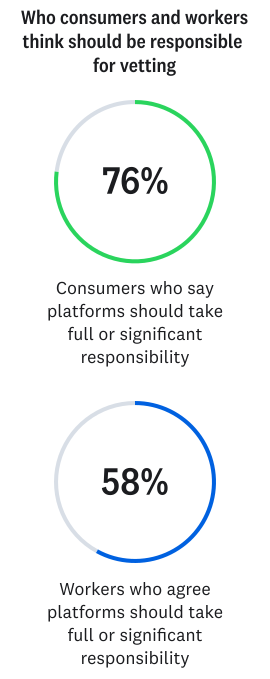
- 76% of consumers believe platforms should take full or significant responsibility for vetting the workers they list.
- 69% of consumers require a background check for childcare hires, making it the highest-scrutiny category.
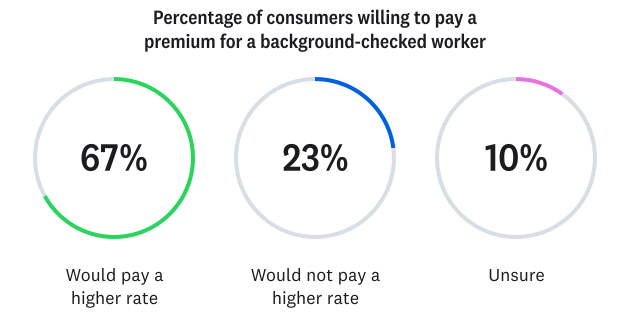
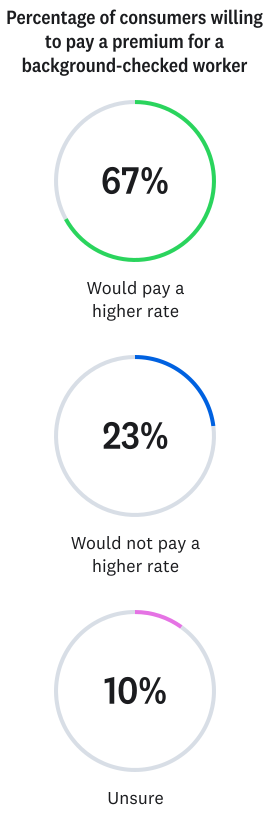
- 67% of consumers would pay a premium to hire a worker who has passed a verified background check.
- 59% of consumers admit that convenience has led them to hire a worker they were not fully comfortable with.
- 57% of consumers say trust must be earned through verification and proof before they feel comfortable hiring.
Trust is harder to earn and easier to lose than ever before
Independent workers are operating in a market where consumer skepticism is rising. The growth of AI-generated content and fake profiles has created a trust environment that is very different from that of even a few years ago. Consumers are not just naturally cautious in 2026; many have been burned, and the rest are aware enough to show concern.
Consumer trust is conditional, not automatic
When asked how they approach trust with a new independent worker, less than half of all consumers say they generally trust until given a reason not to. The rest arrive neutral or already skeptical, and that stance is not irrational. In a market where AI profiles can mimic legitimate credentials and fabricated reviews can create a track record overnight, openness without verification is a risk consumers are no longer willing to take.
Trust must be earned, not assumed
The data on how consumers define trust makes the expectation clear. 57% say trust is earned, meaning they need verification and proof before they feel comfortable hiring someone. An additional 28% describe trust as borrowed, relying on recommendations and platform reputation.
Taken together, 85% of consumers require some form of external validation before they hire. This is a new market standard in the independent economy, and it is one that workers shouldn’t ignore.
On the other side, 43% of independent workers say they still feel the burden of proving themselves with each new client, a direct reflection of the skepticism consumers bring to every new hire. For these workers, verification is not just a credential. It’s the most direct path to earning trust more quickly, resulting in more jobs and wages. A portable, verified identity that belongs to a worker can be instrumental in starting this process.
How consumers find workers, and why it matters
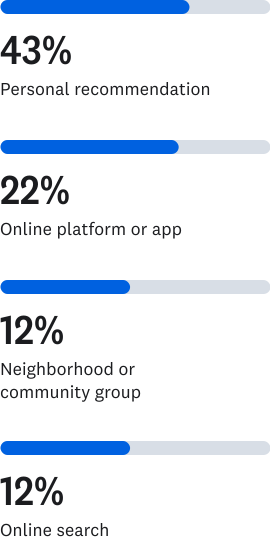
Personal recommendation remains the dominant discovery channel, with 43% of consumers preferring a referral from someone they know, compared to just 22% who turn to an online platform or app. It’s clear that word of mouth carries built-in trust.
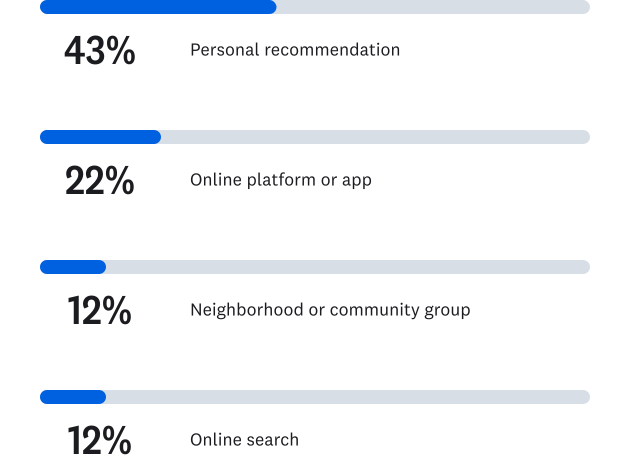
But referral networks have limits, and for the growing share of consumers who hire through platforms or searches, verification is the only substitute for a personal endorsement. Without it, those consumers have no reliable way to distinguish a legitimate worker from a fraudulent one.
The stakes are higher where trust matters most
It’s clear that some decisions are much more important than others when it comes to independent hiring. When a consumer is hiring someone to enter their home, care for their child, or manage the well-being of an elderly parent, the cost of a bad hire is not just an inconvenience. It is a safety risk, and consumers know it.
Care and home access categories demand verification
When asked which service categories make them most concerned about safety and trust, consumers are unambiguous. Childcare and babysitting rank first, followed by elder and home health care, cleaning and housekeeping, and home repair. These are the categories where a stranger is given access to the most protected parts of someone's life, and consumer scrutiny reflects that reality directly.
The numbers in these categories are not about preference. They are about requirements. 69% of consumers require a background check for childcare hires, and 61% require one for elder and home health care. Independent workers in these categories who are not verified are not only less competitive but also disqualified before the conversation even starts.
For these all-important jobs, consumers want verified identities and credentials that belong to workers, and the confidence that comes with them.
The rise of AI fraud has made these requirements more urgent, not less. When a consumer can’t reliably distinguish a real caregiver from someone with a fabricated profile, a background check is key.
Notably, independent workers rank these same categories as the highest-scrutiny segments of the market. Both consumers and workers independently identify childcare, elder care, and home access services as the categories where trust concerns are greatest, meaning the expectation of verification in these categories is not a consumer preference, but it’s a shared market reality.
Platforms are expected to lead on verification
When it comes to the platforms used to hire workers, consumers are not just looking to individual workers to solve the trust problem. They expect the platforms connecting them to workers to share responsibility.
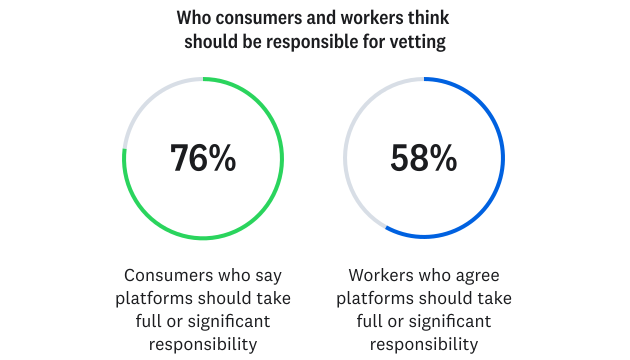
76% of consumers say platforms should take full or significant responsibility for vetting the workers they list. And for platforms operating in the care-based and home-access categories in particular, that expectation is not negotiable. Consumers have made it clear that a platform that does not verify its workers is one they do not trust.
Overall, trust between people has always mattered, but proving who you are has never kept pace with how we live and work. As the independent workforce grows, consumers are raising the bar for trust, especially for the services that matter most in their daily lives.
Verification is the answer consumers are looking for
The trust problem is real, but so is the solution. When a worker can demonstrate verified, documented credentials, consumer behavior changes dramatically. Over and over again, consumers have shown a clear desire to see a worker profile that instantly builds credibility, replacing the self-reported claims in a typical online profile. They want proof, and they want it backed by verification technologies they can actually trust.
When this happens, they hire more readily, they wait longer, and they pay more. Verification does not just signal trustworthiness—it drives it.
A background check is the most powerful trust signal available
When consumers are asked what builds immediate trust with a worker they have never met, background checks rank second only to a personal recommendation from someone they know. For any worker without an existing referral network, a verified background check is the single most effective tool for closing the trust deficit with a new consumer.
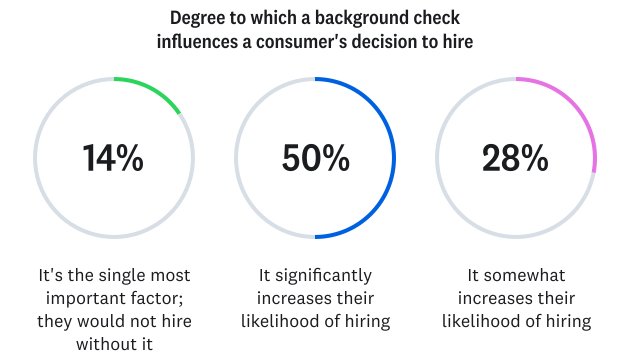
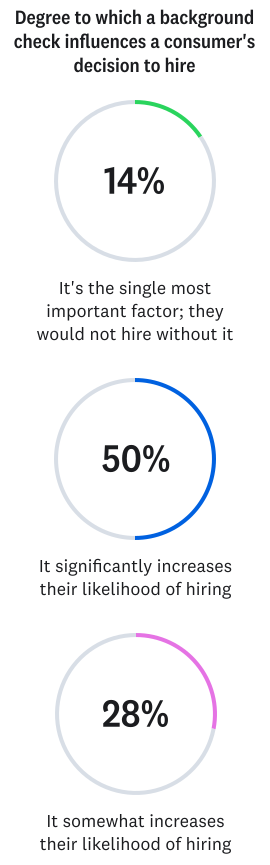
The impact on hiring decisions is also decisive. 64% of consumers say a background check is the single most important factor, and they would not hire without it or it significantly increases their likelihood of hiring. In total, 92% of consumers say a background check influences their decision.
Workers are overlooking their most valuable asset
Independent workers are beginning to recognize what the consumer data confirms. 71% of workers believe a background check increases their chances of getting hired, and 61% say a client has chosen them over a competitor specifically because of their credentials or verifications. The workers who are landing jobs understand that verification is now a competitive edge, and a verified profile can give them a huge advantage.
And yet the gap between knowing and doing remains wide. Despite the overwhelming consumer demand for verification, just 27% of workers who have completed a background check actively promote it on their profile or in conversations with clients. The majority are verified but are unaware of it. In a market where consumers are actively seeking that signal and are willing to pay more for it, not sharing verification leaves real business on the table.
Consumers will wait and pay for a verified worker
In 2026, the willingness to adjust behavior for a verified worker goes beyond a passive preference. 90% of consumers would wait rather than immediately hire an unverified worker, and 67% say they would pay a premium for a background-checked worker.
It’s clear that verification is not just a trust signal in today’s world, where AI has made trust so much harder to prove. For independent workers who have earned it and use it, it is a direct competitive and pricing advantage.
Verification tools are now keeping pace with convenience
Verification is winning on the data, but it has not yet won in every real-world decision. Convenience still pulls consumers toward hires they are not fully comfortable with, and that tension is where the risks are highest.
Compromises are still common and costly
59% of consumers say that at some point, convenience has led them to hire a worker they were not fully comfortable with. In categories like childcare and elder care, where the stakes are highest, a convenience-driven hire made without verification is precisely the kind of hire that leads to serious harm.
We can’t blame the consumers or workers for this issue. The problem has historically been the absence of the right tools. We know this because 35% of independent workers say they have never been asked to complete a background check but would be willing to do so. The demand is there on both sides, but what has been missing is a fast, simple, and trustworthy way to surface verification when it matters most.
That is exactly the problem Checkr Profiles was built to solve. For the first time, independent workers have a way to present their verified credentials directly to consumers in a clear, credible, and instantly accessible format.
Trust has always been personal, but it has rarely been this convenient to prove. When verification is frictionless and impossible to fake, consumers don’t have to choose between speed and safety. They get both, and the convenience compromise that has defined this market no longer exists.
Looking ahead: The future is verified
The independent workforce economy has always run on trust, but the terms of that trust are changing. This survey makes clear that verification is no longer a value-add layered on top of a hiring decision. It is increasingly the condition under which hiring decisions are made.
At Checkr, we work hard to address this issue. Verification should not be a barrier or an afterthought. It should be a seamless, accessible, and consistent part of how every platform connects consumers with the workers they can trust.
The data in this report tells a clear story: consumers want verified workers, workers benefit from being verified, and the platforms that invest in making verification frictionless will define what trust looks like in the next chapter of the independent workforce economy.
For more information on this research or to request graphics or commentary, please contact press@checkr.com
Methodology
All data found within this report is derived from a survey conducted by Checkr via a third-party platform from May 5–10, 2026. In total, 3,000 adult Americans were surveyed: 1,500 general population consumers and 1,500 self-employed independent workers. Consumer respondents were screened to confirm they had hired or considered hiring an independent worker for home services, personal care, childcare, delivery, or a related category in the past 12 months. Worker respondents were screened to confirm they are currently self-employed and provide hands-on services directly to consumers. This survey was conducted over a six-day span, and all respondents were asked to answer all questions as truthfully as possible and to the best of their knowledge and abilities.
Disclaimer
The resources provided here are for educational purposes only and do not constitute legal advice. We advise you to consult your own counsel if you have legal questions related to your specific practices and compliance with applicable laws.

About the author
Ellen Kiehl is the Head of External Communications at Checkr, leading the company's external narrative across media relations, executive thought leadership, data storytelling, and employer brand. With over 12 years of experience at high-growth technology companies, she has held senior roles at Udemy, Step, and Affirm, and began her career at Edelman.