Conduent: Hiring, Background Check & Employment Verification FAQs
Want to see what's on your own background check? Run a check today.
Are you a mortgage lender?
Run an employment verification today.
Checkr is trusted by 140k+ businesses and 80 million individuals
Ready to run background checks the modern way?
Frequently asked questions
Conduent: Company Profile & Background Check FAQs
Conduent is one of the largest business process services companies in the United States, employing tens of thousands of workers across a predominantly remote workforce. For job seekers applying to remote customer service, healthcare, or government services roles, understanding how the Conduent background check process works is an important step in preparing for an offer. Below, we cover Conduent's history, business operations, and straightforward answers to the most-searched questions about the Conduent background check process.
Run a personal background check
Are you an organization? Run candidate background checks here >
Conduent: Company overview
Conduent was spun off from Xerox Corporation in 2017 as an independent publicly traded company. The separation was part of Xerox's strategy to divide its document technology and business process services operations into two distinct entities. Conduent assumed Xerox's business process outsourcing division, which had grown substantially through decades of acquisitions in government services, healthcare IT, and enterprise workflow management.
The company operates across three primary segments: commercial industries, government services, and transportation. Its commercial division serves large enterprises across healthcare, financial services, retail, and technology sectors, providing functions such as customer care, human resources outsourcing, and finance and accounting services. The government services segment administers benefits programs, child support payment processing, Medicaid management information systems, and other public-sector workflows for state and local agencies. The transportation segment manages tolling, parking, and transit systems.
Conduent employs approximately 56,000 people across more than 40 countries. The company's U.S. workforce is heavily distributed, with a large share of positions filled by remote and work-from-home employees. This remote-first structure means that candidates in most locations can apply for positions without relocating, and the majority of onboarding and training occurs virtually.
Company culture and employee programs:
- Remote and hybrid work options across a significant portion of open roles
- Employee resource groups covering various demographic and interest communities
- Health, dental, and vision insurance available for eligible employees
- 401(k) retirement savings plan with company matching for eligible employees
- Paid time off and holiday schedules for full-time employees
- Employee assistance program (EAP) offering counseling and support resources
- Training and development programs, including access to online learning platforms
Conduent background check FAQs
Does Conduent do background checks?
Yes. Conduent conducts background checks for most positions, including remote and work-from-home roles. The scope and components of the background check may vary depending on the specific position, the client contract the role supports, and the candidate's location. Candidates receive written notice and must provide authorization before any screening begins, as required by federal law.
How long can a Conduent background check take?
Three to five business days is a typical turnaround for a standard Conduent background check, though timelines can vary. For more context on general industry timelines, see background check turnaround times.
Factors that may extend the timeline include:
- Court records that require manual retrieval from counties with limited electronic access
- Out-of-state or international employment or education verification
- Discrepancies between candidate-provided information and records found during the search
- High application volume during peak hiring periods
- Delays in receiving responses from third-party institutions such as former employers or schools
What can be revealed in a Conduent background check?
A Conduent background check typically includes several components, depending on the role and applicable state law:
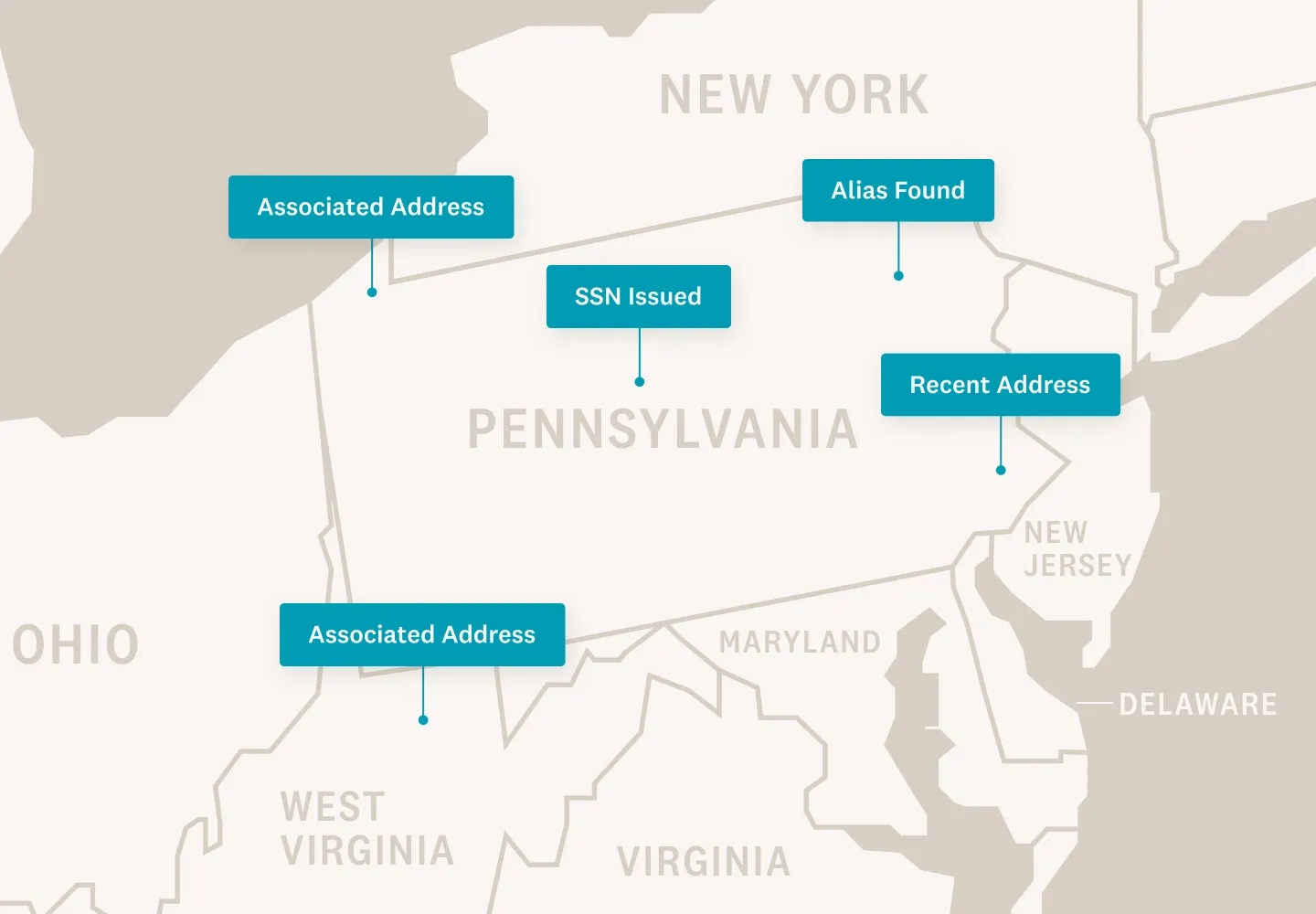
- Identity verification: A SSN trace confirms that the Social Security number provided belongs to the applicant and identifies associated addresses and name variations used in public records.
- Criminal history: Searches of county, state, and federal court records for felony and misdemeanor convictions within the permissible lookback period.
- Sex offender registry: A search of the sex-offender registry databases maintained at the state and national levels.
- Global watchlists: A search of global watchlists, including the OFAC Specially Designated Nationals list and other sanctions and debarment databases.
- Employment verification: Confirmation of dates of employment and job titles at previously listed employers, which is particularly relevant for roles tied to client contracts in regulated industries.
- Education verification: Confirmation of degrees, diplomas, or certifications listed on the application.
How far back can Conduent's background check go?
Seven years is the standard lookback period for criminal history in most states, but this varies. Some states permit searches beyond seven years for certain roles or salary thresholds, while others impose stricter limits. Candidates should also be aware that some states have enacted "ban-the-box" laws that restrict when and how criminal history can be considered in hiring decisions. The applicable lookback period for a given candidate will depend on the state where the work is performed.
What is the FCRA and how does it protect candidates?
The Fair Credit Reporting Act (FCRA) is a federal law that governs how background checks are conducted in the employment context. It establishes specific obligations for employers who use consumer reports, including background screening results, to make hiring decisions.
Employer obligations under the FCRA include:
- Providing a clear written disclosure to the candidate that a background check will be conducted
- Obtaining written authorization from the candidate before initiating the search
- Providing the candidate with a copy of the report and a summary of their rights before taking any adverse action based on the results
- Allowing the candidate a reasonable opportunity to dispute inaccurate or incomplete information
- Following proper adverse action procedures, including a final adverse action notice, if the hiring decision is ultimately unfavorable
Does Conduent drug test?
Drug testing policies at Conduent vary by role, state, and the requirements of the client contract the position supports. Not all positions require a drug test, and some states restrict or prohibit pre-employment testing for certain substances, including marijuana. When drug testing is required, it typically occurs after a conditional offer of employment and before the candidate's start date. Remote roles may have different testing requirements than positions that involve on-site work or access to regulated facilities. Candidates should confirm the specific requirements for their role during the offer stage.
Does Conduent hire felons?
Conduent follows FCRA and EEOC guidelines, which require individualized assessment of candidates with criminal records rather than blanket exclusions. Under this framework, several factors are weighed when evaluating whether a conviction is relevant to a specific role:
- The nature and severity of the offense
- The amount of time that has elapsed since the offense or completion of the sentence
- The direct relevance of the offense to the duties and responsibilities of the position
- Evidence of rehabilitation or changed circumstances
- The accuracy of the information on the application
Many states have also enacted "ban-the-box" laws that delay the point at which criminal history can be considered in the hiring process, providing candidates the opportunity to be evaluated on their qualifications first.
What is the Conduent hiring process?
The Conduent hiring process follows a structured sequence, with most steps completed remotely given the company's work-from-home hiring model:
- Application: Candidates apply online through the Conduent careers portal, submitting a resume and completing any role-specific questions.
- Phone or video screen: A recruiter conducts an initial screening call or video interview to assess qualifications, availability, and fit for the role.
- Interview: Depending on the position, candidates may complete one or more interviews with hiring managers or team leads, typically conducted via video conferencing.
- Conditional offer: Candidates who advance receive a conditional offer of employment, contingent on successful completion of pre-employment screening.
- Background check: The candidate authorizes and completes the background screening process through a third-party Consumer Reporting Agency (CRA).
- Drug test (if applicable): Roles that require drug testing proceed to this step following the background check authorization. Testing requirements vary by role and location.
- Remote onboarding: Most Conduent roles involve virtual onboarding, including completion of I-9 and other new hire documentation, equipment provisioning if applicable, and digital training programs.
What does Conduent look for in a background check?
Conduent's background check review focuses on factors directly relevant to job performance and workplace safety. For criminal history, the review considers the nature and severity of the offense, how much time has passed, and whether the offense is directly related to the responsibilities of the specific role being filled. A conviction in a category unrelated to the job function carries different weight than one with direct operational relevance.
Beyond criminal records, the review examines the accuracy of credentials and employment history stated on the application. Discrepancies in job titles, dates of employment, or educational credentials can independently affect a hiring decision, independent of any criminal findings. Conduent also screens against relevant sanctions and watchlist databases, which is particularly relevant for roles that involve access to government systems or sensitive client data.
Order your own background check
Running a personal background check with Checkr lets you review what may appear in your screening report before an employer sees it. This gives you the opportunity to identify and dispute any inaccurate or outdated records in advance.
A personal background check through Checkr can include:
- Criminal history searches, including county, state, and federal records
- Employment history verification, which is relevant for business process services and customer service roles where prior work experience is listed on the application
To get started, visit Checkr Personal Background Checks or create a Checkr Profile to share your verified background information with prospective employers.
Are you a candidate with an open background check with Checkr?
If you have an open background check in progress, you can check your status and respond to any requests through the Candidate Portal or get support through the Checkr Help Center.
The resources and information provided here are for educational and informational purposes only and do not constitute legal advice. Always consult your own counsel for up-to-date legal advice and guidance related to your practices, needs, and compliance with applicable laws.
Run a personal background check
Are you an organization? Run candidate background checks here >
Disclaimer
The resources and information provided here are for educational and informational purposes only and do not constitute legal advice. Always consult your own counsel for up-to-date legal advice and guidance related to your practices, needs, and compliance with applicable laws.


Run a personal background check today.
Preview your own background check results to see what employers might see.