EY: Hiring, Background Check & Employment Verification FAQs
Want to see what's on your own background check? Run a check today.
Are you a mortgage lender?
Run an employment verification today.
Checkr is trusted by 140k+ businesses and 80 million individuals
Ready to run background checks the modern way?
Frequently asked questions
EY: Company Profile & Background Check FAQs
EY (Ernst & Young) is one of the Big Four professional services firms, employing more than 400,000 people across 150+ countries. As a major global employer operating in regulated industries including financial services, government consulting, and public accounting, EY conducts thorough screening as part of its standard hiring process - including an EY background check for all professional and staff roles. Below, we cover what candidates can expect from the EY background check process, how long it takes, what it may include, and how federal law protects applicants throughout.
Run a personal background check
Are you an organization? Run candidate background checks here >
EY: Company overview
EY, formerly known as Ernst & Young, is one of the world's largest professional services firms. The firm traces its origins to two predecessor organizations: Ernst & Ernst, founded in 1903 by Alwin C. Ernst and Theodore C. Ernst in Cleveland, Ohio, and Arthur Young & Company, founded in 1906 by Arthur Young in Chicago. Over subsequent decades, Ernst & Ernst evolved through a series of mergers into Ernst & Whinney, while Arthur Young & Company continued to expand. The two firms - Ernst & Whinney and Arthur Young & Co. - merged in 1989 to form Ernst & Young. In 2013, the organization rebranded globally to EY, adopting a unified identity across its member firms worldwide.
EY operates through four primary service lines: Assurance, Tax, Strategy and Transactions, and Consulting. The firm serves public and private sector clients across all major industries, including financial services, healthcare, technology, energy, real estate, and government. EY reported approximately $51.2 billion in global revenue for fiscal year 2024, reflecting continued demand for its advisory, audit, and tax services.
Headquartered in London, UK, EY operates through a network of member firms organized by geographic region. U.S. operations are conducted through Ernst & Young LLP, with offices in major cities including New York, Chicago, Los Angeles, Houston, and Atlanta, among many others. The firm employs approximately 400,000 professionals globally, making it one of the largest private employers in the professional services sector.
Because EY serves clients in regulated industries - including public companies subject to SEC reporting requirements, financial institutions, and government entities - the firm maintains rigorous standards for candidate screening. Background check requirements are shaped by the nature of client engagements, applicable professional licensing bodies, and the regulatory environments in which EY operates.
Company culture and employee programs:
- Medical, dental, and vision insurance options for eligible employees
- 401(k) retirement plan with company contributions for eligible U.S. employees
- Paid time off and holidays
- Parental leave for eligible employees
- Employee assistance program (EAP)
- Learning and development programs including CPA exam support and professional certifications
- Flexible work arrangements, which may vary by role, office, and service line
- Tuition assistance for eligible employees pursuing advanced degrees
- Wellness programs and resources
EY background check FAQs
Does EY do background checks?
Yes. EY conducts background checks for all professional and staff positions. The scope of screening may vary depending on the role, the country where the position is located, and the nature of the client engagements the role supports.
For client-facing roles, positions involving access to sensitive financial or proprietary information, or engagements requiring government security clearances, the screening process may be more extensive than for standard administrative or internal support roles. Candidates hired to support clients in heavily regulated industries such as financial services or federal government may be subject to additional checks beyond EY's standard process.
How long can an EY background check take?
The time required to complete an EY background check varies based on several factors. For many candidates, standard screening is completed within one to two weeks. However, for senior roles or positions requiring verification across multiple employers, institutions, or countries, the process can take two to six weeks or longer. See Checkr's resources on background check turnaround times for a general overview of what affects timelines.
Common factors that affect how long an EY background check takes include:
- The number of employers or educational institutions that must be verified
- Response times from third-party verifiers, particularly for international employment history
- Whether the candidate has lived or worked in multiple countries
- Verification of professional licenses or certifications (e.g., CPA, bar admission)
- Court record searches in multiple jurisdictions
- Candidate responsiveness in providing requested documentation or clarifications
EY's process can run on the longer end for experienced professionals with extensive employment histories, particularly those with international experience or multiple degrees requiring verification.
What can be revealed in an EY background check?
An EY background check may include several components depending on the role and applicable legal requirements. Common elements include:
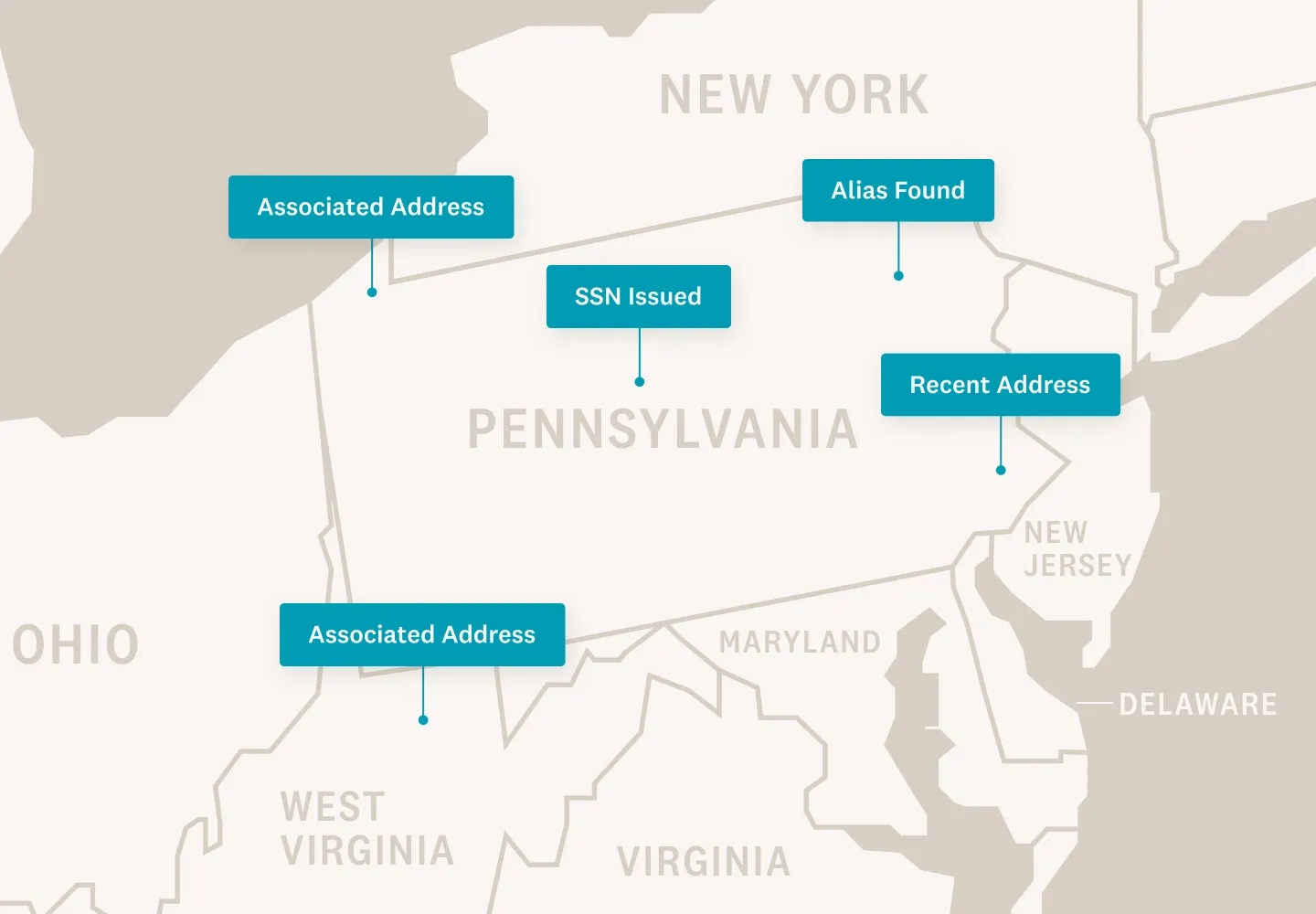
- Identity verification: An SSN trace confirms the candidate's identity and provides a history of addresses associated with the Social Security number.
- Criminal history: Searches of federal, state, and county criminal records for felony and misdemeanor convictions.
- Sex offender registry: A search of state and national sex-offender registry databases.
- Global watchlist screening: A review of global watchlists, including OFAC, terrorist watch lists, and other government sanctions lists.
- Employment verification (EY employment verification): Confirmation of dates of employment, job titles, and eligibility for rehire with previous employers. This is a core component of EY's process given the professional services context.
- Education verification: Confirmation of degrees earned and institutions attended, including graduate and undergraduate credentials.
- Professional license verification: Verification of active licenses such as CPA certification, bar admission, or other professional credentials required for the role.
- Credit history: For roles involving financial advisory services, client asset access, or positions of financial trust, a credit history review may be conducted where permitted by applicable law.
The specific components included in any individual candidate's check will depend on the role, location, and applicable legal requirements.
How far back can EY's background check go?
In most U.S. states, background check reporting is limited to seven years for certain adverse information, including most civil judgments and non-conviction records. This limitation comes from the FCRA. However, the seven-year restriction does not apply to criminal convictions, and an exception exists for positions where the salary exceeds $75,000 annually - a threshold that most EY professional roles will exceed.
As a result, EY's criminal history searches may not be subject to the seven-year lookback restriction for the majority of its positions. Professional credentials such as CPA licensure, educational degrees, and bar admissions are verified regardless of when they were earned, as these are ongoing qualifications rather than time-limited records.
State laws may impose additional restrictions on lookback periods for certain types of records. "Ban-the-box" laws in some jurisdictions also limit when and how employers may inquire about criminal history during the hiring process.
What is the FCRA and how does it protect candidates?
The Fair Credit Reporting Act (FCRA) is a federal law that governs how consumer reporting agencies collect and report information about individuals, including in the context of employment background checks. The FCRA establishes important protections for job candidates:
- EY must obtain written consent from a candidate before conducting a background check through a third-party CRA.
- If information in the background check is used to make an adverse hiring decision (such as withdrawing a conditional offer), EY must follow a pre-adverse action process.
- The pre-adverse action process requires EY to notify the candidate, provide a copy of the background check report, and allow the candidate time to review and dispute any inaccurate information before a final decision is made.
- Candidates have the right to dispute inaccurate or incomplete information directly with the CRA.
- The FCRA also limits how long certain types of adverse information can be reported (generally seven years for most non-conviction records).
Candidates who believe their rights under the FCRA have been violated may file a complaint with the Consumer Financial Protection Bureau (CFPB) or pursue legal remedies.
What is the EY hiring process?
The EY hiring process typically follows a structured sequence, though the specific steps and timeline may vary by role, service line, office location, and region. Candidates for experienced hire positions can generally expect the following stages:
- Application - Submit application materials through the EY careers portal, including resume and any required supporting documents.
- Online assessments - Many EY roles require candidates to complete standardized assessments covering cognitive ability, situational judgment, or role-specific competencies.
- Interview rounds - EY typically conducts two to four rounds of interviews, which may include phone screens, video interviews, and in-person panel interviews with managers and senior leaders.
- Conditional offer - Candidates who successfully complete the interview process receive a conditional offer of employment, contingent on satisfactory completion of the background check and other pre-employment requirements.
- Background check consent - EY provides a disclosure form and authorization for the candidate to sign, as required by the FCRA, before initiating the background check.
- Screening - The third-party CRA conducts the background check, which may include criminal history, employment verification, education verification, credit history (for applicable roles), and professional license verification.
- Onboarding - Once screening is completed satisfactorily, the candidate proceeds to onboarding, including completion of employment paperwork and any required training or orientation.
Candidates applying through campus recruiting programs or for entry-level roles may experience a modified version of this process, with assessments and interviews structured differently than experienced hire pipelines.
Does EY drug test?
EY does not universally require pre-employment drug testing for all positions. Whether a drug test is required depends on the specific role, office location, applicable state law, and the nature of the client engagement the position supports. Roles that require government security clearances or that involve working on-site at client facilities with their own drug testing policies may be subject to testing requirements beyond EY's standard process.
Post-incident drug and alcohol testing may also apply in certain circumstances. Candidates with questions about drug testing requirements for a specific role should consult with EY's recruiting team during the hiring process, as requirements vary and policies may be updated over time.
What happens if you fail an EY background check?
If information uncovered during a background check raises a concern, EY is required to follow the FCRA's pre-adverse action process before making a final decision. This process includes:
- Notifying the candidate that adverse information was found and that it may affect the hiring decision
- Providing the candidate with a copy of the background check report
- Providing a summary of the candidate's rights under the FCRA
- Allowing the candidate a reasonable period (typically five business days, though practices may vary) to review the report and dispute any inaccurate or incomplete information
If a candidate believes any information in the report is incorrect, they have the right to dispute it directly with the CRA. The CRA is required to investigate disputes and correct or remove inaccurate information.
A failed background check does not automatically result in a rescinded offer in all cases. Employers including EY are generally expected to conduct an individualized assessment that considers the nature of the offense, how much time has passed, the relevance of the record to the specific role, and evidence of rehabilitation. State and local fair chance hiring laws may impose additional requirements on this assessment process.
If EY ultimately decides not to move forward with an offer based on background check results, the candidate will receive final adverse action notice along with information about the CRA that conducted the check and the candidate's rights to obtain a free copy of the report and dispute inaccuracies.
Order your own background check
Running a personal background check with Checkr lets you preview what EY may see and help you identify potential inaccuracies before you apply. In one secure report you can review:
- Criminal history searches: SSN trace, sex offender registry, global watchlists, plus national, county, state, and federal court records.
- Employment and education verification: Confirm the accuracy of your work history and credentials before EY's verification process begins.
Create your report in minutes at Checkr Personal Background Checks. To showcase verified credentials proactively, build a free Checkr Profile you can share with recruiters and hiring managers.
Are you a candidate with an open background check with Checkr?
If EY is using Checkr to process your background check, you can track the status of your report and find support through the Candidate Portal or the Checkr Help Center.
The resources and information provided here are for educational and informational purposes only and do not constitute legal advice. Always consult your own counsel for up-to-date legal advice and guidance related to your practices, needs, and compliance with applicable laws.
Run a personal background check
Are you an organization? Run candidate background checks here >
Disclaimer
The resources and information provided here are for educational and informational purposes only and do not constitute legal advice. Always consult your own counsel for up-to-date legal advice and guidance related to your practices, needs, and compliance with applicable laws.


Run a personal background check today.
Preview your own background check results to see what employers might see.