Meta: Hiring, Background Check & Employment Verification FAQs
Want to see what's on your own background check? Run a check today.
Are you a mortgage lender?
Run an employment verification today.
Checkr is trusted by 140k+ businesses and 80 million individuals
Ready to run background checks the modern way?
Frequently asked questions
Meta: Company Profile & Background Check FAQs
Meta Platforms attracts millions of job applicants each year across engineering, product, sales, operations, and content roles at one of the largest technology companies in the world. Understanding what the Meta background check involves and whether Meta conducts drug testing can help you prepare before you apply. Below, we cover Meta's history and business operations, and straightforward answers to the most-searched questions about the Meta background check and hiring process.
Run a personal background check
Are you an organization? Run candidate background checks here >
Meta: Company overview
Meta Platforms, Inc. was founded on February 4, 2004, by Mark Zuckerberg along with co-founders Eduardo Saverin, Andrew McCollum, Dustin Moskovitz, and Chris Hughes while they were students at Harvard University. Originally launched as "TheFacebook," the social networking service expanded beyond college campuses in 2006 to allow anyone with an email address to register. The company went public on the NASDAQ in May 2012 in one of the largest technology IPOs in history, raising approximately $16 billion.
In October 2021, the company rebranded from Facebook, Inc. to Meta Platforms, Inc. to reflect its expanded focus beyond social media into the development of the metaverse, a network of interconnected virtual and augmented reality experiences. The rebranding was accompanied by the reorganization of the company's portfolio of products and services under the Meta name, with the Facebook app, Instagram, WhatsApp, and Messenger continuing to operate as distinct platforms within the broader Meta family.
Meta is headquartered in Menlo Park, California, and operates data centers, offices, and infrastructure across the United States and internationally. The company employs more than 70,000 people globally, with roles spanning software engineering, hardware and reality labs research, global operations, sales and marketing, policy, legal, and administrative functions. Meta's Reality Labs division develops augmented and virtual reality hardware and software, including the Quest headset line and Ray-Ban smart glasses developed in partnership with EssilorLuxottica.
Company culture and employee programs:
- Meta offers compensation packages that typically include base salary, equity in the form of restricted stock units, and performance-based bonuses, with package structures varying by role, level, and location.
- The company provides benefits including medical, dental, and vision coverage, along with on-site services, wellness programs, and family support resources at many of its larger campuses.
- Meta has invested in learning and development programs, internal mobility pathways, and mentorship resources to support employee growth across technical and non-technical career tracks.
- The company has implemented hybrid and remote work policies for certain roles, with in-office expectations varying by team, function, and business need.
Meta background check FAQs
Does Meta do background checks?
Yes. Meta conducts background checks on candidates for positions across its global operations. Given the company's scale, the sensitivity of the data platforms it operates, and the regulatory environment in which it functions, background screening is a standard component of Meta's hiring process. The specific components of the background check may vary depending on the role, level, and location of the position.
How long can a Meta background check take?
Three to five business days is a typical turnaround for an employment background check, though the actual timeline depends on several factors. Some checks complete within one to two business days when all records are accessible electronically, while others take longer due to record complexity or verification requirements. Common factors that can extend the timeline include:
- Manual courthouse record retrieval in jurisdictions that do not provide electronic records access
- Discrepancies between information provided on the application and records found during the search
- Employment or education verification delays when previous employers or institutions are slow to respond
- Multi-state or international searches that require records from multiple jurisdictions
- High application volume periods that affect CRA processing queues
For a detailed breakdown of what affects background check timing, see Checkr's guide to background check turnaround times.
What can be revealed in a Meta background check?
A Meta background check report may include a range of searches depending on the position and location. Common components include:
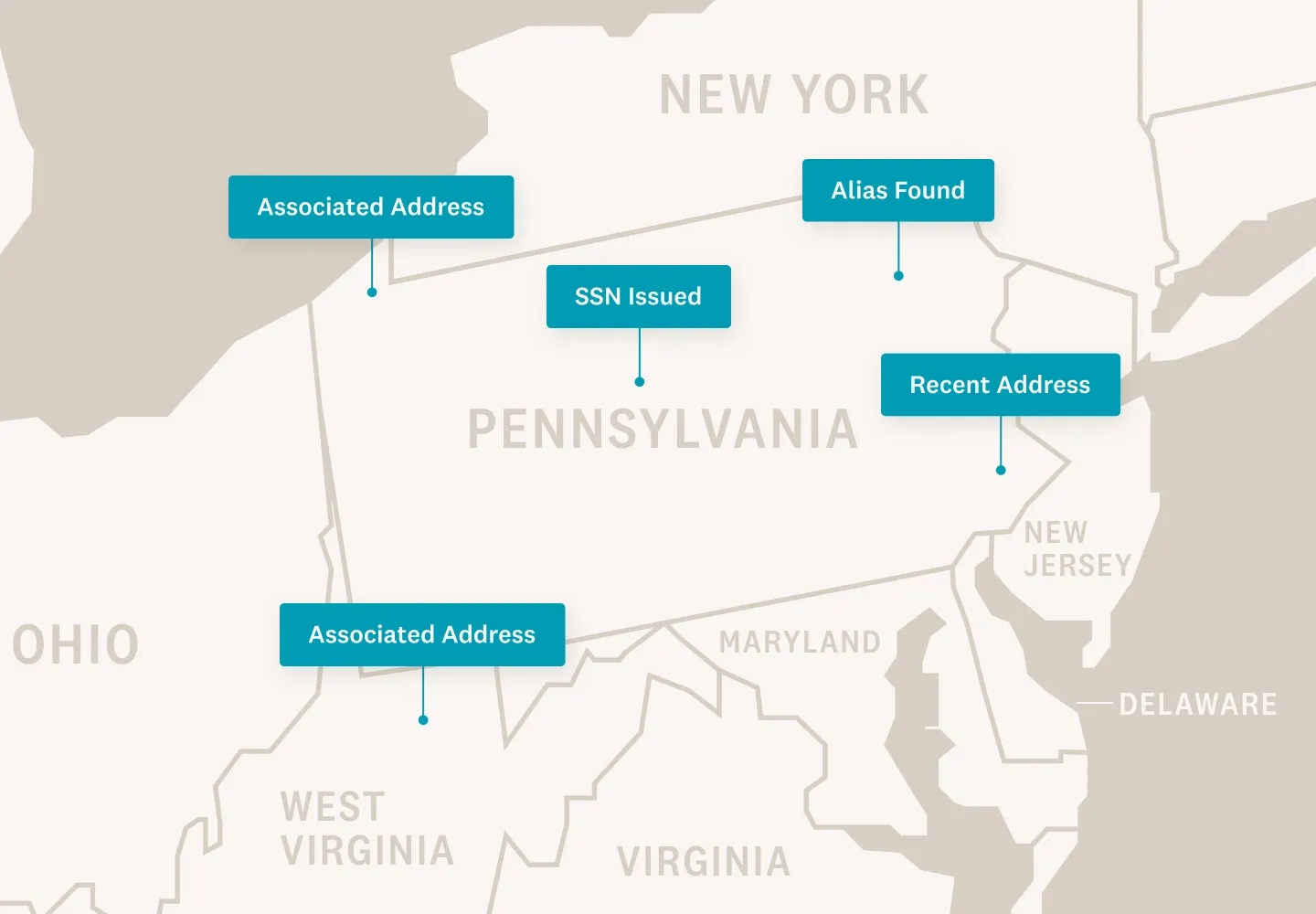
- Identity and criminal history: An SSN trace confirms the candidate's identity and surfaces associated addresses and aliases; county, state, and national criminal record searches are run against those jurisdictions; the sex offender registry is checked; and global watchlists are reviewed for matches against federal and international sanctions databases.
- Employment verification: Previous employers may be contacted to confirm dates of employment, job titles, and in some cases, eligibility for rehire.
- Education verification: For roles that require specific degrees or certifications, academic credentials may be verified with institutions directly.
- Role-specific screenings: Depending on the position, additional screenings such as professional license verification or credit history checks may be requested where permitted by applicable law.
How far back can Meta's background check go?
In most cases, employment background checks in the United States look back seven years for criminal history, in accordance with the Fair Credit Reporting Act and applicable state law. However, the actual lookback period can vary based on the state where the candidate lives or works, the specific role, and the type of record. Some states impose shorter lookback periods, while certain positions may permit a longer review window under applicable law.
Candidates should also be aware of "ban-the-box" laws that apply in their state or city, which may affect when in the hiring process an employer can ask about or consider criminal history.
What is the FCRA and how does it protect candidates?
The Fair Credit Reporting Act (FCRA) is a federal law that governs how employers may use consumer reports, including background checks, in employment decisions. Under the FCRA, employers have specific obligations to candidates throughout the screening process:
- Provide a clear, standalone written disclosure that a background check will be conducted
- Obtain the candidate's written authorization before ordering a background report
- Provide the candidate with a copy of the report and a summary of their rights if an adverse employment decision is being considered based on the report
- Issue a pre-adverse action notice before making a final decision not to hire based on the report, and allow the candidate a reasonable opportunity to dispute inaccurate or incomplete information
- Issue a final adverse action notice if the hiring decision is confirmed, identifying the CRA that provided the report and informing the candidate of their rights
These protections apply to all candidates in the United States regardless of the employer or position.
Does Meta drug test?
Meta does not routinely conduct pre-employment drug testing for most corporate and engineering positions. The company does not publicly maintain a blanket drug testing policy across all roles, and many candidates report completing the hiring process without a drug screening requirement. However, drug testing policies can vary by role type, location, and applicable legal or regulatory requirements, and Meta reserves the right to conduct drug testing where required by law or for specific safety-sensitive positions. Candidates should be aware that policies may be updated and should confirm current practices directly with Meta's recruiting team during the hiring process.
What is the Meta hiring process?
The Meta hiring process for most roles generally follows these steps:
- Application: Candidates submit an application through Meta's careers portal, providing work history, relevant experience, and any required materials such as a portfolio or coding samples.
- Recruiter screen: A recruiter contacts qualified candidates for an initial phone or video conversation to confirm interest, availability, and alignment with the role requirements.
- Technical or skills assessment: For engineering, data, and technical roles, candidates typically complete a coding challenge or take-home assessment before advancing to full interviews.
- Interview loops: Candidates who advance participate in a structured series of interviews, typically consisting of technical and behavioral rounds conducted by members of the hiring team and cross-functional partners.
- Hiring committee review: Meta uses a hiring committee process for many roles to evaluate interview feedback and ensure consistent hiring standards across the organization.
- Conditional offer: Candidates who pass the interview process receive a conditional offer of employment, contingent on the successful completion of the background check.
- Background check: The Meta background check is initiated following the conditional offer. The offer remains conditional on satisfactory results from the screening process.
- Onboarding: Once the background check is cleared, candidates complete onboarding paperwork and participate in new hire orientation and role-specific training.
Order your own background check
Running a personal background check with Checkr lets you preview what Meta may see in your report and identify any inaccuracies before they affect your application. In one secure report you can review:
- Criminal history searches: SSN trace, sex-offender registry, global watchlists, and national, county, state, and federal court records.
- Employment and education verification: Confirm that your work history and academic credentials appear accurately before an employer reviews them.
Create your report in minutes at Checkr Personal Background Checks. To proactively share verified credentials with recruiters or hiring managers, build a free Checkr Profile you can send directly.
Are you a candidate with an open background check with Checkr?
Check your report status and review any notices in the Candidate Portal, or visit the Checkr Help Center for FAQs, dispute steps, and to contact support.
The resources and information provided here are for educational and informational purposes only and do not constitute legal advice. Always consult your own counsel for up-to-date legal advice and guidance related to your practices, needs, and compliance with applicable laws.
Run a personal background check
Are you an organization? Run candidate background checks here >
Disclaimer
The resources and information provided here are for educational and informational purposes only and do not constitute legal advice. Always consult your own counsel for up-to-date legal advice and guidance related to your practices, needs, and compliance with applicable laws.

Run a personal background check today.
Preview your own background check results to see what employers might see.