Microsoft: Hiring, Background Check & Employment Verification FAQs
Want to see what's on your own background check? Run a check today.
Are you a mortgage lender?
Run an employment verification today.
Checkr is trusted by 140k+ businesses and 80 million individuals
Ready to run background checks the modern way?
Frequently asked questions
Microsoft: Company Profile & Background Check FAQs
Microsoft is one of the largest and most recognized technology companies in the world, employing approximately 228,000 people across dozens of countries. With a competitive hiring process that attracts millions of applicants annually, understanding what to expect before and during the application process can help candidates prepare with confidence. This article covers Microsoft's standard pre-employment background check process, as well as the Microsoft Cloud Background Check, a distinct security screening used for roles involving government cloud services and sensitive government contracts.
Run a personal background check
Are you an organization? Run candidate background checks here >
Microsoft: Company overview
Microsoft was founded on April 4, 1975, by Bill Gates and Paul Allen in Albuquerque, New Mexico. Originally built around programming languages and operating systems, the company grew to become a defining force in personal computing with its Windows operating system and Office productivity suite. Over the following decades, Microsoft expanded into enterprise software, gaming with Xbox, professional networking through its 2016 acquisition of LinkedIn ($26.2 billion), and developer tools through its 2018 acquisition of GitHub ($7.5 billion).
Under CEO Satya Nadella, who took the helm in 2014, Microsoft underwent a significant strategic shift toward cloud computing and enterprise services. Microsoft Azure is now one of the leading cloud platforms globally, competing directly with Amazon Web Services and Google Cloud. The company also made one of the largest acquisitions in gaming history with the purchase of Activision Blizzard in 2023 for $68.7 billion. Microsoft's diverse business portfolio now spans Windows OS, Microsoft Azure, Microsoft 365 (formerly Office 365), Xbox, LinkedIn, GitHub, Bing, and Dynamics 365. In fiscal year 2024, the company reported revenue of approximately $245 billion and trades on the NASDAQ under the ticker MSFT, headquartered in Redmond, Washington.
Microsoft's scale means the company recruits across a broad range of disciplines, from software engineering and cloud infrastructure to sales, marketing, operations, legal, and research. The company competes aggressively for talent and is consistently ranked among the most desirable employers in the technology sector worldwide.
Company culture and employee programs:
Microsoft employs approximately 228,000 people globally and is known for offering competitive compensation packages that typically include base salary, stock awards (RSUs), annual bonuses, and comprehensive benefits. The company has publicly emphasized a culture of "growth mindset," a concept championed by Satya Nadella that encourages continuous learning, collaboration, and openness to change. Employee programs include learning and development resources, wellness benefits, parental leave, and various employee resource groups supporting diversity and inclusion across the organization.
Microsoft background check FAQs
Does Microsoft do background checks?
Yes. Microsoft conducts background checks as part of its standard hiring process. Candidates who receive a conditional offer of employment are typically required to complete a background screening before their start date is confirmed. The scope of the background check may vary depending on the role, the level of seniority, the business unit, and any applicable regulatory or contractual requirements tied to that position.
What is the Microsoft Cloud Background Check?
The Microsoft Cloud Background Check is a distinct security screening process that is separate from the standard pre-employment background check most candidates go through. It applies specifically to employees whose roles involve working with government cloud environments or sensitive government contracts, including Microsoft Azure Government, Microsoft 365 Government, and projects tied to U.S. Department of Defense (DoD) or intelligence community (IC) requirements.
This type of screening goes beyond a typical commercial background check. Depending on the classification level of the role, the Microsoft Cloud Background Check may involve:
- Identity verification: Confirming the candidate's legal identity and citizenship or immigration status.
- Criminal history review: A thorough review of criminal records at the county, state, and federal level.
- U.S. citizenship or residency requirements: Some government-classified roles require candidates to be U.S. citizens or lawful permanent residents.
- Security clearance adjudication: Certain roles tied to federal contracts may require the candidate to hold or be eligible to obtain a U.S. government security clearance (e.g., Secret or Top Secret clearance), which involves a separate investigation conducted by a federal agency rather than Microsoft directly.
If a role requires a Microsoft Cloud Background Check, this will typically be disclosed in the job posting or during the offer process. Candidates who are not eligible to meet the applicable requirements may not be able to proceed with those specific roles, even if they are otherwise qualified for positions at Microsoft. The Cloud Background Check is not applied universally across all Microsoft hiring and does not affect the standard background check process for roles that do not involve government-sensitive work.
What is the Microsoft hiring process?
Microsoft's hiring process generally follows a structured sequence. After a candidate applies online through the Microsoft Careers portal, applications are reviewed by recruiters and hiring managers. Qualified candidates are typically contacted for an initial phone or video screen with a recruiter, followed by technical or skills-based interviews, often conducted through Microsoft Teams. Final-round interviews frequently involve a series of back-to-back sessions with multiple team members, covering both technical competency and behavioral questions aligned with Microsoft's values and growth mindset framework.
Following successful interviews, candidates who are selected receive a conditional offer of employment. The offer is typically contingent on the successful completion of a background check. Once the background check is completed and cleared, the offer is confirmed and onboarding begins. The overall process from initial application to start date can range from a few weeks to a few months depending on the role, the team, and scheduling.
How long can a Microsoft background check take?
The length of a Microsoft background check can vary. For many candidates, the process is completed within a few business days. However, certain factors can extend the timeline, including:
- Delays in obtaining court records from jurisdictions with limited electronic access
- International components requiring verification from overseas sources
- Incomplete or inaccurate information provided by the candidate
- Roles requiring additional security screening, such as the Microsoft Cloud Background Check
For roles tied to government contracts or requiring a security clearance, the screening timeline can be significantly longer, sometimes extending weeks or months, depending on the complexity of the investigation and federal agency processing times. Checkr's resource on how long background checks take provides additional context on what influences turnaround times across different screening types.
What can be revealed in a Microsoft background check?
The specific components included in Microsoft's background check may vary by role. Common elements in a corporate pre-employment background check include:
- Criminal history: A search of national, county, state, and federal criminal records databases, as well as sex-offender registries and global watchlists. Learn more about sex-offender registry searches and global watchlist checks.
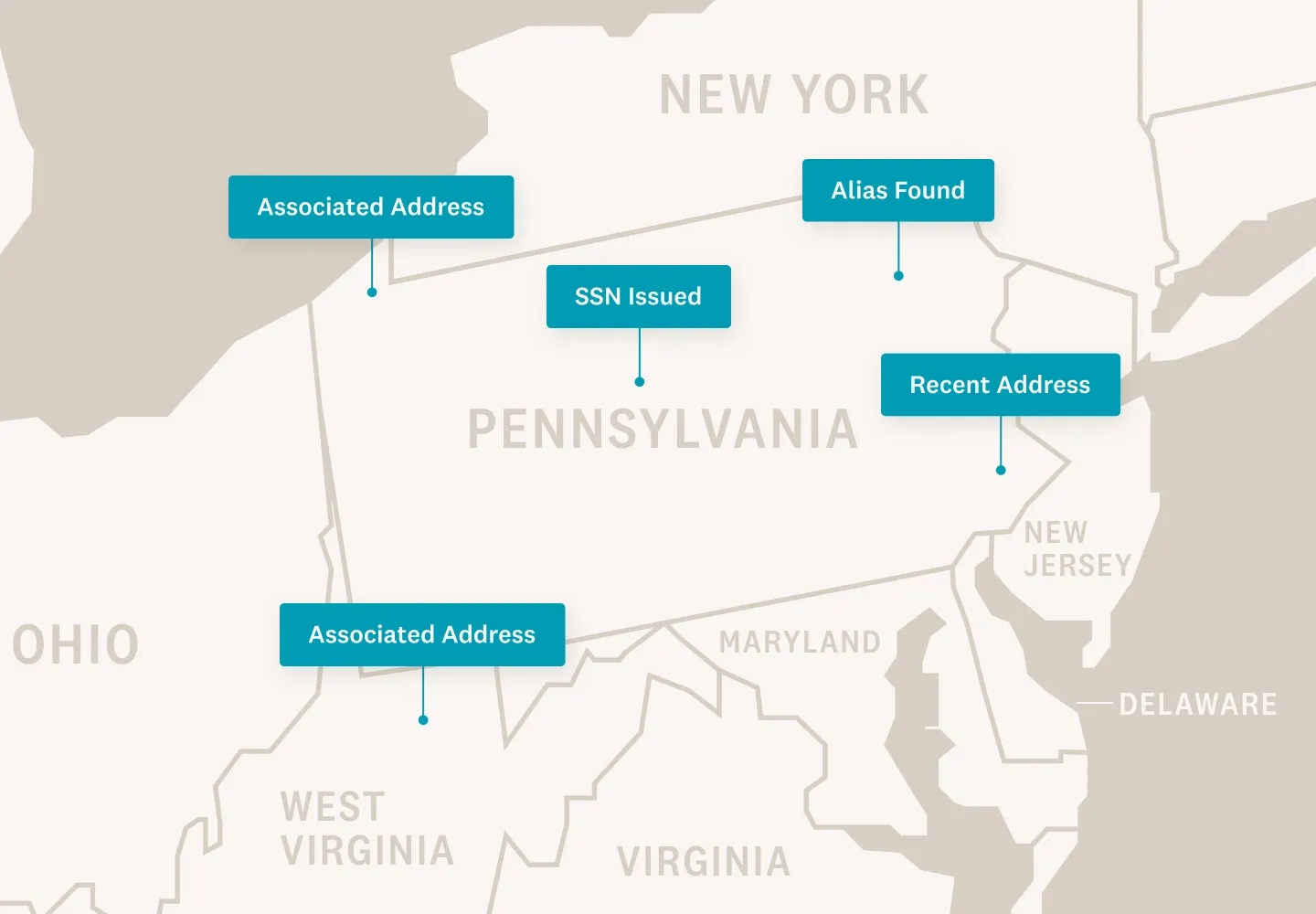
- SSN trace: Verifies the candidate's Social Security Number and identifies addresses associated with the SSN, which helps determine which jurisdictions to search. More detail is available at Checkr's SSN trace resource.
- Employment verification: Confirms previous employers, job titles, and dates of employment as reported by the candidate.
- Education verification: Confirms degrees, certifications, or credentials listed on the application.
- Professional license verification: For roles requiring licensure or certifications, verifies those credentials.
- Motor vehicle records: For positions that involve driving or operating vehicles, a DMV check may be included.
- Credit history: Less common but may be included for roles involving financial responsibility or access to sensitive financial information.
How far back can Microsoft's background check go?
The lookback period for a Microsoft background check will depend on the applicable laws governing the candidate's location, as well as Microsoft's internal policies. In the United States, the FCRA generally limits consumer reporting agencies from reporting most negative information older than seven years, with some exceptions. For criminal convictions, some states impose shorter lookback limits. Candidates in states or localities with specific background check laws, such as ban-the-box protections, may have additional rights that affect when and how criminal history information can be considered. Checkr's resource on ban-the-box laws provides a state-by-state overview of these protections.
Does Microsoft hire felons?
Microsoft does not publicly maintain a blanket policy excluding all candidates with felony records from employment. The company generally evaluates candidates on a case-by-case basis, taking into account the nature of the offense, how much time has passed, the relevance of the offense to the role, and evidence of rehabilitation. This approach aligns with EEOC guidance encouraging employers to assess criminal history in context rather than applying categorical exclusions. Certain roles, particularly those requiring government security clearances or access to sensitive data, may have stricter eligibility requirements that could affect candidates with specific types of criminal history.
What happens if you fail a Microsoft background check?
If information in a background check raises concerns for Microsoft, the company is required under the FCRA to follow a specific adverse action process before withdrawing or rescinding an offer. This process includes:
- Pre-adverse action notice: Microsoft (or its background check provider) sends the candidate a copy of the background check report and a summary of their rights under the FCRA, along with notice that the information may be used to make a negative employment decision.
- Waiting period: The candidate is given a reasonable period (typically at least five business days) to review the report and dispute any inaccurate or incomplete information.
- Adverse action notice: If Microsoft proceeds with withdrawing the offer after the waiting period, the candidate receives a formal adverse action notice that includes information about the CRA that produced the report and the candidate's rights to request another copy.
Candidates who believe their background check report contains errors have the right to dispute inaccurate information directly with the consumer reporting agency. Resolving a dispute can sometimes take additional time, so candidates in this situation should act promptly. For more information on the process and candidate rights, see Checkr's overview of the FCRA and EEOC.
What are Microsoft background check requirements?
Microsoft's background check requirements are tied to the specifics of each role. At a minimum, candidates can generally expect the standard components described above, including identity verification, criminal history, and employment verification. Roles with additional compliance requirements, such as positions supporting government cloud environments, financial operations, or regulated industries, may require expanded screening. Candidates applying for roles that specify a Microsoft Cloud Background Check requirement should expect a more intensive process and review the job description carefully for eligibility criteria, including any U.S. citizenship or clearance requirements.
What is the FCRA and how does it protect candidates?
The Fair Credit Reporting Act (FCRA) is a federal law that governs how employers and consumer reporting agencies handle background check information. Key protections for candidates include:
- Written consent required: Employers must obtain a candidate's written authorization before conducting a background check through a CRA.
- Disclosure obligation: Employers must provide a clear and conspicuous disclosure that a background check may be conducted.
- Adverse action process: As described above, employers must follow a defined process before taking adverse action based on background check findings, giving candidates an opportunity to review and dispute the report.
- Right to a free copy: Candidates are entitled to a free copy of their background check report upon request.
- Dispute rights: Candidates have the right to dispute inaccurate or incomplete information and have it investigated by the CRA.
State and local laws may provide additional protections beyond what the FCRA requires. For a detailed overview, visit Checkr's introduction to the FCRA and EEOC.
Order your own background check
Running a personal background check with Checkr lets you preview what Microsoft may see and help you identify potential inaccuracies before they affect your job application. In one secure report you can review:
- Criminal history searches: Search databases and registries; SSN trace, sex-offender registry, global watchlists, plus national, county, state, and federal court records.
- Motor vehicle records: Search a state's DMV, confirm driver's license, and identify driving incidents.
- Employment verification: Review your work history as it appears in third-party databases.
Create your report in minutes at Checkr Personal Background Checks. To showcase verified credentials proactively, build a free Checkr Profile you can share with recruiters, hiring managers, or potential employers.
Are you a candidate with an open background check with Checkr?
Check your report status in the Candidate Portal. Or, visit the Checkr Help Center for FAQs, dispute steps, and to contact support.
The resources and information provided here are for educational and informational purposes only and do not constitute legal advice. Always consult your own counsel for up-to-date legal advice and guidance related to your practices, needs, and compliance with applicable laws.
Run a personal background check
Are you an organization? Run candidate background checks here >
Disclaimer
The resources and information provided here are for educational and informational purposes only and do not constitute legal advice. Always consult your own counsel for up-to-date legal advice and guidance related to your practices, needs, and compliance with applicable laws.


Run a personal background check today.
Preview your own background check results to see what employers might see.