Securitas: Hiring, Background Check & Employment Verification FAQs
Want to see what's on your own background check? Run a check today.
Are you a mortgage lender?
Run an employment verification today.
Checkr is trusted by 140k+ businesses and 80 million individuals
Ready to run background checks the modern way?
Frequently asked questions
Securitas: Company Profile & Background Check FAQs
Securitas is one of the largest security services employers in the world, with approximately 336,000 employees across more than 40 countries. In the United States, Securitas Security Services USA, Inc. operates as a major employer of security officers, patrol officers, and related personnel. Candidates applying to Securitas commonly want to know what the Securitas background check involves and whether Securitas conducts drug testing as part of its hiring process. This article answers both questions and covers the full Securitas hiring process from application to onboarding.
Run a personal background check
Are you an organization? Run candidate background checks here >
Securitas: Company overview
Securitas traces its origins to 1934, when a Swedish security firm was founded in H��lsingborg, Sweden, under the name H��lsingborg Nattvakt. Through a series of acquisitions and mergers over the following decades, the company grew into what is now known as Securitas AB, headquartered in Stockholm, Sweden. The company is publicly traded on Nasdaq Stockholm under the ticker SECU B.
Today, Securitas operates in more than 40 countries across North America, Europe, Latin America, Africa, the Middle East, Asia, and Australia. The company offers a broad range of security solutions including on-site guarding, mobile patrols, remote guarding, technology-based security systems, and fire and safety services. This diversified service model allows Securitas to serve clients across industries including commercial real estate, healthcare, retail, industrial, government, and transportation.
In the United States, Securitas Security Services USA, Inc. is one of the country's largest private security employers. US operations span all major metropolitan areas and include roles such as security officers, armed security guards, mobile patrol officers, operations supervisors, branch managers, and corporate support staff. The scale and nature of the work, particularly armed and sensitive-site roles, means the Securitas hiring process involves thorough screening at every stage.
Securitas positions itself as a knowledge-led security company, emphasizing training, technology integration, and local expertise. The company invests in officer training programs and career development pathways, which is reflected in its internal promotion structure across its US operations.
Company culture and employee programs:
- Security officer training programs and certifications through Securitas Training Academy
- Career advancement pathways from officer roles into supervisory and management positions
- Employee assistance programs (EAP) available in US operations
- Diversity and inclusion initiatives across regional operations
- Benefits including medical, dental, and vision coverage for eligible employees (specifics vary by position and state)
Securitas background check FAQs
Does Securitas do background checks?
Yes. Securitas conducts background checks on candidates for most, if not all, positions across its US operations. Given the nature of the security industry, background screening requirements at Securitas are more rigorous than in many other industries. Security officers and guards are entrusted with protecting people, property, and assets, which means the company applies thorough screening standards. Armed security positions, in particular, are subject to additional licensing and background requirements dictated by state law and firearms regulations.
How long can a Securitas background check take?
A Securitas background check typically takes three to five business days to complete, though timelines can vary depending on the scope of the search and any complications that arise during the process. For more detail on what affects timing, see Checkr's guide to background check turnaround times.
Common causes of delays include:
- Court records that require manual retrieval from counties or jurisdictions that do not provide electronic access
- Verification of employment history with former employers who are slow to respond
- Discrepancies in the candidate's personal information that require additional research
- Multi-state or multi-country searches that involve a larger number of records sources
- State licensing verification for armed security or specialized roles
- High application volume periods where CRA processing queues are longer than normal
What can be revealed in a Securitas background check?
A Securitas background check may include a range of searches depending on the position and jurisdiction. Common components of a security industry background check include:
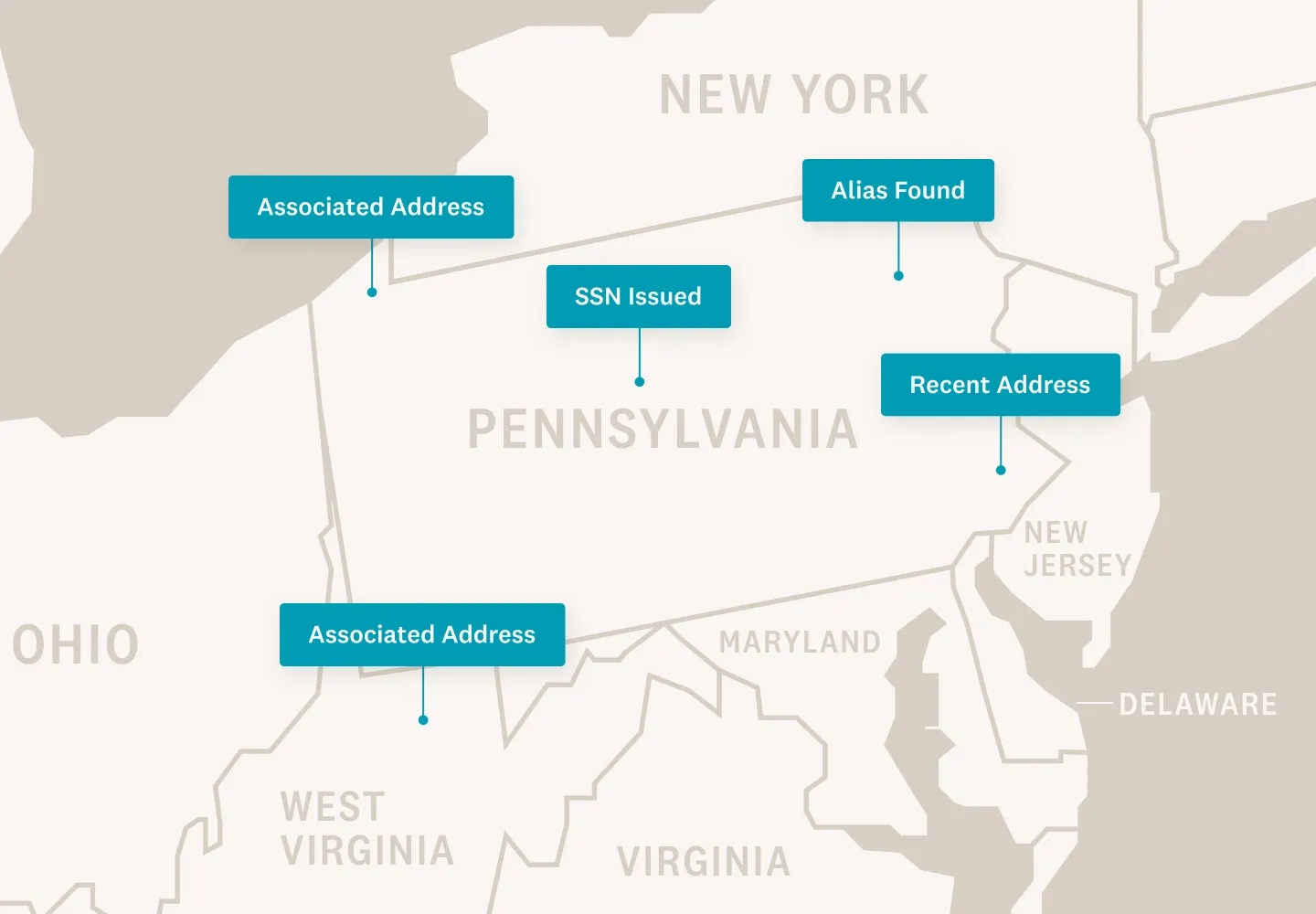
- Identity verification: An SSN trace confirms the candidate's identity and identifies addresses and aliases associated with their Social Security Number, which informs the scope of criminal record searches.
- Criminal history: Federal, state, and county criminal record searches cover felony and misdemeanor convictions. This is a central component of any Securitas background check given the nature of security work.
- Sex offender registry search: A sex offender registry check screens candidates against national and state databases.
- Global watchlist search: A global watchlist search screens against OFAC, terrorist watch lists, and other domestic and international compliance databases.
- Employment verification: Confirms dates of employment, job titles, and in some cases, reasons for separation at prior employers.
- Driving history (MVR): A motor vehicle records (MVR) search is standard for mobile patrol officers and any role requiring operation of a company vehicle. This search surfaces license status, moving violations, DUI records, and at-fault accidents.
- Role-specific checks: Armed security guard positions require state licensing verification. Securitas may also verify professional licenses, certifications, or credentials specific to specialized assignments.
How far back can Securitas's background check go?
In most cases, background checks cover seven years of criminal history, which is the standard lookback period established by the Fair Credit Reporting Act for consumer reports used in employment decisions where the salary is below a certain threshold. For higher-salary positions, some CRAs report beyond seven years. However, the lookback period varies by state, and several states have enacted laws that further limit how far back an employer can look or how certain records can be used.
Securitas, like all employers, must comply with applicable state laws when using background check results to make hiring decisions. Some states also have "ban-the-box" laws that restrict when in the hiring process an employer can ask about criminal history or conduct a background check.
What is the FCRA and how does it protect candidates?
The Fair Credit Reporting Act (FCRA) is a federal law that governs how consumer reporting agencies collect and use personal information for employment screening purposes. The FCRA establishes a set of rights that protect job candidates throughout the background check process.
Key FCRA protections for candidates include:
- Written disclosure: Employers must provide candidates with a clear, standalone disclosure that a background check will be conducted.
- Written authorization: Candidates must provide written consent before the employer can initiate a background check.
- Pre-adverse action notice: If the employer is considering an adverse employment decision based on background check results, they must first provide the candidate with a copy of the report and a summary of their rights.
- Opportunity to dispute: Candidates have the right to dispute inaccurate or incomplete information in their background check report directly with the CRA before a final decision is made.
- Adverse action notice: If the employer proceeds with an adverse decision, they must provide a final notice identifying the CRA that provided the report and informing the candidate of their rights.
Does Securitas drug test?
Yes. Securitas conducts drug testing as a standard part of its hiring process. Drug testing is common across the security industry because officers are responsible for the safety of clients, the public, and their own colleagues. A pre-employment drug test is typically required before a candidate receives a final job offer or begins work. Candidates asking specifically about whether Securitas drug tests at orientation should be aware that drug testing generally occurs before or at the start of onboarding, which may coincide with orientation depending on how the branch schedules the process. In some cases, the drug test is completed prior to the orientation date; in others, it may be administered on the first day.
Securitas's drug test policy also extends beyond pre-employment. As part of standard security industry practices, Securitas may conduct:
- Pre-employment testing: Required for all or most positions before a conditional offer is finalized.
- Random testing: Ongoing random drug screens for employees in safety-sensitive or armed roles.
- Post-incident testing: Drug testing following any workplace accident or security incident.
- Reasonable suspicion testing: Conducted when supervisors observe behavior consistent with impairment.
The types of drug tests used may include urine testing, which screens for a standard panel of substances including marijuana, cocaine, amphetamines, opiates, and PCP, among others. Because Securitas employs armed security officers subject to state licensing requirements, drug testing standards in those roles may be stricter than in unarmed positions.
What is the Securitas hiring process?
The Securitas hiring process for security officer and guard roles generally follows these steps:
- Application: Candidates submit an online application through the Securitas careers portal, providing employment history, education, and any relevant licenses or certifications.
- Application review: The recruiting team reviews applications to confirm candidates meet minimum qualifications for the specific role and location.
- Phone screen: A recruiter or hiring manager conducts a brief phone or video screen to assess fit, verify availability, discuss the role requirements, and answer candidate questions.
- In-person or video interview: Qualified candidates are invited to a formal interview with a branch manager or operations supervisor. Armed guard roles may involve additional screening at this stage.
- Conditional offer: Candidates who pass the interview receive a conditional offer of employment, contingent on successful completion of the background check and drug test.
- Background check and drug test: The Securitas background check and drug screening are initiated following the conditional offer. The offer is contingent on satisfactory results from both.
- Onboarding and licensing: Once background check and drug test results are cleared, candidates complete onboarding paperwork, complete any required state security officer licensing or registration steps, and attend orientation and initial training.
Does Securitas hire felons?
Securitas evaluates candidates with felony records on a case-by-case basis. Because Securitas operates in the security industry, the company's screening standards are generally more stringent than employers in retail, hospitality, or other sectors. The nature of security work, including the authority officers may exercise and the environments they protect, means that certain felony convictions are more likely to result in disqualification.
For armed security officer roles, state licensing boards impose their own restrictions. Many states prohibit issuance of armed security guard licenses to individuals with specific felony convictions, regardless of an employer's own willingness to hire. Federal law also prohibits individuals convicted of certain felonies from possessing firearms, which creates a legal bar to armed security employment.
For unarmed security roles, Securitas may consider factors such as the nature and severity of the offense, how much time has passed since the conviction, evidence of rehabilitation, and whether the offense is directly relevant to the duties of the specific role. Candidates with felony records are encouraged to be transparent during the application process, as misrepresentation on an application is typically grounds for disqualification.
Does Securitas hire people with misdemeanors?
Securitas also evaluates misdemeanor records on a case-by-case basis, and the company may be more flexible with misdemeanor convictions than felony convictions depending on the circumstances. Factors that influence the evaluation include the type of misdemeanor, how recently it occurred, and whether it is relevant to the position being applied for.
Misdemeanor convictions involving violence, theft, fraud, or drug-related offenses are likely to receive greater scrutiny given the responsibilities of security work. Misdemeanors that are older, minor in nature, or unrelated to the job duties may be less likely to affect hiring outcomes. As with felony records, state licensing requirements for security officers may independently restrict certain misdemeanor convictions from qualifying for licensure, particularly for armed roles. Candidates with misdemeanor records should review the licensing requirements in their state and be prepared to discuss their record during the screening process.
Order your own background check
Running a personal background check with Checkr lets you preview what Securitas may see in your report and identify any inaccuracies before they affect your application. In one secure report you can review:
- Criminal history searches: SSN trace, sex-offender registry, global watchlists, and national, county, state, and federal court records.
- Motor vehicle records: Search your state DMV record, confirm driver's license status, and identify driving incidents relevant to patrol or vehicle-based roles.
Create your report in minutes at Checkr Personal Background Checks. To proactively share verified credentials with recruiters or hiring managers, build a free Checkr Profile you can send directly.
Are you a candidate with an open background check with Checkr?
Check your report status and review any notices in the Candidate Portal, or visit the Checkr Help Center for FAQs, dispute steps, and to contact support.
The resources and information provided here are for educational and informational purposes only and do not constitute legal advice. Always consult your own counsel for up-to-date legal advice and guidance related to your practices, needs, and compliance with applicable laws.
Run a personal background check
Are you an organization? Run candidate background checks here >
Disclaimer
The resources and information provided here are for educational and informational purposes only and do not constitute legal advice. Always consult your own counsel for up-to-date legal advice and guidance related to your practices, needs, and compliance with applicable laws.


Run a personal background check today.
Preview your own background check results to see what employers might see.