Checkr is trusted by 140k+ businesses and 80 million individuals
Ready to run background checks the modern way?
Frequently asked questions
U.S. Bank: Company Profile & Background Check FAQs
U.S. Bank is one of the largest banks in the United States, serving individuals, businesses, institutions, and government entities through its parent holding company, U.S. Bancorp. Because banking is a highly regulated industry, candidates often want to know what the U.S. Bank background check includes and how strict the screening is before they apply. This article covers the company's history and answers frequently asked questions about hiring and screening at U.S. Bank.
Run a personal background check
Are you an organization? Run candidate background checks here >
U.S. Bank: Company overview
U.S. Bancorp, the financial services holding company behind U.S. Bank, traces its founding to 1863 and is headquartered in Minneapolis, Minnesota. The modern company was shaped by a long series of mergers among regional banks across the Midwest and West, and today its principal banking subsidiary, U.S. Bank National Association, operates branches and digital banking services across a large national footprint. U.S. Bancorp is publicly traded on the New York Stock Exchange under the ticker USB and is led by chairman, president, and CEO Gunjan Kedia.
The company operates through several business segments: Wealth, Corporate, Commercial and Institutional Banking; Consumer and Business Banking; Payment Services; and Treasury and Corporate Support. Its offerings span checking and savings accounts, consumer and commercial lending, credit cards, mortgage banking, merchant and ATM processing, cash management, capital markets, trust and investment management, fund administration, and brokerage and leasing services.
U.S. Bancorp reports approximately 68,500 employees. Roles range from branch-based positions such as tellers (client relationship consultants), personal bankers, and branch managers to call center and operations staff, mortgage and payments professionals, risk and compliance specialists, and large technology and corporate teams. Nearly all of these roles involve access to customer funds or sensitive financial data, which is why screening is a standard part of hiring across the bank.
Company culture and employee programs: U.S. Bank emphasizes ethics and risk management as core to its culture, which is typical of major regulated financial institutions. Employees generally receive structured onboarding and compliance training, and banks of this size commonly offer benefits such as retirement plans, tuition assistance, and career development paths across business lines. Specific pay and benefits vary by role, level, and location, so candidates should confirm details during the hiring process.
U.S. Bank background check FAQs
Can U.S. Bank run background checks?
Yes. Employers in the banking and financial services industry, including U.S. Bank, are legally permitted to conduct pre-employment background checks, provided they comply with federal, state, and local laws. Checks run through a consumer reporting agency are governed by the Fair Credit Reporting Act (FCRA), which requires written consent and adverse action procedures. Beyond the FCRA, federal banking law adds requirements: Section 19 of the Federal Deposit Insurance Act generally prohibits FDIC-insured institutions from employing individuals convicted of certain offenses involving dishonesty, breach of trust, or money laundering unless an exception applies.
Does U.S. Bank do background checks?
U.S. Bank is generally reported to conduct background checks on candidates, which is both standard practice and, in key respects, a legal necessity for insured banks. Screening at large financial institutions typically covers criminal history and identity verification, and may extend to credit history, employment and education verification, and fingerprinting for certain regulated roles. The exact scope of a U.S. Bank background check may vary by position, business line, and location.
What is the U.S. Bank hiring process?
The U.S. Bank hiring process typically begins with an online application through the company's careers site. Candidates who advance usually complete a phone or video screen with a recruiter, followed by one or more interviews with the hiring manager and team, which may include behavioral questions and, for some roles, assessments. Candidates who receive a conditional offer are asked to consent to a background check and to complete any role-specific requirements, such as credit review or fingerprinting for licensed or registered positions, before a start date is finalized.
How long can a U.S. Bank background check take?
Many background checks are completed within a few business days, but bank hires can take longer when reports combine criminal record searches with credit checks, multi-year employment verification, education verification, and regulatory or fingerprint-based checks. County court searches in multiple jurisdictions can also extend timelines. Candidates who want more detail can review background check turnaround times.
What can be revealed in a U.S. Bank background check?
Employers determine the components of their screening programs, and financial institutions typically screen more broadly than most employers. A background check for a role at a bank like U.S. Bank may include:
- Criminal history: Searches of national criminal databases and county, state, and federal court records, with particular attention to offenses involving dishonesty or breach of trust, which carry special weight under federal banking law.
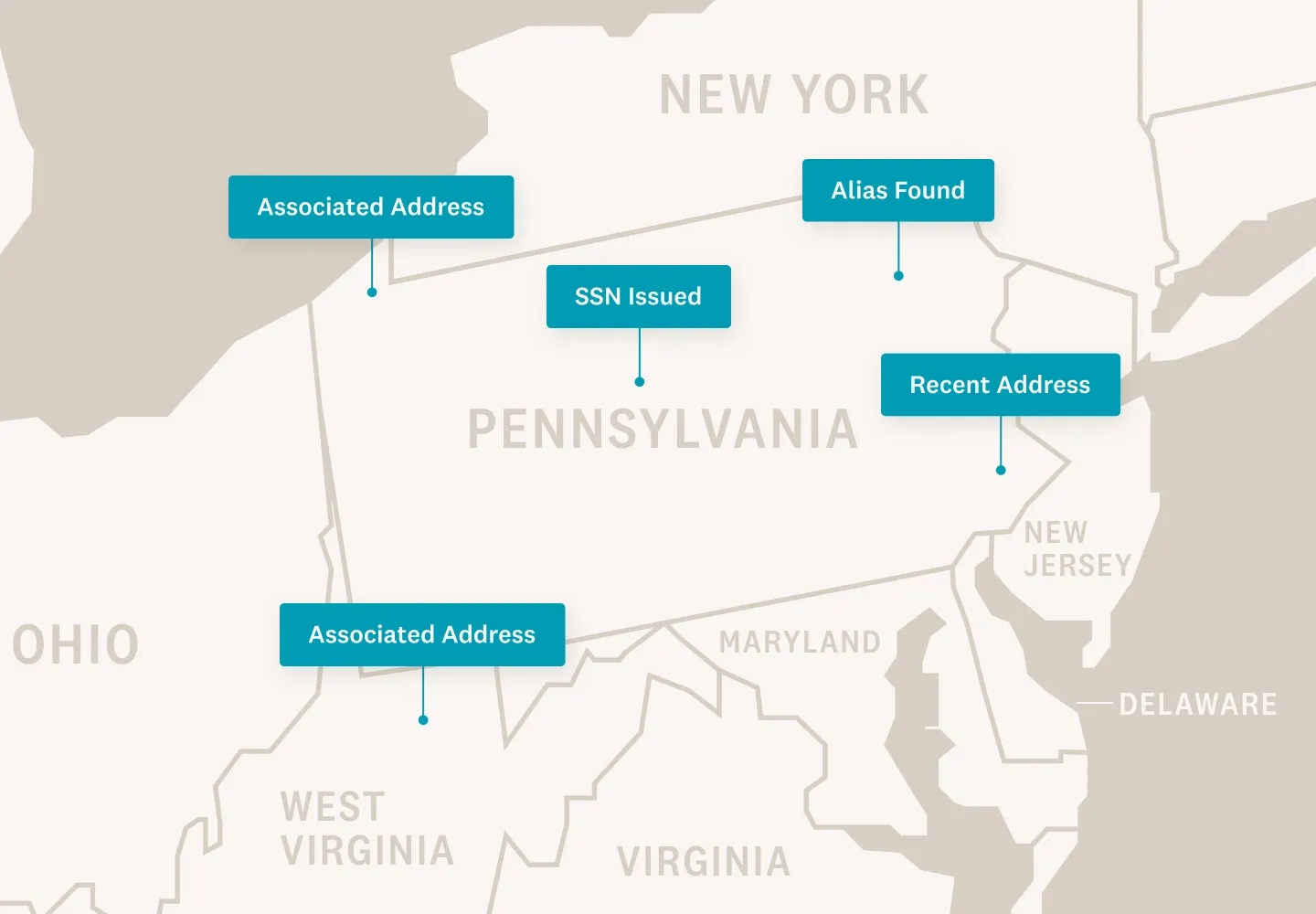
- SSN trace: Verifies identity and address history and helps determine which jurisdictions to search. Learn more about the SSN trace.
- Sex offender registry: A search of state and national registries. Learn more about the sex offender registry search.
- Global watchlist search: Screening against government sanctions lists and international watchlists, a standard step in financial services. Learn more about global watchlist searches.
- Credit history: Because bank employees handle money and sensitive financial data, employment credit checks are common, subject to state law limits.
- Employment and education verification: Confirmation of work history and degrees, especially for professional and licensed roles.
- Drug screening: Some positions or locations may include pre-employment drug testing.
Candidates should review their disclosure and consent forms to see which searches apply to their role.
How far back can the U.S. Bank background check go?
Under the FCRA, most negative information other than convictions generally cannot be reported once it is more than seven years old, and salary-based exceptions can apply for higher-paying roles; convictions can often be reported further back under federal law. Some states impose stricter limits. Separately, federal banking rules under Section 19 of the FDI Act are not bound by the seven-year framework for the specific offense categories they cover, so certain older convictions can still affect eligibility for bank employment unless regulatory relief applies.
Does U.S. Bank hire felons?
Decisions are typically made case by case, but banking is different from most industries: federal law restricts insured banks from hiring individuals with convictions for offenses involving dishonesty, breach of trust, or money laundering unless an exception or regulatory consent applies. Recent reforms, including the Fair Hiring in Banking Act, have narrowed these restrictions, excluding certain older and minor offenses. For convictions outside these categories, employers generally weigh the nature, age, and relevance of the offense. Many states and cities also have "ban-the-box" laws limiting when criminal history can be discussed. Candidates with records should answer honestly and be prepared to provide context.
What are U.S. Bank background check requirements?
Candidates will typically be asked to sign a written disclosure and authorization form before screening begins, as the FCRA requires. Applicants should be prepared to provide accurate personal information, including full legal name, date of birth, Social Security number, and address history, along with proof of identity and work authorization. Roles that are licensed or registered, such as certain mortgage or investment positions, may require fingerprinting and regulatory registration steps. Accurate information helps searches run in the right jurisdictions and keeps the process on schedule.
What is the FCRA and how does it protect candidates?
The Fair Credit Reporting Act is a federal law that governs how consumer reporting agencies collect, use, and share background check information, including both criminal history and credit reports used for employment. It requires written consent before a report is run, and before an employer takes adverse action based on the results, the candidate must receive a copy of the report and a summary of rights, plus an opportunity to dispute inaccuracies. For a deeper overview of the FCRA and related EEOC guidance, see this introduction to the Fair Credit Reporting Act (FCRA).
Order your own background check
Running a personal background check with Checkr lets you preview what U.S. Bank may see and helps you identify potential inaccuracies before they affect your job application. In one secure report you can review:
- Criminal history searches: Search databases and registries; SSN trace, sex offender registry, global watchlists, plus national, county, state, and federal court records.
- Motor vehicle records: Search a state's DMV, confirm your driver's license, and identify driving incidents.
- Employment verification: Review your work history as it appears in third-party databases.
Create your report in minutes at Checkr Personal Background Checks. To showcase verified credentials proactively, build a free Checkr Profile you can share with recruiters, hiring managers, or potential employers.
Are you a candidate with an open background check with Checkr?
Check your report status in the Candidate Portal. Or, visit the Checkr Help Center for FAQs, dispute steps, and to contact support.
Run a personal background check
Are you an organization? Run candidate background checks here >
Disclaimer
The resources and information provided here are for educational and informational purposes only and do not constitute legal advice. Always consult your own counsel for up-to-date legal advice and guidance related to your practices, needs, and compliance with applicable laws.

Run a personal background check today.
Preview your own background check results to see what employers might see.