Checkr is trusted by 140k+ businesses and 80 million individuals
Ready to run background checks the modern way?
Frequently asked questions
U.S. Probation Office: Company Profile & Background Check FAQs
The U.S. Probation Office is the local office of the federal judiciary's probation and pretrial services system, whose officers investigate and supervise people charged with or convicted of federal crimes. Job seekers considering a role with a U.S. Probation Office often want to understand how the U.S. Probation Office background check works before they apply. This article covers what candidates can generally expect from the screening process, the roles the system hires for, and how federal court suitability checks differ from a typical private employer's screening.
Run a personal background check
Are you an organization? Run candidate background checks here >
U.S. Probation Office: Agency overview
U.S. Probation and Pretrial Services is a national system within the federal judiciary, and the individual U.S. Probation Offices located in each court district are where its officers work. According to the federal courts' website, the system's officers are responsible for pretrial services, presentence investigations, and post-conviction supervision, and they are described as the eyes and ears of the federal courts. The system's stated mission is to facilitate the fair administration of justice, enhance public safety, and positively affect the lives of people who become involved with the federal courts.
The system is decentralized, with operations in all 94 federal court districts. In some districts, probation and pretrial services are separate offices, while in others they are combined. The Judicial Conference of the United States sets policy for the system, and the Administrative Office of the U.S. Courts supports implementation of that policy. The probation system dates to the Probation Act of 1925, signed by President Calvin Coolidge.
Because each district runs its own office, there is no single hiring office behind the name "U.S. Probation Office." Hiring is generally handled at the court level, and openings are listed through the Judiciary's careers site. Candidates should treat the vacancy announcement for the specific district and position as the authoritative source on requirements.
The workforce includes probation and pretrial services officers, officer assistants, and other professional staff in information technology, budgeting, human resources, and administrative support. Officers conduct investigations for the court, which can involve interviewing people charged with or convicted of crimes and reviewing records such as criminal histories, court records, school and military records, and employment histories. They also prepare reports for judges and supervise people released to the community. Probation and pretrial services officers are federal law enforcement officers and district court employees.
Company culture and employee programs:
Officers are trained through the Federal Probation and Pretrial Services Academy, while officer assistants receive training in the district where they work. The Judiciary's careers pages also describe benefit programs and family-friendly flexibilities for employees. Benefits, pay, and schedules may vary by position and district, so candidates should confirm specifics in the vacancy announcement.
U.S. Probation Office background check FAQs
Can the U.S. Probation Office run background checks?
Yes. Employers in the federal courts and law enforcement sector, including the U.S. Probation Office, are legally permitted to run pre-employment background checks, provided they follow applicable federal law and Judiciary policy. In the United States, background screening through a consumer reporting agency is governed by the Fair Credit Reporting Act (FCRA), which sets rules for consent, disclosure, and adverse action. Federal court employers also run suitability checks of their own, such as fingerprint-based checks and background investigations, under federal rules and Judiciary policy.
Does the U.S. Probation Office do background checks?
Yes, the federal Judiciary states that all Judiciary candidates must complete an employment suitability process that includes electronic background checks. Its employment eligibility page says every Judiciary employee, including interns, volunteers, and contractors, is fingerprinted as part of the background check process and must be found suitable before onboarding. The components that apply may vary by position and its sensitivity level, so candidates should read the pre-employment requirements for the specific opening.
What is the U.S. Probation Office hiring process?
The U.S. Probation Office hiring process generally runs through a district's vacancy announcement, followed by screening, interviews, and a suitability process. Candidates typically find an opening through the Judiciary's job search, apply under the announcement's instructions, and meet citizenship requirements for Judiciary jobs. Announcements for officer positions have listed a four-year degree and specialized experience, and the best qualified candidates may be tested and interviewed. Finalists then undergo fingerprinting and a background check, and an example announcement from the Southern District of California describes a provisional appointment pending a favorable suitability determination by the court. Details vary by district, so the announcement for the specific job controls.
How long can a U.S. Probation Office background check take?
Timelines vary by position, because the Judiciary says the position and its sensitivity level determine which suitability components apply. Electronic checks and fingerprints may return quickly, while a full background investigation for a law enforcement officer role may take longer. Candidates who want to understand typical timelines in more detail can review background check turnaround times.
What can be revealed in a U.S. Probation Office background check?
A U.S. Probation Office background check may reveal criminal history, identity details, employment and education records, and drug screening or medical results for officer roles. The specific components depend on the position and are set by the court and the Judiciary. For a federal probation role, screening may include some or all of the following:
- Criminal history: Fingerprint-based and database searches of national, county, state, and federal court records to identify convictions or pending charges. Learn more about criminal background checks.
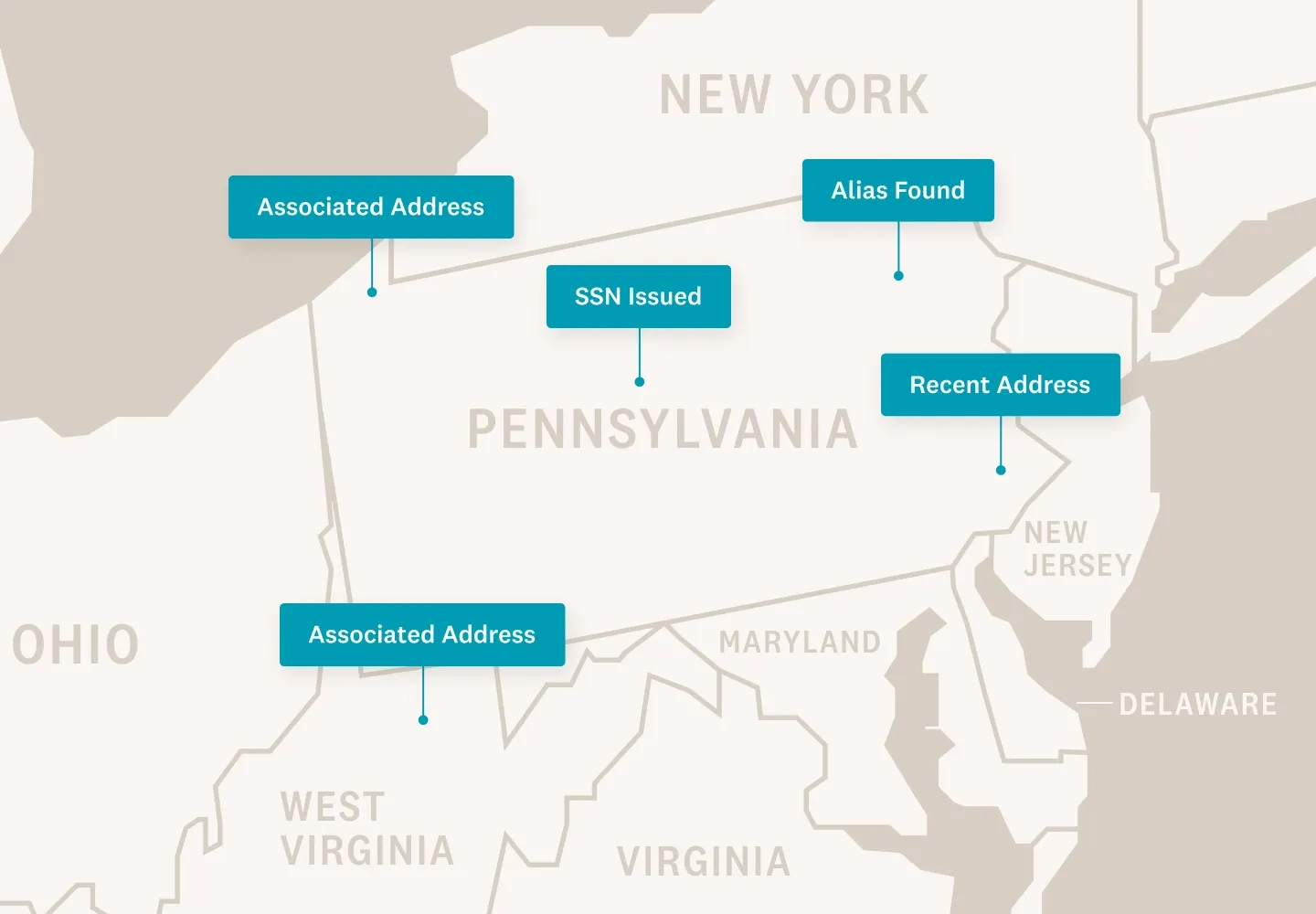
- SSN trace: A foundational search that verifies identity and surfaces address history. Learn more about SSN trace.
- Sex offender registry: A search of state and national registries. Learn more about sex-offender registry.
- Global watchlist search: A check of government watchlists and sanctions lists. Learn more about global watchlists.
- Employment and education verification: Confirmation of work history and degrees, since officer announcements have listed degree and experience requirements.
- Financial history: Some federal suitability reviews may look at financial records for certain positions, subject to applicable law.
- Medical exam and drug screening: The Judiciary says law enforcement officers complete a pre-employment medical examination and drug test.
Does the U.S. Probation Office drug test?
Yes, the Judiciary states that law enforcement officers are subject to pre-employment drug tests and to random drug tests as Judiciary employees. Because probation and pretrial services officers are federal law enforcement officers, this requirement may apply to officer positions, while other roles, such as some administrative positions, may not be tested. Candidates should check the vacancy announcement for the specific job. This answer reflects published Judiciary information and not a prediction for any individual case.
How far back can the U.S. Probation Office background check go?
The lookback period for a background check depends on the type of search and the laws of the state or country where the candidate lives or worked. In the United States, the FCRA generally limits consumer reporting agencies from reporting most negative information older than seven years, with certain exceptions for higher-salary positions and specific record types such as convictions. Some states have stricter limits. Candidates with records in multiple jurisdictions may see different lookback windows applied to different searches within the same report.
Does the U.S. Probation Office hire felons?
The U.S. Probation Office does not publish a list of disqualifying offenses on the pages reviewed, and candidates must be found suitable through the Judiciary's employment suitability process. Because officers are federal law enforcement officers who supervise people involved with the federal courts, criminal history is typically examined closely for officer roles, and decisions may vary by position, district, and the facts of a record. Many states and cities have enacted "ban-the-box" laws that limit when private employers can ask about criminal history, but how such laws apply to a federal court employer may differ, so candidates should read the announcement carefully. Candidates are encouraged to answer every question on an application honestly and completely.
What are U.S. Probation Office background check requirements?
Candidates will typically be asked for written consent, fingerprints, and accurate personal information before suitability checks begin. Candidates should be prepared to supply their full legal name, date of birth, Social Security number, address history, and work history. To apply for a Judiciary job, candidates must meet the courts' citizenship requirements, so proof of eligibility may also be needed. Providing accurate information helps ensure searches are run in the correct jurisdictions and can prevent delays.
What is the FCRA and how does it protect candidates?
The Fair Credit Reporting Act is a US federal law that governs how consumer reporting agencies collect, use, and share background check information. Under the FCRA, employers must obtain written consent before running a background check, provide a copy of the report and a summary of rights if they intend to take adverse action based on the results, and allow the candidate an opportunity to dispute inaccurate information before a final decision is made. For a detailed overview of how the FCRA applies to background checks, visit Fair Credit Reporting Act (FCRA).
What are the requirements to become a U.S. probation officer?
Officer announcements have required U.S. citizenship, a four-year degree in a related field, and specialized experience, along with passing a suitability process. An example announcement from the Southern District of California also described a full-field background investigation, a pre-appointment medical examination and drug screening, ongoing random drug screening, and updated background investigations every five years. That announcement is several years old, so current requirements may differ. Officer assistants must be high school graduates or the equivalent, are not authorized to carry firearms, and do not attend the officer academy.
Other government employers
Order your own background check
Running a personal background check with Checkr lets you preview what U.S. Probation Office may see and help you identify potential inaccuracies before they affect your job application. In one secure report you can review:
- Criminal history searches: Search databases and registries; SSN trace, sex-offender registry, global watchlists, plus national, county, state, and federal court records.
- Motor vehicle records: Search a state's DMV, confirm driver's license, and identify driving incidents.
- Employment verification: Review your work history as it appears in third-party databases.
Create your report in minutes at Checkr Personal Background Checks. To showcase verified credentials proactively, build a free Checkr Profile you can share with recruiters, hiring managers, or potential employers.
Are you a candidate with an open background check with Checkr?
Check your report status in the Candidate Portal. Or, visit the Checkr Help Center for FAQs, dispute steps, and to contact support.
Run a personal background check
Are you an organization? Run candidate background checks here >
Disclaimer
The resources and information provided here are for educational and informational purposes only and do not constitute legal advice.

Run a personal background check today.
Preview your own background check results to see what employers might see.