Checkr is trusted by 140k+ businesses and 80 million individuals
Ready to run background checks the modern way?
Frequently asked questions
United States Postal Service: Company Profile & Background Check FAQs
The United States Postal Service (USPS) is an independent agency of the federal government that delivers mail and packages to homes and businesses across the country. Because USPS is one of the largest civilian employers in the United States, many job seekers want to understand the agency's hiring requirements and screening practices before applying. This article covers what candidates can generally expect from the USPS background check process, from application through onboarding.
Run a personal background check
Are you an organization? Run candidate background checks here >
United States Postal Service: Company overview
The Postal Service traces its roots to 1775, when the Second Continental Congress appointed Benjamin Franklin as the first Postmaster General, and postal service became a permanent fixture of the federal government with the Post Office Act of 1792. The modern USPS was created by the Postal Reorganization Act, which transformed the old Post Office Department into an independent establishment of the executive branch in 1971. USPS is headquartered in Washington, DC, is self-funded primarily through the sale of postage, products, and services, and operates under a universal service obligation to serve every American address.
The scale of the operation is enormous. According to USPS postal facts, the agency delivered to approximately 170.4 million delivery points in fiscal year 2025, operated 30,972 retail offices, and maintained 236,347 delivery routes across the United States. USPS reported 531,261 career employees in 2025, and it also relies on non-career workforce categories such as city carrier assistants, rural carrier associates, postal support employees, and mail handler assistants, which are common entry points into postal careers.
USPS roles span far more than the familiar letter carrier. The workforce includes mail processing clerks and mail handlers in plants, retail associates in post offices, truck drivers and vehicle maintenance technicians, custodians, engineers, IT professionals, inspectors, and administrative staff. Because postal employees handle the public's mail, and many drive postal vehicles daily, screening is a formal, standardized part of the federal hiring process.
Company culture and employee programs: As a federal employer, USPS offers structured pay scales, union representation for most craft positions, and defined paths from non-career to career status. Career employees are generally eligible for federal-style benefits, while non-career roles have more limited benefits that vary by position. Veterans may receive preference in hiring under federal law. Common entry-level roles include:
- City and rural mail carriers (including assistant and associate roles)
- Mail handlers and processing clerks
- Retail sales and service associates
- Tractor-trailer operators and maintenance staff
USPS background check FAQs
Can USPS run background checks?
Yes. Employers in the postal and delivery industry, including the United States Postal Service, are legally permitted to conduct background checks on job candidates. Private-sector screening through a consumer reporting agency is governed by the Fair Credit Reporting Act (FCRA), which requires disclosure, consent, and adverse action procedures. As a federal entity, USPS also follows federal hiring and suitability procedures, which include criminal history reviews, and roles involving driving include a review of the applicant's driving record.
Does USPS do background checks?
Yes, USPS is widely reported to screen applicants as a standard part of its hiring process, which is consistent with federal employment practice. Postal screening typically includes a criminal history review and, for driving positions, a motor vehicle record review, along with employment history verification. Certain positions may involve additional review, and the exact process may vary by role, facility, and the sensitivity of the position, so applicants should follow the instructions in their job posting and pre-hire communications.
What is the USPS hiring process?
The USPS hiring process runs through the agency's online job portal. Candidates create a profile, apply to specific postings, and, for many roles, complete a Virtual Entry Assessment. Applicants who advance may be invited to an interview or directly to pre-employment steps, which commonly include a criminal background review, a drug screen, and, for driving roles, a review of the applicant's driving record and a road test in some cases. Candidates who clear screening receive job offers contingent on completing orientation and any required training.
Does USPS require a drug test?
USPS is generally reported to require applicants to pass a pre-employment drug screening, consistent with its status as a drug-free workplace employer. Requirements can vary by position, and safety-sensitive roles, such as those involving commercial driving, are subject to additional federal drug and alcohol testing rules. Applicants should review their pre-hire instructions for specifics on when and where testing occurs.
How long can a USPS background check take?
Timelines vary based on the applicant's history, the jurisdictions that must be checked, and hiring volume at the facility. Some candidates clear screening in a matter of days, while others, particularly those with long multi-state address histories or records that require manual review, may wait longer. Candidates who want to understand what drives screening timelines can review background check turnaround times.
What can be revealed in a USPS background check?
Screening components depend on the position. For postal roles, a background review may include some or all of the following:
- Criminal history: Reviews of criminal records, which for federal hiring can include FBI fingerprint-based checks in addition to searches of county, state, and federal court records.
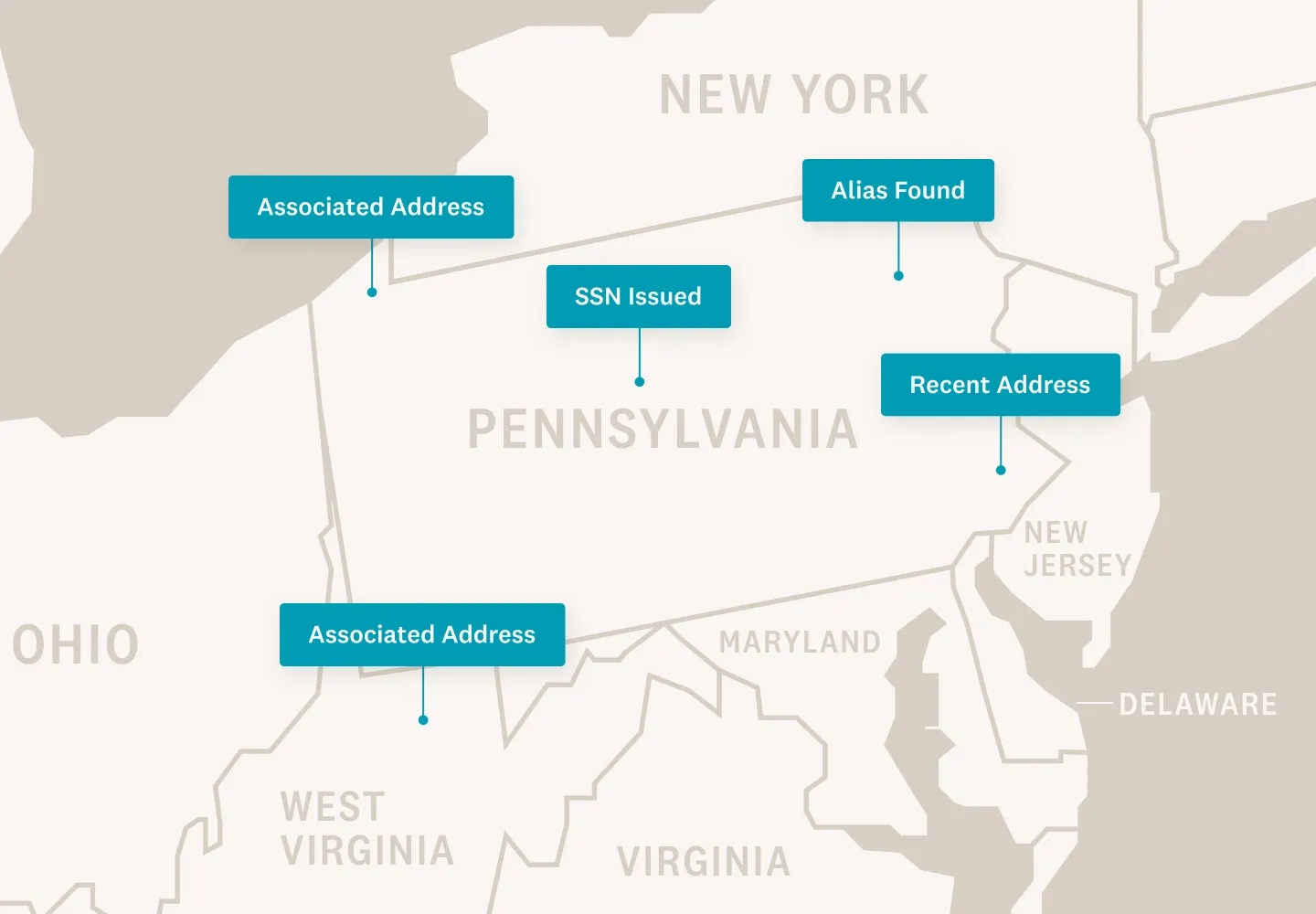
- SSN trace: An identity and address history search that helps determine which jurisdictions to check. Learn more about the SSN trace.
- Sex offender registry: A search of state and national sex offender registries. Learn more about the sex offender registry.
- Global watchlist search: A check of government watchlists and sanctions databases. Learn more about global watchlists.
- Motor vehicle record (MVR): A review of license status and driving history, standard for carrier and driving positions.
- Employment verification: Confirmation of prior work history, often covering recent years of employment.
- Drug screening: Pre-employment testing, with ongoing testing requirements for safety-sensitive roles.
Applicants should read all pre-employment forms carefully to understand which checks apply to their position.
How far back can the USPS background check go?
Lookback periods depend on the type of check and applicable rules. When a consumer reporting agency prepares a report, the FCRA generally limits reporting of most negative information to seven years, with criminal convictions often reportable for longer depending on state law. Federal suitability reviews follow their own standards and may consider an applicant's recent history of employment and conduct, commonly focusing on the past several years. Applicants with older records should be prepared to provide accurate information and context if asked.
Does USPS hire felons?
USPS does not automatically disqualify applicants with criminal records, and suitability decisions are generally made case by case. Reviewers typically consider the nature and seriousness of the offense, how much time has passed, evidence of rehabilitation, and the duties of the position. Federal hiring practices and many state and local "ban-the-box" laws delay criminal history inquiries until later in the hiring process. Applicants with records should answer all questions truthfully, since dishonesty on a federal application can itself be disqualifying.
What are USPS background check requirements?
Applicants will be asked to authorize screening and to provide accurate personal information, typically including full legal name, date of birth, Social Security number, address history, and employment history. Driving positions require a valid driver's license and a driving record that meets postal safety standards. Providing complete, accurate information helps the review move quickly and avoids delays caused by mismatched records.
What is the FCRA and how does it protect candidates?
The Fair Credit Reporting Act is a US federal law that governs how consumer reporting agencies collect, use, and share background check information. When an employer uses a consumer reporting agency, it must obtain written consent before running the check, and before taking adverse action it must provide the candidate a copy of the report and a summary of rights, along with an opportunity to dispute inaccurate information. For a detailed overview of the Fair Credit Reporting Act (FCRA) and EEOC guidance on using criminal records in hiring, review Checkr's introduction.
Order your own background check
Running a personal background check with Checkr lets you preview what USPS may see and helps you identify potential inaccuracies before they affect your application. In one secure report you can review:
- Criminal history searches: Search databases and registries; SSN trace, sex offender registry, global watchlists, plus national, county, state, and federal court records.
- Motor vehicle records: Search a state's DMV, confirm your driver's license, and identify driving incidents.
- Employment verification: Review your work history as it appears in third-party databases.
Create your report in minutes at Checkr Personal Background Checks. To showcase verified credentials proactively, build a free Checkr Profile you can share with recruiters, hiring managers, or potential employers.
Are you a candidate with an open background check with Checkr?
Check your report status in the Candidate Portal. Or, visit the Checkr Help Center for FAQs, dispute steps, and to contact support.
Run a personal background check
Are you an organization? Run candidate background checks here >
Disclaimer
The resources and information provided here are for educational and informational purposes only and do not constitute legal advice. Always consult your own counsel for up-to-date legal advice and guidance related to your practices, needs, and compliance with applicable laws.

Run a personal background check today.
Preview your own background check results to see what employers might see.