Checkr is trusted by 140k+ businesses and 80 million individuals
Ready to run background checks the modern way?
Frequently asked questions
U.S. Xpress: Company Profile & Background Check FAQs
U.S. Xpress is a major American trucking company that provides truckload shipping and dedicated transportation services across the United States. Drivers and other job seekers considering a role with the carrier often want to understand its hiring requirements and screening practices before applying. This article covers what candidates can generally expect from the U.S. Xpress background check process, along with an overview of the company and answers to common hiring questions.
Run a personal background check
Are you an organization? Run candidate background checks here >
U.S. Xpress: Company overview
U.S. Xpress was founded in 1985 by Max Fuller and Patrick Quinn and is headquartered in Chattanooga, Tennessee. The carrier grew rapidly through the 1990s, going public in 1994 and acquiring transportation companies around the country; by 1998 it ranked among the largest publicly traded trucking firms in the United States. The founders took the company private again in 2007, and it returned to the public markets in 2018.
In 2023, Knight-Swift Transportation Holdings, one of North America's largest truckload carriers, acquired U.S. Xpress in a deal valued at approximately 808 million US dollars. U.S. Xpress has operated as a subsidiary of Knight-Swift since then, continuing to run under its own brand out of Chattanooga.
The company's services center on over-the-road truckload shipping and dedicated contract carriage, in which trucks and drivers are committed to specific customer freight networks. According to Wikipedia, as of 2025 U.S. Xpress fields a dedicated fleet of 2,000 trucks with 2,300 drivers and operates eleven terminals across the United States. Its workforce includes company drivers, owner-operators who contract with the carrier, and office staff in operations, fleet management, maintenance, safety, recruiting, and other corporate functions.
Company culture and employee programs:
As a large trucking employer, U.S. Xpress recruits both experienced drivers and newer drivers building their careers, and it has offered dedicated, over-the-road, and team driving configurations. Driver pay, home time, and benefits vary by route type, region, and experience level, while corporate roles follow more traditional schedules at its Chattanooga headquarters and terminal locations. Candidates should confirm current pay packages, benefits, and training options with a recruiter, as offerings change over time.
U.S. Xpress background check FAQs
Can U.S. Xpress run background checks?
Yes. Employers in the trucking and transportation industry, including U.S. Xpress, are legally permitted to conduct pre-employment background checks, provided they follow applicable federal, state, and local laws. In the United States, employment screening is governed by the Fair Credit Reporting Act (FCRA), which requires written consent, clear disclosures, and adverse action procedures. Trucking companies are also regulated by the Federal Motor Carrier Safety Administration (FMCSA), which imposes additional screening obligations for drivers of commercial motor vehicles.
Does U.S. Xpress do background checks?
U.S. Xpress is generally reported to conduct background checks on driver applicants and other hires, which is standard, and in many respects federally required, practice in the trucking industry. For commercial drivers, Department of Transportation (DOT) regulations require carriers to review driving records, verify safety history with previous DOT-regulated employers, and conduct pre-employment drug testing. The specific scope of a U.S. Xpress background check may vary by position, and office roles may involve a narrower screening than driving jobs.
What is the U.S. Xpress hiring process?
For drivers, the hiring process typically starts with an application that collects licensing, employment, and accident history details. Recruiters generally review qualifications and driving experience, and qualified candidates move on to consent-based screening that commonly includes a motor vehicle record review, verification of prior DOT-regulated employment, a DOT physical if a current medical certificate is not on file, and a pre-employment drug test. Approved drivers then complete orientation before being assigned to a fleet. Office and corporate candidates follow a more conventional path of interviews followed by a background check after a conditional offer.
How long can a U.S. Xpress background check take?
Turnaround time depends on the searches involved and how quickly courts, state driving record systems, and former employers respond. Many background checks are completed within a few business days, though verifying several years of employment history with multiple past carriers can extend the timeline. Candidates can learn more by reviewing background check turnaround times.
What can be revealed in a U.S. Xpress background check?
Each employer determines which screenings to include, and DOT regulations shape what trucking companies must review for driver roles. For a position at a carrier like U.S. Xpress, a background check may include some or all of the following:
- Criminal history: Searches of national criminal databases and county, state, and federal court records for convictions or pending charges.
- Motor vehicle records (MVR): A review of the candidate's driving record, license class and status, endorsements, violations, and accidents, a core component for any commercial driving role.
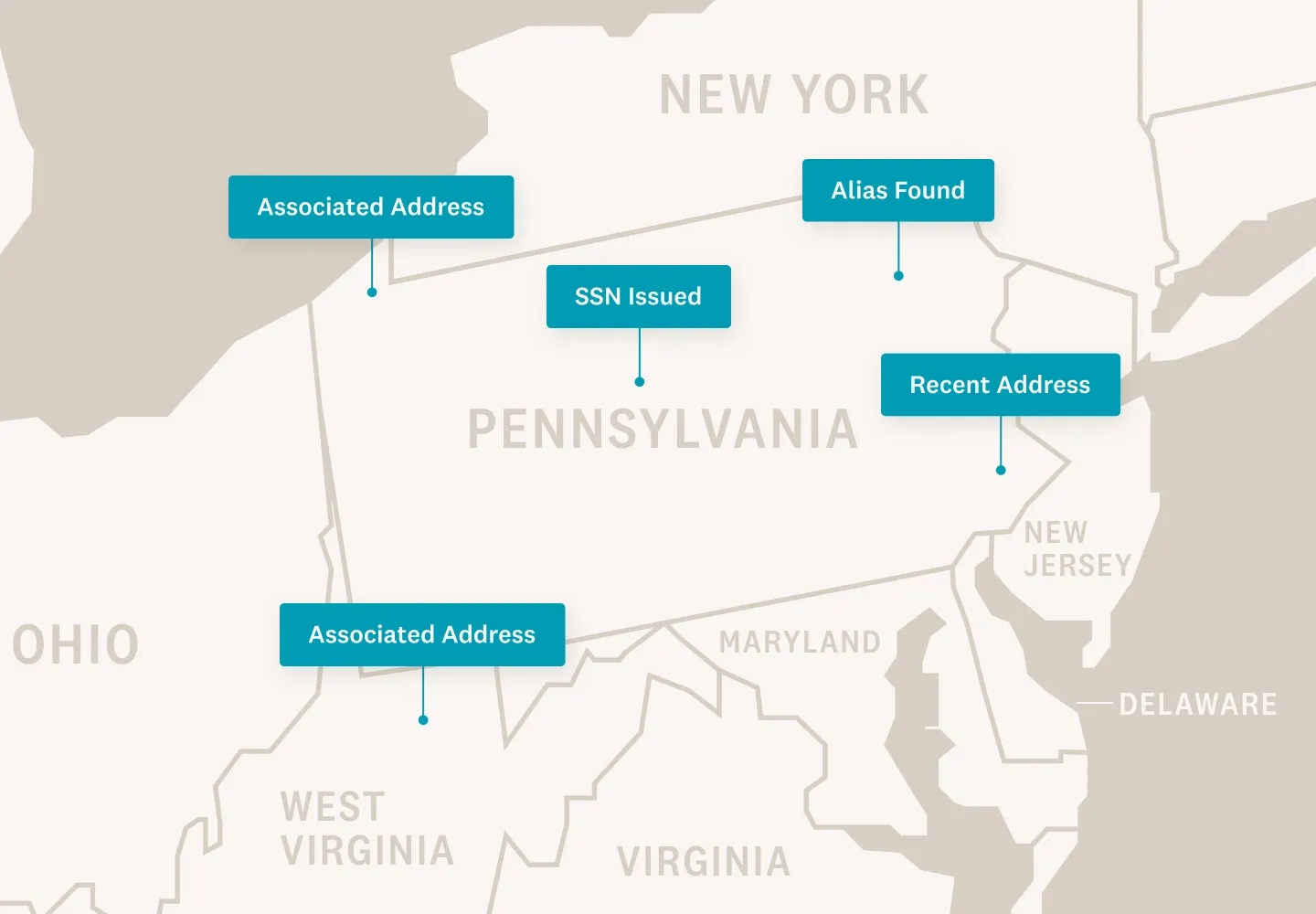
- SSN trace: A foundational identity search that verifies a candidate's Social Security number and surfaces address history to guide which jurisdictions are searched. Learn more about SSN trace.
- Sex offender registry: A search of state and national sex offender registries. Learn more about the sex offender registry.
- Global watchlist search: A check of government sanctions lists and international databases. Learn more about global watchlists.
- Employment verification: Confirmation of work history, including the DOT-required safety performance history from previous regulated employers.
- Drug and alcohol screening: DOT regulations require pre-employment drug testing for CDL drivers, along with a query of the FMCSA Drug and Alcohol Clearinghouse.
Candidates should review the disclosure and consent forms provided during hiring to understand which searches apply to their role.
How far back does the U.S. Xpress background check go?
Lookback periods vary by search type and applicable law. Under the FCRA, most negative information older than seven years generally cannot be reported by consumer reporting agencies, though criminal convictions can often be reported further back and some exceptions apply. For drivers, DOT rules require carriers to investigate the previous three years of safety performance history with DOT-regulated employers, and driving record reviews typically cover the period reported by each state. State laws can impose stricter limits on criminal history reporting, so windows may differ across a single report.
Does U.S. Xpress hire felons?
U.S. Xpress does not publicly publish a detailed policy on hiring candidates with felony records, and decisions are typically made on a case-by-case basis. In trucking, factors often include the nature of the offense, how long ago it occurred, its relevance to operating a commercial vehicle, and any restrictions tied to specific freight or customer requirements. Many states have adopted "ban-the-box" laws that limit when employers can ask about criminal history. Candidates with records should be honest on their application and prepared to discuss their history with a recruiter.
What are U.S. Xpress background check requirements?
Driver applicants will typically be asked to provide written consent for a background check, along with a valid commercial driver's license, Social Security number, date of birth, address history, and a detailed accounting of recent employment, including any DOT-regulated positions. Candidates should also expect a pre-employment drug test and a DOT medical certification requirement for driving roles. Providing accurate, complete information helps verifications go smoothly and prevents delays in orientation scheduling.
What is the FCRA and how does it protect candidates?
The Fair Credit Reporting Act is a federal law that governs how consumer reporting agencies collect, use, and share background check information, including the driving records and employment verifications used in trucking. Under the FCRA, employers must obtain written permission before ordering a background check, and if they intend to take adverse action based on the results, they must provide a copy of the report and a summary of rights, then allow the candidate time to dispute inaccurate information. For more on how the FCRA and Equal Employment Opportunity Commission (EEOC) guidance apply to hiring, see this introduction to the Fair Credit Reporting Act (FCRA).
Order your own background check
Running a personal background check with Checkr lets you preview what U.S. Xpress may see and helps you identify potential inaccuracies before they affect your application. In one secure report you can review:
- Criminal history searches: Search databases and registries; SSN trace, sex offender registry, global watchlists, plus national, county, state, and federal court records.
- Motor vehicle records: Search a state's DMV, confirm driver's license, and identify driving incidents.
- Employment verification: Review your work history as it appears in third-party databases.
Create your report in minutes at Checkr Personal Background Checks. To showcase verified credentials proactively, build a free Checkr Profile you can share with recruiters, hiring managers, or potential employers.
Are you a candidate with an open background check with Checkr?
Check your report status in the Candidate Portal. Or, visit the Checkr Help Center for FAQs, dispute steps, and to contact support.
Run a personal background check
Are you an organization? Run candidate background checks here >
Disclaimer
The resources and information provided here are for educational and informational purposes only and do not constitute legal advice. Always consult your own counsel for up-to-date legal advice and guidance related to your practices, needs, and compliance with applicable laws.


Run a personal background check today.
Preview your own background check results to see what employers might see.