Checkr is trusted by 140k+ businesses and 80 million individuals
Frequently asked questions
U.S. Department of Homeland Security: Company Profile & Background Check FAQs
The U.S. Department of Homeland Security (DHS) is a Cabinet-level federal agency created to secure the nation from a wide range of threats, from border and aviation security to cybersecurity and disaster response. Job seekers considering a federal career with DHS often want to understand how the DHS background check works before they apply. This article covers what applicants can generally expect from the DHS background check process and the federal hiring path, including how vetting may vary by component and position.
Run a personal background check
Are you an organization? Run candidate background checks here >
U.S. Department of Homeland Security: Agency overview
The Department of Homeland Security was established in 2002, combining 22 different federal departments and agencies into a unified, integrated Cabinet agency. Its stated mission is to secure the nation from the many threats it faces, and its website describes the work of more than 260,000 employees in jobs that range from aviation and border security to emergency response, and from cybersecurity analyst to chemical facility inspector.
DHS is organized into operational and support components, each with its own mission. They include U.S. Citizenship and Immigration Services (USCIS), the U.S. Coast Guard (the only military organization within DHS), U.S. Customs and Border Protection (CBP), the Cybersecurity and Infrastructure Security Agency (CISA), the Federal Emergency Management Agency (FEMA), the Federal Law Enforcement Training Centers (FLETC), U.S. Immigration and Customs Enforcement (ICE), the U.S. Secret Service and the Transportation Security Administration (TSA). Support offices such as the Management Directorate, the Science and Technology Directorate and the Office of Intelligence and Analysis round out the department. Because each component has its own mission and workforce, the roles available and the vetting that comes with them can differ considerably.
Most DHS jobs are posted on USAJOBS, the federal government's job site, and DHS publishes guidance on the federal application process and on veterans and military spouse employment. Some components, including CBP, also run their own recruiting pages. Federal positions are generally assigned a risk or sensitivity level, and the Office of Personnel Management (OPM), which serves as the Suitability Executive Agent under Executive Order 13467, provides guidance on suitability and fitness vetting, including a position designation tool. That framework is a large part of why a DHS background check can look different from a typical private-sector screening.
Company culture and employee programs: DHS describes its careers as a way to apply skills and talents to missions that include securing borders, airports, seaports and waterways, developing security technologies, responding to natural disasters and analyzing intelligence reports. Roles span law enforcement and inspection, emergency management, cybersecurity, scientific research, intelligence analysis, and administrative and technical support. Pay, benefits and schedules for federal positions are generally tied to the position's classification and federal rules rather than to DHS alone, so applicants should read each USAJOBS announcement closely for specifics. DHS also maintains resources for veterans and military spouses exploring federal careers.
U.S. Department of Homeland Security background check FAQs
Can DHS run background checks?
Yes. Federal agencies, including the U.S. Department of Homeland Security, are legally permitted to vet applicants and employees through background investigations under federal suitability and fitness rules. Private employers in the United States follow the Fair Credit Reporting Act (FCRA), while federal vetting is largely shaped by OPM's suitability and fitness framework. The FCRA may still apply when an agency relies on a report from a consumer reporting agency, and requirements may vary by position.
Does DHS do background checks?
DHS is generally reported to conduct background investigations on applicants and employees, with the depth of review typically tied to the position. This is consistent with federal practice, where positions are generally assigned a risk or sensitivity designation that sets the level of vetting. A role involving law enforcement, border security or intelligence duties may involve a more extensive review than an administrative role, and the process may vary by component.
What is the DHS hiring process?
The DHS hiring process typically starts with an application on USAJOBS and, for many roles, moves through a qualifications review, one or more interviews and a tentative job offer. After a tentative offer, applicants are usually asked to complete background investigation forms, and the offer generally becomes final once vetting is cleared. Steps, timing and any tests or assessments vary by component and position, so applicants should follow the instructions in each announcement. DHS explains the federal application process on its How to Apply page.
How long can a DHS background check take?
The length of a DHS background check varies with the position, its risk or sensitivity designation and how quickly records, references and agencies respond. Roles that call for a more extensive investigation, such as those involving law enforcement duties or access to classified information, may take longer than administrative roles. Applicants who want a general picture of typical timelines can review background check turnaround times.
What can be revealed in a DHS background check?
The components of a DHS background check depend on the position's designation and the level of investigation it requires. Depending on the role, a review may include some or all of the following:
- Criminal history: Searches of federal, state and local criminal records to identify convictions or pending charges. See how criminal background checks work.
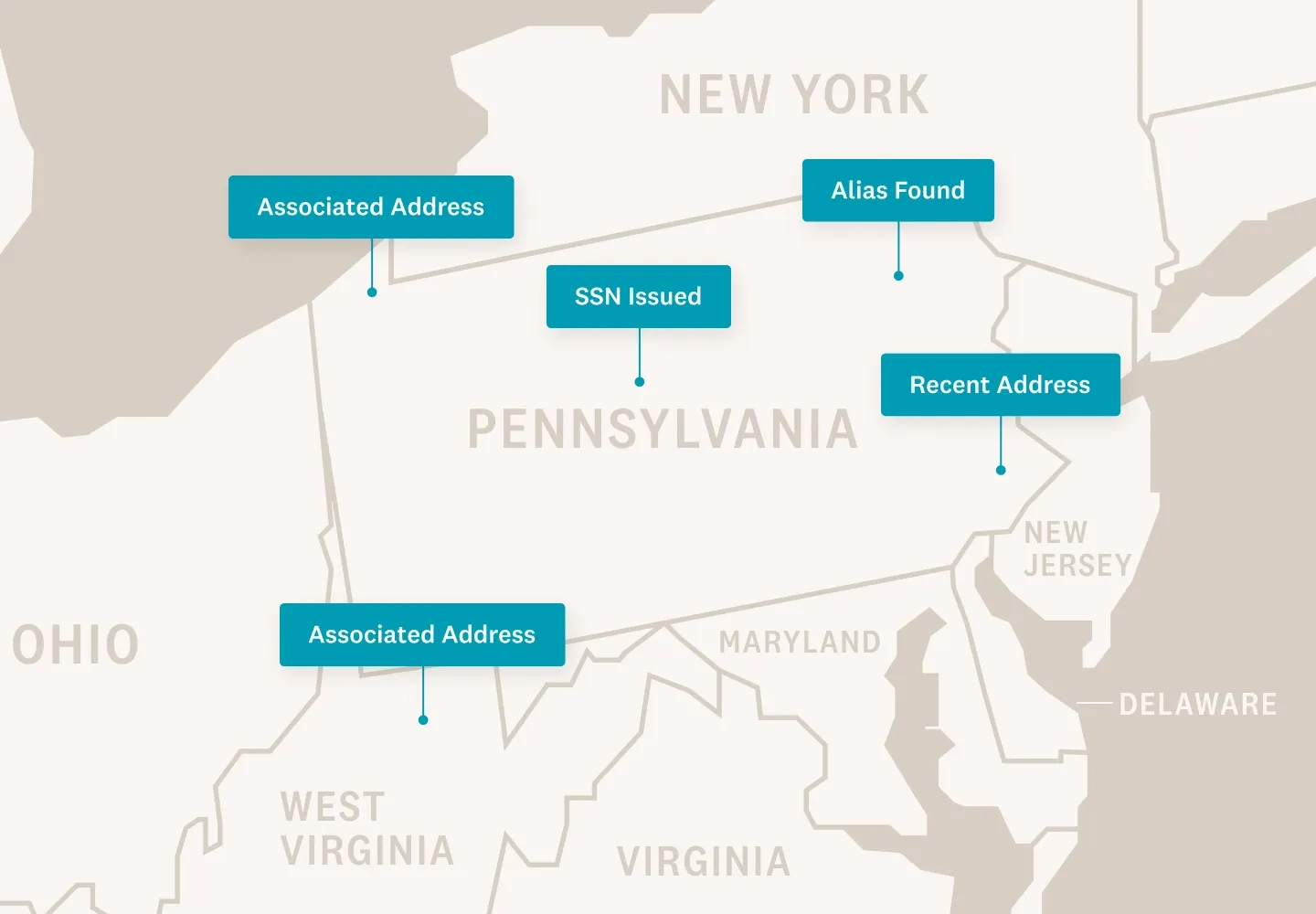
- SSN trace: A foundational search that confirms identity and surfaces address history, which helps determine where to search. Learn more about SSN trace.
- Sex offender registry: A search of state and national sex offender registries. Learn more about the sex-offender registry.
- Global watchlist search: A check of government watchlists, sanctions lists and other international databases. Learn more about global watchlists.
- Identity verification: Confirmation that an applicant is who they say they are, a common part of public-sector vetting. See identity verification.
- Employment verification: Confirmation of stated work history with previous employers. See employment verification.
- Financial history: Some positions with sensitive responsibilities may include a review of financial history.
- Drug screening: Certain positions may require a drug test as part of pre-employment screening.
Applicants should read the forms and notices they receive during the process to understand which reviews apply to their position.
Does DHS drug test?
DHS may require a drug test for certain positions, but whether one applies is generally reported to depend on the component and the specific role. Safety-sensitive, law enforcement and security-related positions may be more likely to involve testing than administrative roles. Job announcements typically state any testing requirement, so applicants should read the announcement for the position they are pursuing.
How far back can the DHS background check go?
The lookback period for a background check depends on the type of search and the laws of the state or country where the candidate lives or worked. In the United States, the FCRA generally limits consumer reporting agencies from reporting most negative information older than seven years, with certain exceptions for higher-salary positions and specific record types such as convictions. Some states have stricter limits. Candidates with records in multiple jurisdictions may see different lookback windows applied to different searches within the same report.
Does DHS hire felons?
A criminal record does not automatically keep someone from a federal job, according to OPM, and DHS is generally reported to review each applicant on a case-by-case basis. OPM says adjudicators may consider how the past conduct relates to the job, how long ago it occurred and how serious it was, and certain statutes can bar specific convictions from specific positions. Under the Fair Chance to Compete for Jobs Act, agencies are also generally limited in when they can ask about criminal history, and each job announcement states whether such questions may be asked before a tentative offer. OPM explains this on its criminal history inquiries help page. That federal rule is separate from state and local "ban-the-box" laws, which apply to many private employers. Applicants are encouraged to answer questions truthfully.
What are DHS background check requirements?
Applicants should generally expect to provide detailed personal information and sign consent and disclosure forms before a DHS background investigation begins. This typically includes a full legal name, date of birth, Social Security number, residence history, employment and education history and references, and some positions require completion of additional federal vetting forms. Providing complete and accurate information helps avoid delays, and omissions or inaccuracies may affect the outcome. Each USAJOBS announcement lists the requirements for that specific position.
What is the FCRA and how does it protect candidates?
The Fair Credit Reporting Act is a US federal law that governs how consumer reporting agencies collect, use, and share background check information. Under the FCRA, employers must obtain written consent before running a background check, provide a copy of the report and a summary of rights if they intend to take adverse action based on the results, and allow the candidate an opportunity to dispute inaccurate information before a final decision is made. For a detailed overview of how the FCRA applies to background checks, visit Fair Credit Reporting Act (FCRA).
Do all DHS jobs require a security clearance?
No. A security clearance is generally required only for positions that need access to classified information, and many roles are filled through suitability or fitness vetting alone. OPM's guidance under Executive Order 13467 treats suitability for government employment, fitness for contractor employees and eligibility for access to classified national security information as related but distinct determinations. The designation of a specific position, which is stated in its job announcement, typically sets the level of vetting.
Other government employers
Order your own background check
Running a personal background check with Checkr lets you preview the kind of record information an employer or agency such as DHS may review and help you identify potential inaccuracies before they affect your job application. In one secure report you can review:
- Criminal history searches: Search databases and registries; SSN trace, sex-offender registry, global watchlists, plus national, county, state, and federal court records.
- Motor vehicle records: Search a state's DMV, confirm driver's license, and identify driving incidents.
- Employment verification: Review your work history as it appears in third-party databases.
Create your report in minutes at Checkr Personal Background Checks. To showcase verified credentials proactively, build a free Checkr Profile you can share with recruiters, hiring managers, or potential employers.
Are you a candidate with an open background check with Checkr?
Check your report status in the Candidate Portal. Or, visit the Checkr Help Center for FAQs, dispute steps, and to contact support.
Run a personal background check
Are you an organization? Run candidate background checks here >
Disclaimer
The resources and information provided here are for educational and informational purposes only and do not constitute legal advice. Always consult your own counsel for up-to-date legal advice and guidance related to your practices, needs, and compliance with applicable laws.

Run a personal background check today.
Preview your own background check results to see what employers might see.