United States Postal Service (USPS): Company Profile & Background Check FAQs
Want to see what's on your own background check? Use Checkr to preview your own background check results.
Checkr is trusted by 140k+ businesses and 80 million individuals
Ready to run background checks the modern way?
Frequently asked questions
United States Postal Service (USPS): Company Profile & Background Check FAQs
The United States Postal Service handles billions of mailpieces annually and employs hundreds of thousands of workers across the nation. As a federal agency responsible for secure mail delivery, USPS conducts thorough background checks and drug testing as part of its hiring process. Understanding the USPS background check requirements, typical timelines for running background checks, and drug testing policies can help you prepare for the application and screening process.
Run a personal background check
Are you an organization? Run candidate background checks here >
USPS: Company overview
The United States Postal Service traces its origins to 1775, when Benjamin Franklin was appointed the first Postmaster General. In 1971, the Post Office Department was reorganized as an independent agency of the federal government, becoming the USPS. Today, the organization operates as a self-funded federal agency that does not receive tax dollars for operating expenses and relies on the sale of postage, products, and services to fund operations.
USPS delivers mail and packages to more than 163 million addresses across all 50 states, US territories, and military bases worldwide. The organization employs approximately 640,000 workers, including both career and non-career employees. The USPS network includes thousands of post offices, stations, and branches, along with processing and distribution centers, vehicle maintenance facilities, and one of the largest civilian vehicle fleets in the world.
The agency's workforce includes:
- Letter carriers
- Mail handlers
- Mail processing clerks
- Sales associates
- Vehicle operators
- Vehicle technicians
- Maintenance staff
- Administrative personnel
Career positions include federal benefits such as health insurance, retirement plans through the Federal Employees Retirement System (FERS), participation in the Thrift Savings Plan, paid leave, and job security protections.
USPS employment data and workforce statistics are publicly available through the Postal Facts publication, which provides transparency into agency operations, delivery volume, financial performance, and employment data.
Frequently asked questions about USPS background checks
Can USPS run background checks?
Yes. As a federal agency handling mail delivery and operating facilities, USPS conducts criminal background checks on all prospective employees. The screening process helps USPS protect its mail, packages, customer information, and postal facilities. After making a conditional job offer, USPS will request a background check through the Postal Service's security office or an authorized consumer reporting agency (CRA).
How long can a USPS background check take?
USPS background checks typically take between two weeks to several months to complete. Federal background investigations are generally more extensive than standard employment screenings in the private sector. The timeline varies based on several factors:
- Position level: Entry-level positions like mail handler or clerk may complete faster than supervisory or security-sensitive roles.
- Investigation depth: Some positions may require basic checks while others may need more comprehensive federal background investigations.
- Record accessibility: Database searches complete quickly, but manual verification of court records, employment history, or reference checks can extend the timeline.
- Applicant history: Candidates with extensive employment or residence history across multiple states may require additional verification time
During peak hiring periods, background check processing times may increase due to high application volume. Checkr's guide to background check turnaround times provides additional context on screening timelines.
What can be revealed in a USPS background check?
USPS background checks are conducted according to federal standards and may include:
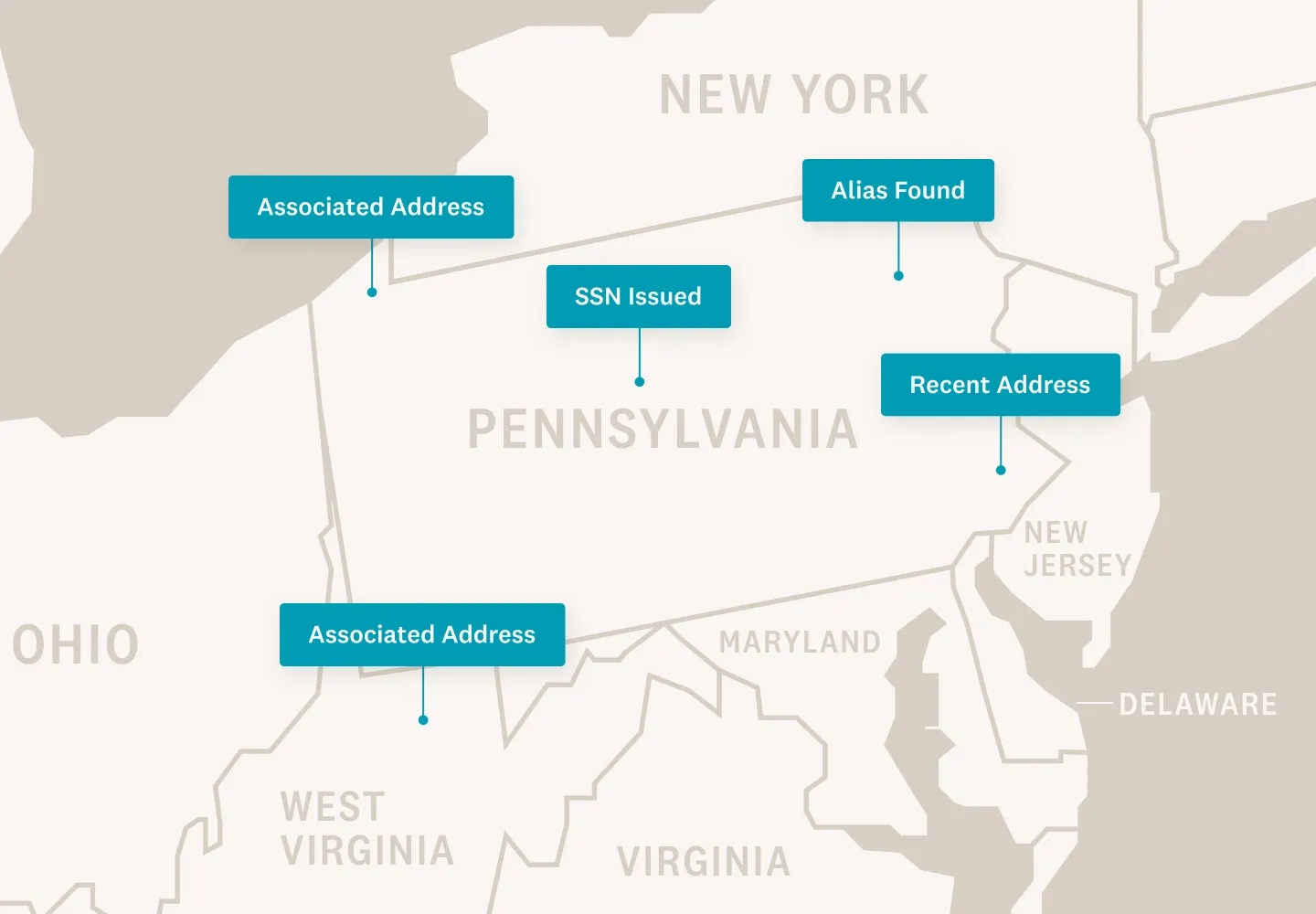
- Identity verification: SSN trace to confirm identity and report aliases or previous addresses
- Criminal history: County, state, federal, and national criminal record database searches; sex offender registry checks; global watchlists for terrorism or sanctions
- Driving records: Motor vehicle record (MVR) checks for positions requiring vehicle operation, including mail carriers and truck drivers
- Employment verification: Confirmation of previous job titles, dates of employment, and eligibility for rehire
- Education verification: Confirmation of degrees or certifications when required for the position
- Credit history: Financial background checks may be conducted for positions with financial responsibilities or access to sensitive data
- Reference checks: Contact with former supervisors, colleagues, or personal references
- Drug screening: Detecting whether drugs are present using a biological sample
Because USPS operates as a federal agency, background investigations follow guidelines from the Office of Personnel Management (OPM) and Postal Service regulations rather than solely private-sector standards.
How far back does a USPS background check go?
As a federal employer, USPS is not subject to the same state-level lookback restrictions that apply to private employers in many jurisdictions. Federal background checks typically review:
- Criminal history: USPS generally reviews an applicant's entire criminal history with no specific time limit, although the relevance and recency of offenses are considered in hiring decisions.
- Employment history: Verification typically covers the past 5 to 10 years of work history.
- Residence history: Address verification may look back 7 to 10 years.
- Driving records: MVR checks usually cover the past 3 to 7 years depending on state DMV record retention.
The depth of the background check may correlate with the security requirements of the position and the level of responsibility required by the role. Candidates that would have access to financial systems, secure facilities, vehicles, or sensitive mail may undergo more comprehensive reviews.
What is the FCRA and how does it protect candidates?
The Fair Credit Reporting Act (FCRA) establishes requirements for employers using consumer reports for employment purposes. Under the FCRA, employers must:
- Obtain written consent from candidates before ordering a background check
- Provide a copy of the report if it may result in adverse action
- Give candidates a pre-adverse action notice with sufficient time for the candidate to dispute inaccuracies
- Provide a final adverse action notice if the negative decision stands
While USPS operates as a federal agency and follows federal employment regulations, it generally adheres to FCRA principles when using third-party consumer reporting agencies. The Equal Employment Opportunity Commission (EEOC) also recommends individualized assessments of candidates’ criminal history, which consider the nature of the offense, when it occurred, and its relationship to job duties.
USPS also conducts random drug testing, reasonable suspicion testing, post-accident testing, and return-to-duty testing for current employees in safety-sensitive positions, particularly those operating vehicles or machinery.
Candidates should note that marijuana remains illegal under federal law even in states where it has been legalized for recreational or medical use. USPS, as a federal employer, maintains zero-tolerance policies for marijuana use regardless of state laws.
Does USPS drug test?
Yes. USPS requires pre-employment drug testing for all positions. The Postal Service follows federal drug-free workplace requirements and tests for substances including:
- Marijuana (THC)
- Cocaine
- Amphetamines
- Opiates
- Phencyclidine (PCP)
Drug testing typically occurs after a conditional job offer and before the initial start date. The test is usually administered at a designated collection site, and results are processed through a Medical Review Officer (MRO). The MRO reviews positive results and provides candidates an opportunity to explain legitimate medical reasons for positive findings.
USPS also conducts random drug testing, reasonable suspicion testing, post-accident testing, and return-to-duty testing for current employees in safety-sensitive positions, particularly those operating vehicles or machinery.
Candidates should note that marijuana remains illegal under federal law even in states where it has been legalized for recreational or medical use. USPS, as a federal employer, maintains zero-tolerance policies for marijuana use regardless of state laws.
Does USPS hire felons?
USPS considers applicants with criminal histories on a case-by-case basis. Having a felony conviction does not automatically disqualify a candidate from employment. The Postal Service evaluates:
- Nature of the offense: The type of crime and its relationship to postal duties
- Time elapsed: How long ago the conviction occurred
- Rehabilitation evidence: Steps taken toward rehabilitation, such as education, stable employment, or community involvement
- The role in question: Whether the conviction relates to job responsibilities
Certain offenses may result in permanent disqualification or extended ineligibility periods under Postal Service regulations. These typically include:
- Crimes involving mail theft or tampering
- Embezzlement or theft from the federal government
- Crimes of violence with sentences exceeding one year
- Sexual offenses that require registration
- Drug trafficking convictions
The USPS Suitability Screening Program evaluates criminal history according to federal regulations and internal policies. Candidates are encouraged to be honest and complete when disclosing criminal history on applications; providing false information can result in disqualification or termination.
What are USPS background check disqualifiers?
Common factors that may disqualify candidates during USPS background screening include:
- Felony convictions for mail-related crimes: Theft, destruction, or obstruction of mail; mail fraud
- Convictions for crimes against the United States: Espionage, treason, or sabotage
- Drug trafficking convictions: Sale or distribution of controlled substances
- Recent or serious criminal history: Violent crimes, sexual offenses, or patterns of criminal behavior
- Positive drug test results: Testing positive for prohibited substances during pre-employment screening
- Falsification of application materials: Providing false information about work history, education, or criminal background
- Failure to meet citizenship requirements: Most USPS positions require US citizenship or permanent resident status
- Inability to pass required assessments: Failure to pass the Virtual Entry Assessment (VEA) or other position-specific exams
- Poor driving record: For positions requiring vehicle operation, excessive violations, DUI convictions, or license suspensions
- Failure to meet physical requirements: Inability to pass medical examinations or meet physical demands for certain positions
Disqualification criteria may vary by position type and level. USPS human resources personnel or security officers make final suitability determinations based on the complete background check.
How do you know if you passed the USPS background check?
USPS communicates background check results through multiple channels:
- Email notification: Candidates typically receive email updates at key milestones in the hiring process.
- Applicant portal: The USPS Careers portal shows application status updates, including background check progress.
- Direct contact: HR representatives or hiring managers may contact candidates by phone or email regarding next steps.
- Pre-employment orientation invitation: Receiving an invitation to orientation or training indicates successful completion of the background check.
- Start date confirmation: Official notification of a start date confirms clearance through all screening steps.
If your background check reveals information that may affect your eligibility, USPS or its background check provider should send a pre-adverse action notice along with a copy of the report. This notice gives you time to review the information and dispute any inaccuracies with the background check provider who conducted the report before a final decision is made.
The USPS hiring process timeline can vary significantly. Some candidates receive job offers within a few weeks, while others may wait several months depending on position availability, application volume, and background check complexity. Monitor your applicant portal regularly for potential updates.
If you have not heard back within a reasonable timeframe (typically 30 to 60 days after your interview or conditional offer), you may contact the HR office or hiring manager listed in your application correspondence for a status update.
Order your own background check
Running a personal background check with Checkr allows you to preview what USPS may see during their screening process and identify potential inaccuracies before they affect your application. A personal background check may include:
- Criminal history searches: National, county, state, and federal court records; SSN trace; sex offender registry; global watchlists
- Motor vehicle records: State DMV searches to confirm driver's license status and identify driving incidents
Reviewing your own background check helps you:
- Verify the accuracy of criminal records and correct errors or outdated information
- Understand how past incidents may appear to employers
- Prepare explanations for any issues that may arise during the hiring process
- Ensure your driving record meets USPS requirements for carrier or vehicle operator positions
Create your background check report in minutes with Checkr’s personal background checks. To proactively show your credentials to recruiters or hiring managers, build a free Checkr Profile you can share during the application process.
Are you a candidate with an open background check with Checkr?
If USPS is using Checkr to process your background check, you can check your report status in the Candidate Portal. The portal provides:
- Real-time updates on background check status
- Visibility into completed and pending screening components
- Options to upload supporting documentation
- Dispute resolution tools if you find inaccuracies
For additional support, visit the Checkr Help Center for FAQs, step-by-step dispute instructions, and contact information for candidate support.
Run a personal background check
Are you an organization? Run candidate background checks here >
Disclaimer
The resources and information provided here are for educational and informational purposes only and do not constitute legal advice. Always consult your own counsel for up-to-date legal advice and guidance related to your practices, needs, and compliance with applicable laws.

Run a personal background check today.
Preview your own background check results to see what employers might see.