

Table of Contents
Get the full hiring workflow
See the complete six-stage process, ownership breakdown, and ready-to-use templates in the Small Business Hiring Playbook.
Key takeaways
- Hiring delays often come from manual workflows, unclear criteria, and communication gaps—the same issues that can also increase hiring risk
- Standardizing what "qualified" means for each role helps managers make faster, more consistent hiring decisions
- Most hiring automation doesn't require new tools—it starts with identifying which steps in your current process you're rebuilding from scratch every time
- Candidate drop-off during the background check stage is almost entirely preventable—and almost entirely ignored by small hiring teams
The pressure to hire quickly usually starts long before you post a job. Maybe you're covering shifts yourself, asking the rest of the team to take on extra work, or watching projects slow down because you're short-staffed. Every day the role stays open creates more strain.
Moving too quickly feels just as risky—and that tension is real. But hiring fast and hiring carefully aren't actually in conflict. The delays, inconsistencies, and compliance gaps that slow most small business hiring down are the same things that introduce risk. Fix the process, and you get both.
This guide covers the specific points in a small business hiring workflow where delays most often happen—and what to do about each one.
What’s actually behind the pressure to hire fast when you’re a small business
For most small businesses, an open role doesn't stay abstract for long. Someone is covering extra shifts. A project is stalled. A customer is waiting. The urgency is real—and so is the instinct to move carefully.
But in most cases, what feels like a trade-off isn't one. The hiring processes that introduce the most risk are usually the same ones creating the most delay: unclear criteria, manual steps, and communication gaps that leave candidates wondering what's happening.
Fixing those doesn't slow you down. It's the only thing that actually speeds you up.
What a single open position in a small business means:
- Overtime for employees
- Delayed projects
- Customer service strain
- Reduced productivity
- Revenue opportunities missed
Where speed and risk come from the same place
Most hiring delays don't come from moving carefully—they come from three specific process failures that also happen to be where hiring mistakes get made.
- Unclear criteria slow decisions and invite inconsistency. When "qualified" hasn't been defined before interviews start, every hiring conversation becomes a negotiation. You spend time debating requirements that should have been settled earlier, and decisions get made on gut feel rather than consistent standards—which is both slower and harder to defend.
- Manual steps create compounding delays. Every time someone manually requests information, checks a status, or sends a reminder, there's another opportunity for a dropped handoff. The problem isn't effort—it's that manual processes don't fail loudly. They just slow down quietly until a candidate accepts another offer.
- Communication gaps cause drop-off. Candidates applying to multiple roles simultaneously make fast decisions about where to invest their attention. When they don't know what information to provide, what happens next, or whether they're still being considered, they move on—not because they weren't interested, but because someone else communicated better.
Take a deeper look at the three most common hiring failures for small businesses—and how to fix them.
How to speed up hiring without cutting corners
To reduce hiring time without increasing mistakes, focus on the points in your workflow where delays most often occur. The following steps can help you move candidates through the process faster while keeping decisions clear, consistent, and easy to explain.
Define what "qualified" means before you start
Defining your hiring criteria upfront can help you make faster decisions because everyone involved knows what to look for throughout the process. Start by creating a shared vision of what a qualified candidate for the role looks like. This may include the required experience, skills, availability, certifications, licenses, and physical requirements.
Also, consider any sensitive or risk-related responsibilities associated with the role, such as driving, handling cash, accessing sensitive information, working alone, entering customers' homes, handling company property, or supervising other employees. Be sure to create a set of standard qualifications for each position, tailoring the details to the job. This information can also inform which background checks make sense for the role—so you're not over-screening or under-screening when the time comes.
Automate repetitive steps
Before deciding what to automate, track where your hiring time actually goes. Walk through your last two or three hires and note which steps required manual follow-up, which ones caused delays, and which ones you rebuilt from scratch each time. That's your automation shortlist.
For most small teams, the highest-impact targets are: sending candidate invitations, collecting required information, triggering background checks, routing status updates, and sending reminders when candidates haven't responded. These steps share a common trait—they're repetitive, time-sensitive, and easy to drop when someone gets busy.
Platforms like Checkr automate the background check portion of this workflow—candidate invitations, information collection, and status tracking—without requiring you to overhaul everything else.
Manual vs. automated steps in hiring
Manual
Automated
- Send invitation
- Request information
- Follow up
- Order background check
- Check status
- Notify candidate
Communicate proactively—don't wait for candidates to ask
Too much back-and-forth can cause strong candidates to look elsewhere, especially when they're applying to multiple jobs at once. Email templates are one way to reduce repeated back-and-forth while still making a good impression on candidates. Create ones for common messages, such as confirming an application, requesting missing information, explaining next steps, asking for screening details, or updating a candidate on timing.
Candidate communication should also continue between hiring stages. If a background check is still pending, an internal review is taking longer than expected, or a manager needs more time to decide, the candidate shouldn't be left wondering whether they are still being considered. A brief update can help maintain trust and reduce the risk of drop-off.
Set a clear follow-up goal, such as touching base every 48 hours while the candidate is active in the process. If you promised an update in three days but realize on day two that the decision will take five days, let the candidate know right away. Keeping candidates informed helps protect momentum, even when a decision takes longer than expected.
What fast and reliable hiring looks like in practice
Consider a small HVAC company that started as a family business with two technicians serving one suburb of a major city. At first, hiring was simple because the company grew slowly through word of mouth. When the owner hired the first technician outside the family, the process was mostly conversational. As the company added two more technicians, everyone pitched in to review candidates, ask questions, and talk through the decision.
That approach worked while the business was small. But within a few years, demand has increased. The company has expanded into nearby communities and needs to hire technicians more often. The old process creates delays. Different people ask different interview questions. Candidate follow-up depends on who has time. Background check reports include inconsistent screenings, and duplicate checks occasionally occur. The result is higher candidate drop-off and wasted time and money.
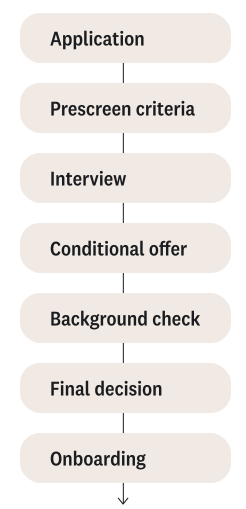
Now, imagine the company has already defined hiring criteria, standardized interviews, and built screening into the hiring process. When it's time to hire a new technician, one of two district managers takes ownership of the process, depending on the geographic area.
Using a preset list of required and preferred prescreening criteria focused on technical skills and experience, the manager scores each application and decides who to interview. Email templates and automated tools make it easy to thank candidates who won't be moving forward and schedule interviews with the rest.
District managers use the same set of questions for each candidate and the same evaluation criteria to choose their preferred new hire. That individual receives a conditional job offer with a link to provide information for background screenings.
Other candidates automatically get a thank-you email letting them know they will hear about the final decision within 48 hours. If 48 hours pass without the managers reaching a decision, a second email is sent stating that the process is still underway.
Meanwhile, district managers order a predetermined set of screenings to verify the candidate's professional licensing and review driving and criminal history. Configured workflows highlight the results the company has deemed relevant to the position, and the business's policy clarifies how to interpret the report.
Once the report is complete, managers can reach a final decision faster because the workflow is already in place. This repeatable process limits risk, reduces waste, and allows the business to hire quickly and onboard the skilled technicians it needs for continued growth.
What is the HVAC hiring workflow?
Before you go
Fast hiring doesn't come from rushing. It comes from removing the delays, uncertainty, and manual work that slow decisions down in the first place.
Three things make the biggest difference:
- Define what "qualified" means for each role before the first interview—not after
- Assign a single owner to each stage of the process so nothing waits on whoever has time
- Communicate with candidates on a set cadence—even when there's nothing new to report
When your hiring process is clear and repeatable, speed becomes the result of good organization rather than a tradeoff you have to make.
Ready to take the manual work out of your hiring process?
Still building out your process end-to-end?
The Hiring and Compliance Guide for Small Businesses covers everything from first hire to ongoing compliance—in plain language.
Disclaimer
The resources and information provided here are for educational and informational purposes only and do not constitute legal advice. Always consult your own counsel for up-to-date legal advice and guidance related to your practices, needs, and compliance with applicable laws.

About the author
Hayley Harrison began her career as a hiring manager at a mid-size regional bank in the Pittsburgh area. She now brings her experience and knowledge of hiring best practices to her work as a freelancer, helping employers refine and improve their processes.