
Ready to run background checks the modern way?
Key takeaways
- Anticipate seasonal hiring surges early so you can prepare your screening process before candidate volume increases
- Standardize screening criteria by role and establish review guidelines in advance to support faster, more consistent decisions
- Bring candidate and screening information into one place so your team can quickly see what needs attention as hiring volume increases
- Cut manual busywork with automation and reusable communications before the hiring surge begins
You’ve developed a hiring process that works well for most of the year. Then, preparations for your busiest season begin. You need temporary workers to close the staffing gap, and suddenly the same process can’t keep up. Screening tasks pile up, hiring slows down, and you’re left wondering whether you’ll have enough people in place when demand peaks.
If this sounds familiar, the problem may not be your screening process itself but the amount of manual work it requires as hiring volume increases. A few practical changes can help you keep hiring fast, organized, and consistent during your next demand surge.
Why your process works fine until it doesn't
To understand why manual processes slow down during seasonal hiring surges, it helps to see what happens as candidate volume increases. Imagine an independent grocery store in a large suburban area.
After a few years in business, the hiring team has developed what seems to be a solid routine. One or two positions open each month. When they do, the store manager posts the job ad, reviews applications, develops a shortlist, and tracks everything in a centralized spreadsheet. The store manager and the relevant department manager conduct interviews, decide who should receive a conditional offer, and determine which background checks to run.
Next, the store manager emails the required disclosures, orders the checks, and tracks their status in a second spreadsheet. They review each candidate’s status once a day and send follow-up emails when necessary. Once a report is ready, the store manager and department manager review the results and determine the next steps.
At one or two hires a month, those manual steps don’t feel burdensome. There are only a few invitations to send, statuses to check, follow-ups to remember, and reports to review at any given time.
Then October arrives, and instead of managing one or two hires, the store needs to fill multiple positions at once for the busy Thanksgiving and winter holiday season. Each year, it brings on temporary cashiers, stockers, and meat department clerks to meet increased demand. Although the seasonal team usually includes a few employees returning from previous years, the process quickly begins to feel out of control.
Background checks for seasonal employees become the biggest headache. Screening that normally moves through the store’s internal workflow within days now takes weeks to reach a final hiring decision.
Nothing about the grocery store’s hiring process has changed. The manual work was always there; it was simply manageable when the store hired one person at a time. During a seasonal surge, those same invitations, status checks, follow-ups, and review steps multiply across many candidates at once. What once required a few manageable tasks can quickly become a backlog.
That’s why a process that works well at normal hiring volume can struggle during a seasonal spike. Volume doesn’t necessarily create new problems—it magnifies the manual processes already built into the workflow.
Normal volume vs. surge volume
Normal volume
- 2 candidates
- 2 invitations
- 2 status checks
- a few follow-ups
- 2 reports
Surge volume
- 20 candidates
- 20 invitations
- 20+ status checks
- multiple follow-ups
- multiple reports arriving at different times
The specific ways manual processes break down under volume
Under the pressure of seasonal hiring surges, manual hiring processes tend to break down in predictable places. Here’s where you’re most likely to see the effects of a sudden increase in candidate volume.
Candidate queues get backed up
You send a few invitations, then a few more. Suddenly, there are 20 candidates at different stages of screening, and each new addition seems to worsen the holiday hiring delays.
Because manual steps depend on you to keep things moving forward, the queue keeps growing while you’re also managing your usual responsibilities. Even short pauses to request follow-up or confirm information start stacking up when you have to repeat the same manual actions across dozens of candidates.
Tracking gets harder to trust
To support your manual process, your team has developed several tracking tools that work well all year long. But once you’re juggling multiple candidates, keeping all of those updates aligned becomes its own job, one nobody has enough time for.
You end up with your screening spreadsheet saying a candidate is still pending, their unread finished background report sitting in their candidate file, and a hiring manager marking off items on the candidate’s onboarding sheet. Another candidate may not have anything marked on the sheet at all. These inconsistencies force your team to spend more time reconciling records to understand where each candidate actually stands.
Follow-ups get forgotten
When you're hiring one candidate at a time, the small tasks that occur between steps in the manual process are manageable. Increase the number of positions to fill, and there just isn't time to do it all.
You need to check back with a candidate to get more information before starting a check. There is an unread email from a department manager about a final hiring decision in your inbox. Plus, you have six completed reports waiting for review. With all that to juggle, it's easy to overlook a task or two.
The surge bottleneck
- Candidates apply
- Invitation queue → manual work accumulates
- Status tracking → manual work accumulates
- Follow-ups → manual work accumulates
- Report review
- Decision
What surge-ready screening actually looks like
Now imagine the grocery store entering its busy hiring season with a process designed to handle higher volumes. Pre-set criteria help the team determine which screenings to run for each role, while a background check platform automates the repetitive parts—sending screening invitations and follow-up requests.
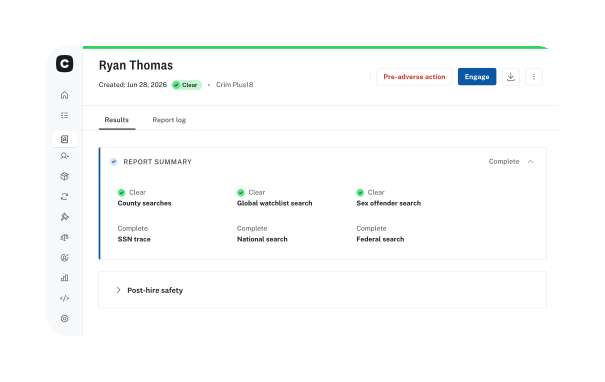
Instead of tracking candidates across separate spreadsheets and inboxes, the store manager can use a centralized dashboard to see where each screening stands and identify which candidates need attention. Notifications alert the manager when reports are ready, and pre-established criteria help the team follow a consistent process when evaluating results and making confident hiring decisions.
As candidate volume increases, the team still has more screenings to manage, but each additional candidate doesn’t create the same amount of manual administrative work. The manager spends less time sending individual messages, checking statuses, and reconciling records and can focus attention on screenings that actually require action.
That’s what makes a screening process better prepared for a hiring surge: standardized criteria, automation for repetitive tasks, centralized visibility, and clear review steps. Building those elements into your workflow before your next seasonal hiring cycle begins can help prevent your internal process from becoming the bottleneck when volume increases.
Not sure which checks you actually need?
Standardize your screening criteria before volume hits, not during it.
Planning ahead for your next hiring spike
Preparation for a seasonal hiring surge works best when it begins well before you post your job ads. The earlier you anticipate increased hiring volume and build a process designed to handle it, the less likely you are to find yourself making decisions in the middle of the rush. Here’s how to prepare your screening workflow for your next hiring spike:
Forecast demand and set screening criteria in advance
Knowing what to expect makes it possible to develop criteria that simplify decisions and keep things moving when hiring picks up. Think about:
- How many seasonal workers you hired last year
- This year's expected volume vs. last year
- Current staffing gaps and likely turnover
- Which departments will need extra help
From there, decide exactly which jobs you’ll be posting. Then, determine in advance which background checks to run based on each role’s responsibilities and requirements, along with any applicable industry, customer, site, legal, or regulatory requirements. Finally, develop guidelines for interpreting reports and using the results to make final hiring decisions.
Reduce repetitive work before volume increases
Cutting manual busywork before a hiring surge helps your existing team manage increased volume more efficiently. First, map your desired background checks. Next, use automated tools to send screening invitations and follow-up requests, cutting missed steps along with the workload.
Centralize screening visibility
When all your candidate data lives in one place, tracking progress and sharing information with hiring managers gets much easier. Replace separate spreadsheets with a single dashboard that gives your team a complete view of the screening process for all candidates at once.
This way, you’ll always know who hasn’t started, who's in progress, who needs action, and which reports are awaiting review. Once you have a dashboard in place, enable any notifications that alert you when a report is ready or something needs your attention.
Planning ahead
- Forecast
- Define screening criteria
- Standardize packages
- Automate repetitive tasks
- Prepare communications
- Confirm ownership
- Test workflow
Keeping screening consistent when you're hiring fast
By planning ahead, you can refine your process and reduce the manual work that leads to stress during seasonal hiring pushes. The result is a faster, smoother workflow that sets you up for consistent, confident hiring decisions.
Consistency matters for candidates, too. A hiring surge may change your team’s workload, but candidates still need clear instructions, timely updates, and a clear sense of what happens next. Preparing those communications in advance can help you maintain the same candidate experience whether you’re screening two people or 20
Jump-start your pre-season planning
0 OUT OF 6 COMPLETE
Review last year’s seasonal hiring volume and estimate your needs for this year.
Identify the roles you expect to fill and determine the appropriate screening criteria for each.
Examine your screening workflow for manual steps you can standardize or automate before hiring volume increases.
Confirm who owns each step of the screening and review process.
Confirm that hiring managers have access to the candidate and screening information they need.
Prepare reusable candidate communication templates before recruiting begins.
Preparing your screening workflow before hiring ramps up can help you keep candidates moving during peak demand.
Ready for your next hiring surge?
Start screening candidates without the manual bottlenecks.
Disclaimer
The resources and information provided here are for educational and informational purposes only and do not constitute legal advice. Always consult your own counsel for up-to-date legal advice and guidance related to your practices, needs, and compliance with applicable laws.

About the author
Hayley Harrison began her career as a hiring manager at a mid-size regional bank in the Pittsburgh area. She now brings her experience and knowledge of hiring best practices to her work as a freelancer, helping employers refine and improve their processes.