Fill Driver Seats Faster
The transportation screening playbook

When a driver seat goes unfilled, the cost shows up on the operations side first: A truck parked in the yard, a route covered on overtime, a delivery window missed. The pool of qualified drivers keeps shrinking—FMCSA rule changes are pulling drivers out of the eligible pool faster than hiring can replace them—so every candidate who clears screening matters more than they did a year ago.
The instinct under that pressure is to move faster by checking less. A falsified CDL puts an unqualified driver on the road, so screening less to hire faster isn't a real option. What works instead is screening that's fast by design—so speed and the safety bar aren't competing.
Below are four levers you can put to work now.
1
Sequence screening so real, qualified candidates make it to the offer faster
Drivers switch carriers for a dollar an hour. The longer a qualified candidate waits without a clear next step, the more likely a competitor reaches them first. Your screening process shouldn't only be built for compliance at the finish line; it should speed ready-to-work drivers through hiring while confirming identity and credentials early on.
Background checks typically run after interviews, any road tests, or a conditional offer (depending on your hiring policies and relevant Ban the Box ordinances). But credential and identity verification (IDV) often wait until then too—or don't run at all, in the case of IDV (more on fraud detection later in this guide)—even though they don't have to.
What does that gap mean in practice? An unconfirmed identity or an unverified credential can ride all the way to the offer, and only then hit a check that ends the process — after your team has already spent its most expensive hours on a candidate who was never going to qualify.
61%
of transportation orgs encountered hiring fraud in the past year
63%
catch credential fraud after application screening—too late to save recruiter and interview time
58%
of HR teams got no added headcount or budget despite a heavier compliance load
Source: 2026 State of Screening Compliance Report for Transportation
The solution lies in a multi-touch verification workflow that moves identity and credential verification forward in the hiring process, triggering with the same compliant automations you use to run driver background checks.
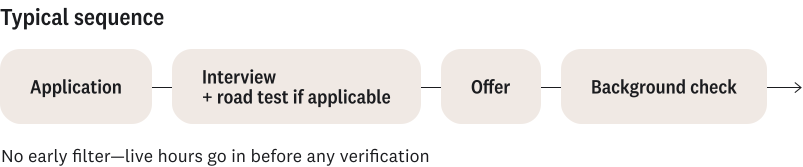
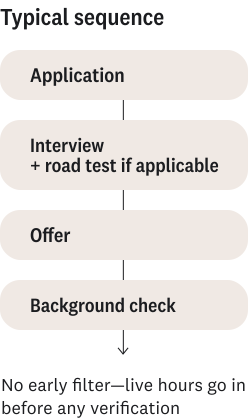

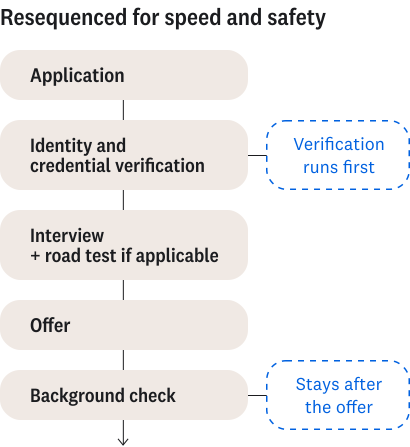
IDV runs in minutes, and the positive ROI is easy to buy into: It keeps unconfirmed identities from consuming recruiter hours and interview time before anyone realizes the candidate can't be verified. FMCSA license and credential verification can run early for the same reason. The candidates who reach your hiring managers have already cleared some verifications that could have disqualified them, while the comprehensive background check still runs where it belongs in the funnel.
A modern screening platform makes this resequencing a configuration change, not new manual work—when verification is automated and ordered through one workflow, adding screenings like IDV earlier is a setting, not a task.
Do this: Map your screening sequence end to end, then add identity verification at any point where identity was previously assumed, instead of confirmed. This often looks like right after an initial application or phone screening—ahead of secondary or in-person interviews.
You'll know it's working when: The candidates who can't be verified are dropping out before your team spends live hours on them.

"It can take a matter of minutes to complete an MVR with Checkr versus the two weeks that it took on average previously with our old partnership."
Erin Doehring
Human Resources Director, TAL Building Centers
2
Keep drivers moving with mobile-friendly screening
Drivers aren't at a desk. A process that assumes a candidate will open a laptop, print a form, and scan it back loses people filling out your application from a truck cab or a break room.
This is a throughput problem, not a nicety. Background check speed and accuracy is transportation CHROs' second-highest AI investment priority for 2026—behind only resume screening.
54%
of transportation CHROs list background check speed and accuracy as their top AI investment priority
A mobile-first flow—forms, document uploads, SMS status updates, and support all from a phone—keeps the funnel moving at the pace drivers actually work. The candidate who can finish screening between loads is the one who starts on time.
Do this: Walk through your own screening flow on a phone, start to finish, as a candidate would. Count every point that requires a clunky browser window (instead of an app), a printer, or a wait with no status update. Each one is where you're losing drivers.
Make the move to mobile: Each step that lacks a mobile-first, transparent experience for candidates needs a closer look (and likely a new vendor). Prioritize the one-workflow approach as your north star by ensuring you have a background checks integrate with your ATS/HRIS mobile flow, as well.
Build DOT-compliant screening into your hiring flow
See how transportation teams run modern checks for speed and safety.
3
Catch the fraud a standard background check misses
Transportation hiring fraud isn't just resume padding anymore. Fraudulent or fake candidates now show up with AI-generated CDLs, altered medical cards, stolen identities, and even proxy or deepfake-assisted interviews—and a standard background check, run once at the end, isn't built to catch all of it. Fraud in transportation is a public safety issue first: a forged credential doesn't just cost a bad hire; it can put an unqualified driver on the road.
Most common types of hiring fraud in transportation.
Source: 2026 State of Screening Compliance Report for Transportation
The harder problem is that most carriers aren't using the tools that catch this. The 2026 State of Screening Compliance Report for Transportation also found that only 38% of carriers are detecting fraud using identity verification this year — meaning the majority are relying on checks that were never designed to flag a synthetic identity or an authentic-looking forged document.
Identity verification and document authentication close those gaps. IDV confirms the person is who they claim to be; document authentication checks whether a credential is genuine, not just present. Together, they catch the fraud types above at the point of verification, rather than hoping a downstream background check surfaces them.
Do this: Pull a report of your most recent fraud cases and note how each was caught—and what tool caught it.
The tell: If most surfaced at I-9, onboarding, or not at all, your funnel is relying on a background check to do a job identity verification and document authentication are built for. Add them at the point where identity first matters.
Flag fraudulent candidates before they reach the interview
Identity verification runs at any stage of the funnel from one centralized screening dashboard.
4
Set up post-hire monitoring, so one check isn't your only defense
A background check is a snapshot of the day it was run. A driver's record doesn't freeze at hire—a license can lapse, a violation can land, a medical cert can expire. A once-a-year review leaves a long blind window.
Continuous MVR monitoring closes this window, so instead of waiting for an annual MVR pull, it flags changes as they happen. The same logic extends to the Drug and Alcohol Clearinghouse, where ongoing query requirements mean a one-time check at hire doesn't keep you current.
This matters more in 2026 because the monitoring work is landing on internal HR teams—who aren't getting more resources to do it.
Who owns screening compliance in transportation?
2024
2026
HR or onboarding team
Dedicated background check team
58%
report no increase in headcount or budget
Source: 2026 State of Screening Compliance Report for Transportation
Do this: Set up continuous MVR monitoring instead of relying on annual reviews.
You'll know it's working when: A driver's license status change reaches you as an alert, not at the next scheduled MVR pull. Continuous monitoring is how a smaller team keeps watch on a larger roster without manually re-running checks.
Hiring faster without lowering the bar
The driver shortage tempts every operations leader toward the same shortcut: hire faster by screening less. These four levers point the other way. Sequencing the funnel, going mobile-first, catching fraud upstream, and monitoring continuously all make hiring faster and raise the safety bar—because they move the decisive checks to where they cost the least and run automatically once configured.
The teams that widen their lead in 2026 won't be the ones who lowered the bar to fill seats. They'll be the ones whose screening was fast enough that they never had to—which often comes down to choosing a provider built for hiring at scale.
Ready to get qualified drivers on the road faster?
See Checkr for transportation in action.
See where your team stands against 500 transportation HR leaders
Compliance, fraud detection, and AI governance, benchmarked.

Disclaimer
The resources and information provided here are for educational and informational purposes only and do not constitute legal advice. Always consult your own counsel for up-to-date legal advice and guidance related to your practices, needs, and compliance with applicable laws.