
Table of Contents
Ready to run background checks the modern way?
Nanny background checks can provide families with peace of mind when hiring a childcare professional to entrust with their children's well-being. Childcare professionals can run a nanny background check to understand what potential families or employers will see during the background screening process, helping to prepare and present themselves with confidence.
Run a personal background check
Are you an organization? Run candidate background checks here >
Nannies have tremendous responsibilities, and it’s only natural for parents to want to learn as much as possible about the individuals they trust with their children. A nanny background check can offer valuable insights about prospective childcare professionals before making a hiring decision. Prospective nannies can also benefit from knowing what might appear on a background screening to handle any errors or inaccuracies before applying for jobs. Whether you’re a parent or a childcare professional, here’s what you should know about nanny background checks.
What are nanny background checks?
Nanny background checks review public and private sources to review information about an individual, such as criminal history, sex offender status, and child abuse records.
Parents often request a nanny background check to help them decide who to hire to care for their children. The results of a background check can make parents feel more secure about extending a job offer to a prospective nanny.
Federal laws require background checks for childcare providers who wish to work in daycares, and all 50 states mandate that prospective K-12 teachers undergo a background check prior to employment or teacher licensing. The purpose of these laws is to protect children and minimize the risk of child abuse and neglect at daycare centers and schools. Although no such laws exist for childcare professionals working directly and privately for families in homes, the nanny background check serves a similar purpose.
What can show up on a childcare background check?
The results of a childcare background check depend on which searches are conducted, which is determined by the individual requesting the search. Common screenings for a childcare background check may include a Social Security number (SSN) trace, sex offender registry search, and criminal searches, such as national or county screenings. Here’s a look at each of these background screenings.
SSN trace
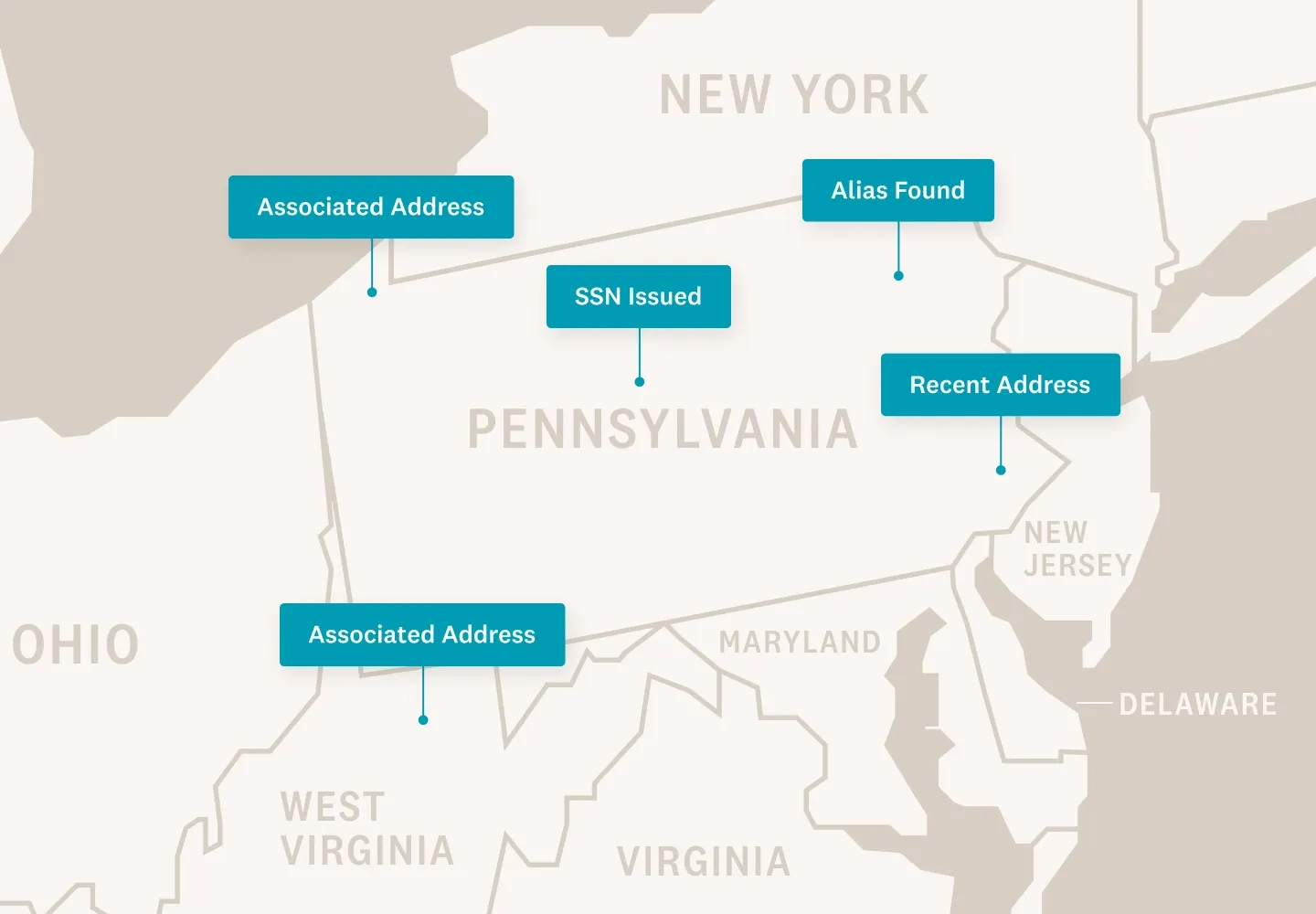
An SSN trace searches for a Social Security number in databases of schools, utility companies, lending institutions, credit card companies, and other organizations. It may include information such as the year and state where the Social Security Administration (SSA) issued the number, as well as associated names and addresses.
An SSN trace is a type of “pointer search” that helps indicate other jurisdictions for conducting additional background screenings. For example, if an SSN trace shows an SSN linked to addresses in more than one state, that information can help determine additional counties for conducting county background checks.
Sex offender registry
A sex offender registry search reviews sex offender registry records from all 50 states, the District of Columbia, and tribal territories to determine if a candidate is a registered sex offender in any jurisdiction.
Federal law requires states to establish sex offender registries. Individuals convicted of certain crimes of a sexual nature, including sex-related child abuse, are often required to register with the sex offender registries in all of the locations where they live as a part of their criminal sentencing. Depending on the information in the particular jurisdiction’s registry, a sex offender registry may show the candidate’s name, physical description, and a description of the crimes for which they were convicted.
National criminal search
A national criminal search accesses thousands of local and state databases that report criminal records, such as felony and misdemeanor convictions and pending cases. This background check may also return records of other types of contact with law enforcement, such as arrests. This is also used as a pointer search to indicate other jurisdictions for conducting additional background screenings.
County criminal search
A county criminal search reports criminal charges, convictions, and other case information from county court houses or county criminal record repositories. Convictions may be reported indefinitely, or restricted to the previous seven years, depending on the state where the candidate lives or works. State court systems are responsible for handling the majority of criminal cases, and typically, cases originate at the county level. As a result, county criminal searches often show the most current and accurate records related to candidates’ criminal histories.
How to run a background check for childcare services
The process for running a background check for childcare services varies depending on whether you’re seeking information about yourself before applying for a position or evaluating an individual for a nanny role. Here’s an overview of how to conduct a background check on a nanny in each scenario.
For families
If you’re hiring a childcare provider, one of the simplest approaches to running a nanny background check is to obtain consent from the individual to request their personal background check from a background check provider, like Checkr.
For childcare providers
Before applying for a nanny position, you can run a background check on yourself. This allows you to review what may show up and identify any inaccuracies in advance. While it doesn't replace a background check run by an employer, providing potential employers with your background check report and resume can help establish trust during the hiring process. To run a nanny background check on yourself using Checkr, you’ll need your Social Security number and zip code.
Run a personal background check
Are you an organization? Run candidate background checks here >
Best nanny background check services
When choosing a company for your nanny background check, consider factors like cost, turnaround time, and the types of background screenings available. To help you make an informed decision, here’s an overview of the best nanny background check providers.
1. Checkr
Checkr makes performing a nanny or babysitter background check easy with our personal background check service, which includes an SSN trace, sex offender registry check, global watchlist search, and national criminal search. Transparent pricing and online ordering make getting started easy, plus results are often available the same day. A PDF download option makes it simple to share your results with a family who's interviewing you for a nanny position.
2. eNanny Source
eNanny Source allows families to conduct nanny background checks with permission from candidates. A basic package includes an SSN trace, a national criminal record search, and a sex offender registry search, with the option to add on more searches with additional fees. Because eNanny Source partners with another background check provider to perform the searches, reports are typically ready in two to three days.
3. ShareAble
A service provided by the credit reporting agency TransUnion, ShareAble offers background checks for small businesses and families. The basic search includes federal watchlist and most wanted list searches, a national sex offender registry search, and SSN trace information based on TransUnion’s records. A limited SSN trace can be added for an additional fee. Results are typically ready to review in a few minutes, but criminal records in certain counties and states are ineligible for reporting through the service.
Find out what’s on your criminal record
Nanny background checks offer families peace of mind while helping childcare professionals build trust with potential employers. While it doesn't replace a formal background check, providing a background check report to prospective employers demonstrates transparency and can set you apart from other candidates.
Checkr makes running a nanny background check on yourself quick and simple. With our personal background check service, you can be informed and empowered with fast, accurate results and transparent pricing. Get started today.
Run a personal background check
Are you an organization? Run candidate background checks here >
Average turnaround time
Type of screening | Average turnaround time |
Employment background check (a more comprehensive report that typically includes multiple screenings) | >1 hour to 1–5 days |
Criminal background check | 1–3 days |
Employment verification | 1–3 minutes (quick verification) to 2–7 days (manual entry) |
Reference checks | 2–5 days |
Driving record (MVR) check | >1 hour to 1–3 business days |
Drug testing | 10 minutes (onsite) to 3–10 days (lab-based) |
Frequently asked questions
Do I need the nanny’s permission before running a background check?
Yes. You need the candidate’s consent before ordering a background check through a screening service. The simplest approach is to obtain written permission from the nanny to run a personal background check using Checkr. Our personal background check service makes this process straightforward for both parties.
Can a nanny run a background check on themselves?
Yes, and it’s a good idea to do so. Running a background check on yourself before applying for nanny roles lets you review what potential families will see and catch any inaccuracies early. You can also share your results proactively with a potential employer. With Checkr’s personal background check service, you just need your Social Security number and zip code to get started. Results are often available the same day.
What is the difference between a national criminal search and a county criminal search?
A national criminal search pulls from thousands of local and state databases across the country. It’s useful for identifying jurisdictions that are worth investigating further. County criminal searches go directly to county courthouses or criminal record repositories and typically return the most current and accurate records. Using both together gives you a more complete picture of a candidate’s history.
Are there laws that require background checks for nannies?
Federal law requires background checks for childcare providers who work in licensed daycares, and all 50 states require background checks for K-12 teachers before they’re employed or licensed. No equivalent federal law applies to nannies hired privately by families. That said, many families choose to run background checks for the same reason those laws exist: to protect children and make informed hiring decisions.
How long does a nanny background check take?
It depends on the provider and the types of searches included. Checkr’s personal background check service often returns results the same day. Services that partner with third-party providers, like eNanny Source, typically take two to three days. More thorough checks that include county-level records may take longer depending on the jurisdiction.
What should I look for when choosing a nanny background check service?
Think about the types of searches included, the cost, and how quickly results are returned. Checkr offers an SSN trace, sex offender registry check, global watchlist search, and national criminal search, with transparent pricing and same-day results in many cases. eNanny Source and ShareAble are two other options, though each has different coverage, turnaround times, and pricing structures. Knowing what each package includes helps you choose the right fit for your situation.
Can a nanny background check show records from other states?
Yes. An SSN trace can reveal addresses linked to a candidate across multiple states, which helps identify additional jurisdictions for further searching. A national criminal search also pulls from databases across the country. If a candidate has lived or worked in multiple states, these searches help you avoid missing records from other locations.
Disclaimer
The resources and information provided here are for educational and informational purposes only and do not constitute legal advice. Always consult your own counsel for up-to-date legal advice and guidance related to your practices, needs, and compliance with applicable laws.

Hayley Harrison began her career as a hiring manager at a mid-size regional bank in the Pittsburgh area. She now brings her experience and knowledge of hiring best practices to her work as a freelancer, helping employers refine and improve their processes.