

Table of Contents
- Summary of key findings: Stats that define America’s trust crisis
- How deepfakes, fake reviews, and digital doubt are spreading
- How Americans vet, verify, and second-guess everything
- Why booking, hiring, and shopping feel riskier than ever
- The emotional cost of deception in digital relationships
- How fear of being scammed is changing daily behavior
- The financial fallout of fraud in the AI era
- Rebuilding confidence in a world full of fakes
Ready to run background checks the modern way?
Checkr surveyed 3,000 Americans—an equal mix of Gen Z, Millennials, Gen X, and Baby Boomers—to uncover how AI, scams, and digital deception are reshaping consumer trust in 2025. Join us as we dive into the key fears, behaviors, and generational insights behind America’s growing consumer trust crisis in the age of AI.
Trust has always been the foundation of everyday life — whether you’re booking a vacation rental, meeting someone from a dating app, or letting a babysitter into your home. But in 2025, that foundation is starting to crack. As artificial intelligence becomes more advanced, so do the tools of deception.
Deepfake videos, AI-generated reviews, fake social media profiles, and impersonation scams are making it harder than ever to know what’s real and who can be trusted. The consequences aren’t just digital — they’re deeply personal, emotional, and financial.
In this report, Checkr surveyed 3,000 consumers across four generations — Gen Z, Millennials, Gen X, and Baby Boomers — to understand how fraud and misinformation are shaping modern life. We found that while each generation experiences the trust crisis differently, the emotional toll is universal: people are second-guessing their instincts, changing their behaviors, and sometimes losing money to scams that didn’t exist a few years ago. Gen Z tends to be more tech-aware but still vulnerable to deception, while older generations may lack fluency in the tools that help verify identities or spot fake content. No matter the age group, trust has become a moving target.
At Checkr, we believe that trust shouldn’t be a guessing game. As a company that helps businesses and consumers make informed trust decisions like hiring and lending, we know that identity, safety, and credibility matter—not just at work, but everywhere in life. By sharing this data, we aim to spotlight the scope of the problem, raise awareness about how consumers are coping with it, and start a conversation about rebuilding trust in a world where anyone—or anything—can be faked.
Now, let’s check out some of the key findings.
Summary of key findings: Stats that define America’s trust crisis
- A full 88% of Americans say it’s harder now than it was a year ago to tell what’s real online, with 41% saying it’s way harder.
- 76% of Americans say they’ve questioned whether photos or videos they’ve seen online were real—rising to 80% among Gen Z.
- Nearly 4 in 10 Americans (39%) say their top fear about AI fakery is no longer knowing what’s real in news, photos, or video—the most common concern across every generation.
- Nearly 4 in 10 consumers (39%) say their biggest fear is not knowing what’s real anymore online.
- Only 37% of Americans feel confident they can spot AI-driven scams—dropping to just 23% among Baby Boomers.
- 70% of Gen Z have abandoned a platform, app, or website because it felt fake or overrun by scams.
- 41% of all consumers—and over half of Gen Z and Millennials—say they’ve encountered a suspicious or scam rental or real estate listing.
- 1 in 3 Gen Z and Millennials say they’ve had a relationship with someone online who later seemed fake—possibly even AI-generated.
- 60% of Americans admit to backing out of a purchase, booking, or date because something felt off or suspicious.
- 40% of Americans say they’ve lost money to a scam—including 14% of Millennials and Gen Z who say the financial hit was significant.
- 69% of consumers now only shop from trusted or verified sellers—including 79% of Baby Boomers.
- 1 in 4 consumers say fear of fraud has kept them from making important financial moves like investing or booking travel.
- More than half (54%) of consumers now avoid certain apps or platforms entirely—including 58% of Baby Boomers.
How deepfakes, fake reviews, and digital doubt are spreading
Artificial intelligence is no longer just powering convenience—it’s powering deception. From fake product reviews to deepfake videos and impersonated identities, AI-driven content is infiltrating everyday digital interactions. This section explores just how widespread AI fakery has become—and how Americans across generations are struggling to tell what’s real from what’s manufactured.
The vast majority of Americans—95%—say they’ve encountered at least one form of suspicious or likely AI-generated content online. The most commonly cited were altered photos or videos (76%), fake social media accounts (53%), and overly polished product reviews (49%), suggesting that AI deception is blending into even the most routine parts of modern life.
Younger generations were especially attuned: 80% of Gen Z reported questioning the authenticity of digital visuals, and 67% said they’ve doubted influencers or social profiles.
When asked what scares them most about AI fakery, 39% of Americans said their top fear is simply not knowing what’s real anymore—whether in news, photos, or video.
This concern topped fears of financial scams, identity theft, or political manipulation.
Notably, this anxiety was shared equally across all generations, including Boomers, Gen X, Millennials, and Gen Z, highlighting a rare moment of generational alignment around a shared distrust of the digital landscape.
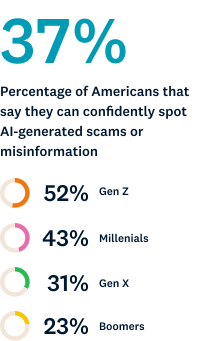
Despite being aware of AI deception, most Americans don’t feel well-equipped to detect it. Fewer than 4 in 10 (37%) say they can confidently spot AI-generated misinformation. Younger generations reported more confidence, with 52% of Gen Z claiming they can usually detect it—compared to just 23% of Baby Boomers.
Do Americans really trust themselves to spot AI scams?
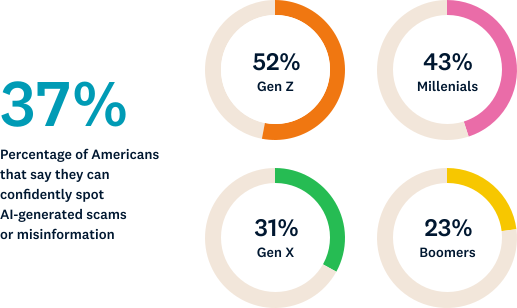
Still, nearly half (48%) of all respondents admitted they worry they’ve already missed signs of AI fakery without realizing it. Perhaps most striking: 15% of Americans say they no longer know what’s real online at all.
AI fakery isn’t static—it’s accelerating. A full 88% of Americans say it’s harder now than it was a year ago to tell what’s real online, with 41% saying it’s way harder. Only 3% believe things are getting easier.
Older generations, often assumed to be less tech-savvy, are especially aware of this shift: 44% of Baby Boomers said it’s much harder to verify digital reality today than it was just a year ago.
Next, let’s take a look at how consumers work to build trust before purchasing products, using services, and more.
How Americans vet, verify, and second-guess everything
In a digital world where AI can fabricate just about anything—faces, profiles, reviews, even voices—trust is no longer assumed. It’s something consumers actively work to verify. As scams become more sophisticated, Americans are developing a set of habits, signals, and instincts to help them separate truth from manipulation.
Before buying, booking, or meeting someone new, nearly half of Americans (47%) say they always investigate first, using tools like review sites, background searches, or social media sleuthing. Another 44% say they investigate when something feels off, meaning that 91% of consumers now pause to verify trust before engaging.
Gen Z leads the way in proactive research, with 55% saying they always do it, while Boomers aren’t far behind at 42%.
When asked what actually builds trust online, consumers overwhelmingly point to authenticity and transparency. 63% say verified customer reviews are the most important trust signal.
Other top tactics include word-of-mouth recommendations (51%), company credentials or trust badges (46%), and background checks (44%).
Younger consumers are more likely to look at social media history (52% of Gen Z) or request a video call (39%), while older generations prefer referrals and in-person assessments. Despite generational differences, the trend is clear: Americans are using multiple trust signals before they commit to a transaction or interaction.
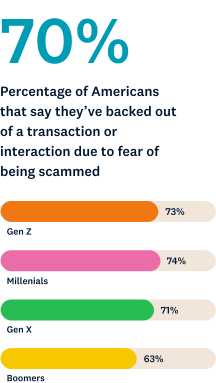
This new era of digital caution isn’t theoretical—it’s changing the way people behave. A full 70% of Americans say they’ve backed out of a purchase, booking, or date because something didn’t feel right. Millennials were the most cautious (74%), followed by Gen Z (73%).
Are consumers frequently backing out of purchases or interactions in fear of scams?
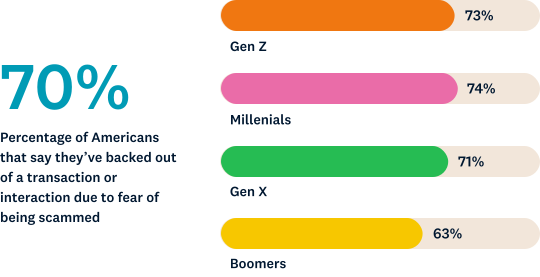
Even 63% of Baby Boomers admitted to walking away from an interaction that felt risky. This isn’t just a shift in trust—it’s a shift in how and whether people choose to engage at all.
Let’s dive into the personal aspect of eroding trust and consumer scams.
Why booking, hiring, and shopping feel riskier than ever
Scams were once the stuff of spam emails and too-good-to-be-true phone calls. But today, they’ve become embedded in the fabric of daily life. Whether you’re booking a vacation rental, hiring a babysitter, or scrolling through online marketplaces, the possibility of being deceived is no longer an exception—it’s an expectation. For millions of Americans, fraud isn’t just a risk. It’s a routine threat they try to navigate every day.
When asked to rank the situations where they feel most at risk of being scammed, online shopping and marketplaces came out on top—with the lowest average score across all generations (2.8, where 1 is most concerning).
That concern was especially high among Gen Z and Millennials, who also cited vacation rentals, rideshare pickups, and online dating as high-risk categories. Gen X and Baby Boomers ranked babysitting and pet sitting services, school visitor check-ins, and car rentals slightly higher than younger generations—a sign that no category of life feels immune to potential deception.
Where do American consumers feel most vulnerable to scams in everyday life?


The trust crisis extends well beyond the internet. 41% of all Americans say they’ve come across a real estate or rental listing that felt suspicious or turned out to be a scam. That number jumps to over 50% for Millennials and Gen Z, who are more likely to interact with digital rental platforms. Even offline interactions are now filtered through a lens of suspicion, especially when money or access is on the line.
When hiring someone for a personal service—like a babysitter, tutor, or pet sitter—consumers are relying on a mix of digital tools and old-fashioned instincts. 65% say they’d request or run a background check, and 54% rely on reviews or ratings, while another 54% say they ask a friend or neighbor for a recommendation.
Gen Z and Millennials are far more likely to check social media (56% and 47% respectively) or use video interviews. Baby Boomers, meanwhile, still lean heavily on personal referrals (64%).
Across the board, very few consumers (4%) say they would trust someone without verifying them first.
Americans aren’t just cautious—they’re opting out. 61% say they’ve abandoned a platform, app, or website because it felt sketchy or overrun by scams.
That number spikes to 70% among Gen Z, the generation most immersed in digital life, but still skeptical of what they see. Even more traditional users like Baby Boomers are adapting: more than half (52%) have walked away from platforms they no longer trust.
As scams become more personal and pervasive, Americans aren’t just changing how they shop or hire—they’re rethinking how they build relationships, assess strangers, and navigate trust in their most intimate digital interactions.
The emotional cost of deception in digital relationships
Scams don’t just target our wallets—they target our emotions. As AI-generated personas and impersonation scams grow more sophisticated, Americans are becoming increasingly cautious in personal relationships formed online.
Whether it’s dating, networking, or building new friendships, the risk of being deceived has become deeply personal—and increasingly common.
The trust crisis extends far beyond money. 36% of Americans say they’ve personally been deceived by someone online who wasn’t who they claimed to be, with another 29% saying it’s happened to someone close to them. This includes dating scams, impersonated identities, and AI-generated personas.
The problem is especially pronounced among younger generations: 45% of Gen Z and 38% of Millennials report being personally misled—compared to just 25% of Boomers. As online communication becomes more central to modern relationships, the emotional cost of digital deception is rising fast.
When asked specifically about interactions with people who may have been AI-generated or impersonating others, 1 in 4 Americans (25%) said they’ve experienced this directly, with Gen Z (33%) and Millennials (31%) again the most affected.
Boomers were less likely to report this type of deception, but 12% still said they had experienced it—underscoring that no generation is fully immune to this new wave of artificial identity fraud.
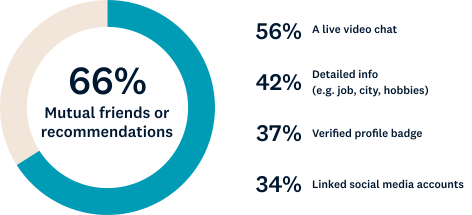
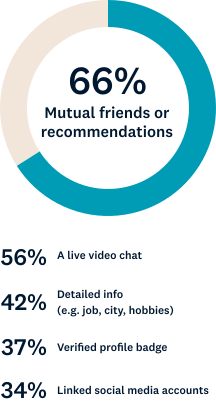
To combat identity fraud and deception, consumers are demanding stronger signals of authenticity. 56% of Americans say a live video chat would make them feel confident someone is who they say they are, with the number rising to 69% among Gen Z.
Other top trust indicators include mutual friends or referrals (66%), detailed personal info (42%), and verified badges or linked social accounts. While the tools for establishing trust vary by generation, the underlying need is the same: consumers want proof before they invest emotionally.
What makes Americans trust that someone online is actually real?
But even beyond financial risk and identity theft, there’s something deeper at stake: peace of mind. As AI deception spreads and trust becomes harder to verify, the emotional burden of staying alert is weighing heavily on consumers—shaping not only how they interact, but how they feel every day.
How fear of being scammed is changing daily behavior
In today’s AI-driven world, scams no longer feel like rare exceptions. They feel inevitable. The result? Americans are mentally bracing for deception at every turn—in small transactions, casual interactions, and major decisions alike. The emotional cost of always being on guard is becoming a defining characteristic of modern consumer behavior.
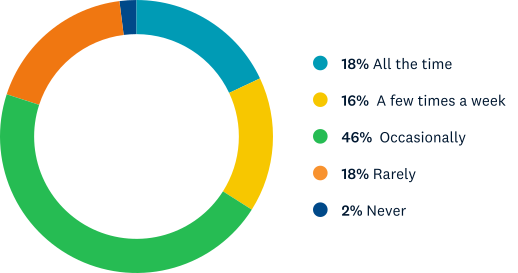
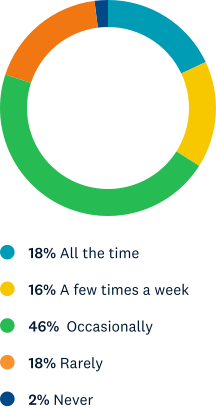
Nearly 1 in 5 Americans (18%) say they worry all the time about being scammed, while another 16% say it crosses their mind several times a week.
While Boomers were slightly more relaxed, the anxiety is especially pronounced among younger generations: 20% of Millennials and 19% of Gen Z say they feel this constant unease. Overall, 80% of Americans report some level of frequent scam anxiety, showing just how deeply fraud has penetrated the consumer psyche.
How often do Americans worry about being scammed in everyday decisions?
This heightened alertness is reshaping how people behave online. More than 4 in 5 consumers (82%) say they’ve changed how they shop, date, hire, or travel due to scam concerns. For 1 in 5 (19%), the fear is strong enough to actively delay or avoid those activities altogether.
Gen Z was the most likely to say they now hesitate, with 24% reporting they avoid certain decisions entirely. Only 18% of Americans say they’ve made no behavioral changes at all.
To protect themselves, consumers are building personal fraud-defense playbooks. 69% say they now only buy from trusted or verified sellers, while 55% say they fact-check everything. Over half avoid certain platforms entirely, and more than half (54%) say they’ve adopted a mindset of “trust nothing, verify everything.”
Even the most analog consumers are adapting — 58% of Baby Boomers say they avoid platforms that feel risky, and 43% say they actively fact-check information.
While emotional exhaustion is one consequence of the trust crisis, the financial stakes are just as real—and often far more painful. From small losses to major scams, Americans are feeling the monetary impact of fraud in deeply personal ways.
The financial fallout of fraud in the AI era
Fraud doesn’t just shake consumer confidence—it drains wallets. From minor losses to life-altering scams, Americans across every generation are facing the real economic consequences of deception in the digital age. And for many, the fear of getting scammed is enough to hold them back from major financial moves altogether.
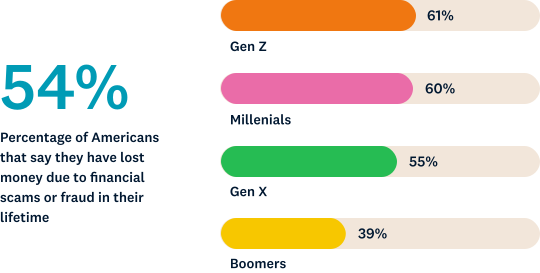
A staggering 40% of Americans say they’ve personally lost money due to a scam, fake listing, or deceptive online interaction. While most of these were small losses, 11% describe the financial hit as significant. Younger generations have been hit hardest: 14% of Gen Z and Millennials say the financial damage was major, compared to just 6% of Boomers. Another 23% say they’ve had close calls—meaning well over half the population has either lost money or narrowly avoided doing so.
When asked to estimate their total financial losses, 37% of Americans say they’ve lost at least some money to fraud, and 28% estimate those losses exceeded $100. While large losses (over $2,000) were less common, 11% of Millennials and 7% of Gen X respondents report falling into that category — further evidence that scams aren’t just targeting the gullible; they’re hitting working adults in critical financial moments.
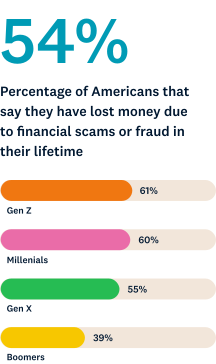
How many Americans have lost money due to financial scams or fraud?
It’s not just the losses themselves—it’s the fear of what could be lost. 1 in 3 Americans (32%) say they’ve hesitated or held back from making a major financial move—such as investing, applying for a loan, or booking travel—due to fear of being scammed. Among Gen Z, that number jumps to 37%, showing how even everyday financial decisions now carry psychological weight. Fraud isn’t just stealing money — it’s stealing confidence.
Rebuilding confidence in a world full of fakes
Across generations and across industries, one message is clear: America is facing a full-scale trust crisis. From AI-generated content and deepfakes to everyday scams that target our wallets and emotions, consumers are under siege.
They’re anxious, cautious, and constantly second-guessing who—and what—they can believe. Trust, once an invisible assumption, is now a daily decision.
This report reveals that fraud isn’t just a threat to financial security. It’s reshaping how people live, shop, connect, and make decisions. And while consumers are adapting—through research, background checks, video calls, and digital skepticism—they’re also exhausted. The emotional and economic toll of living in a world where anything can be faked is real, measurable, and growing.
At Checkr, we believe the future of trust can’t be left to chance. Whether you’re hiring a teammate, booking a service, or meeting someone new, identity verification, transparency, and accountability matter.
As AI continues to evolve, so must the systems we use to protect people. Because in a world full of uncertainty, trust isn’t just a nice-to-have—it’s everything.
For more information on Check’s research or to request graphics or an interview about this study, please contact press@checkr.com.
Methodology
All data found within this report is derived from a survey conducted by Checkr via the online survey platform Pollfish from November 12–16, 2025. In total, 3,000 adult U.S. consumers were surveyed, with an equal distribution across four generations: 750 from Gen Z, 750 Millennials, 750 Gen X, and 750 Baby Boomers. Respondents were identified using Pollfish’s age-based demographic targeting features. This survey was conducted over a five-day period, and all participants were asked to answer questions as truthfully as possible and to the best of their knowledge and experience.
Disclaimer
The resources provided here are for educational purposes only and do not constitute legal advice. We advise you to consult your own counsel if you have legal questions related to your specific practices and compliance with applicable laws.

About the author
As VP of Product & Customer Marketing at Checkr, Bryan is responsible for educating current and prospective customers about the value and use of our products. He is passionate about understanding the needs of companies and candidates who use Checkr, and helping them get the most from the platform.