Failed Background Checks: Why It Happens and How to Respond

Hayley Harrison
Author
Ready to run background checks the modern way?
Many employers conduct background checks as part of their hiring process to make informed hiring decisions, maintain a safe work environment, and comply with industry and legal requirements. If the report doesn’t return any adverse information, a background check can put your mind at ease. But what do you do if the background check reveals unexpected news about your job candidate? This guide explains what a "failed" background check means, common reasons it happens, and the steps both employers and candidates should take to respond appropriately.
Key takeaways:
- A "failed" check means information was found; it doesn't mean that someone is automatically disqualified
- Issues typically stem from relevant criminal records, employment or education discrepancies, or failed drug tests
- Companies must follow FCRA guidelines, including sending pre-adverse and final adverse action notices
- Candidates have the right to dispute inaccurate information on their background check and provide context
Watch the video or keep reading for more.
What is a "failed" background check?
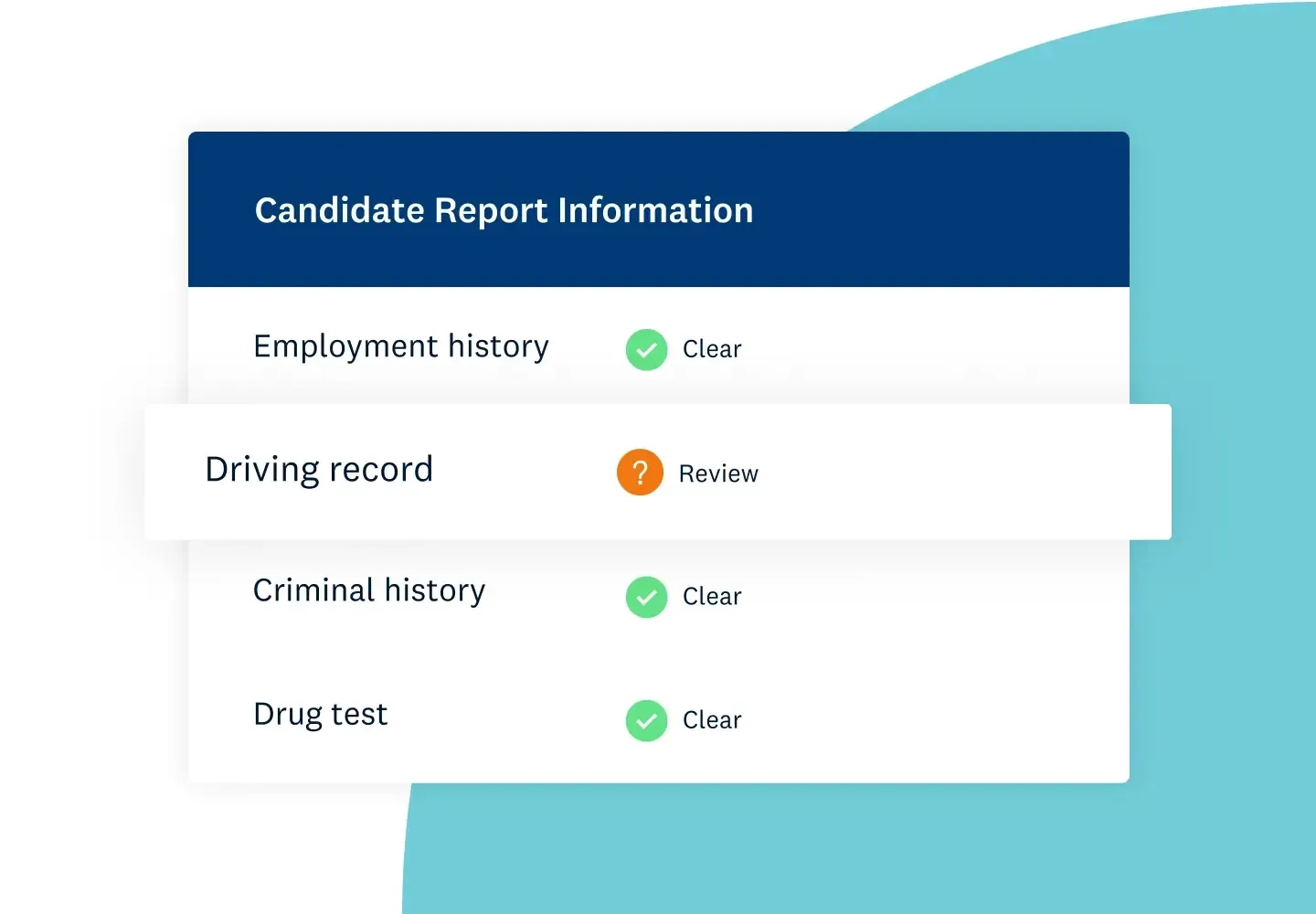
A "failed" background check means the screening report has returned "hits" or alerts—such as relevant criminal records, employment discrepancies, or failed drug tests—that require employer review. A failed background check does not automatically disqualify a candidate from a position.
When your background screening returns unexpected results, it's important to review the report based on your company's background check policy and hiring procedures. Careful consideration can help you make an informed decision about how you should proceed with the hiring process.
Note: As an organization, Checkr does not use pass or fail language with regard to background checks. However, we know that many people do use these terms and have questions about how to proceed when screening results require extra consideration.
Checkr is a leader in advocating for the business benefits of fair chance hiring and empowering employers to fairly assess their candidates' history. Checkr tools like Assess can help employers implement and scale fairer background screening adjudication processes.
Reasons why a candidate could “fail” a background check
There are several reasons why a candidate may "fail" a background check:
- Criminal history: Relevant felonies, misdemeanors, or other convictions
- Employment discrepancies: Inaccurate job titles or dates
- Education discrepancies: Unverified degrees or credentials
- Driving record issues: Suspended licenses or violations
- Failed drug test: Positive results above threshold levels
Different screenings return varying information that may or may not be relevant to the job offer. Here's a closer look at each type.
Criminal history
A candidate's criminal history can be reported through a criminal background check, which may reveal felony and misdemeanor convictions, infractions, or violations. In some cases, arrests without prosecution, acquittals, and dismissed charges may also appear.
A criminal record may not automatically disqualify a candidate from a job offer, as convictions vary by type and degree. However, certain records could bar a candidate from specific roles based on federal, state, or local regulations; for example, a fraud conviction may disqualify someone from certain roles in financial services.
Employment history
Employment verification confirms the employment history on a candidate's resume or application. A failed verification indicates a discrepancy, such as invalid employment dates or incorrect job titles, between what the candidate reported and what the verification uncovered.
Education history
An education verification provides information about an individual's academic credentials from colleges, universities, high schools, or GED equivalencies. A failed education verification usually indicates a discrepancy between the information reported by the candidate and the information reported by the institution, such as a different program of study or different enrollment or graduation dates.
Driving records
Motor vehicle record (MVR) checks search states’ Department of Motor Vehicles databases for information about a candidate's driving record. This can include license status, type, class, accident reports, traffic violations, and driving-related convictions. An MVR check that shows a suspended license or unsafe driving practices may affect a candidate’s eligibility for a driving-related role.
Drug test
Employment drug tests detect controlled substances or alcohol. A failed drug screen means a substance was detected above the predetermined threshold.
In roles where impairment creates workplace liability, such as equipment operation, a failed drug test may disqualify a candidate. Regulations vary by location and industry, so employers should follow applicable state laws and consult legal counsel before taking adverse action.
Best practices after a "failed" background check
Because background checks return information from many different sources, background check alerts may not always be relevant to a job offer. There’s also a possibility that the unexpected information may be an error. As a result, both employers and candidates can benefit from reviewing best practices for what to do after an alert appears on a background check.
For employers
Employers have specific guidelines to follow before taking adverse action following a failed background check. Your priority should always be legal compliance with the federal Fair Credit Reporting Act (FCRA), relevant state laws, and any local Ban the Box or other hiring-related laws. Because hiring criteria can vary by state, employers should consult with their legal team to ensure compliance with best practices during the screening and hiring process.
When faced with challenging hiring decisions, here are five steps to consider:
- Consult your company's written background check policy. An effective policy should be consistent, current, and comprehensive to ensure fair treatment and legal compliance.
- Send a pre-adverse action notice. If you're considering rescinding an offer, the FCRA requires you to notify the candidate with a pre-adverse action notice, a copy of the report, and "A Summary of Your Rights Under the FCRA."
- Allow the candidate time to respond. The FCRA requires giving candidates time to dispute inaccuracies or provide context. Five to ten business days is usually a good benchmark. Checkr's candidate stories tool is a good place for candidates to provide additional information about their background check.
- Make a hiring decision. Align your decision with your company’s policy and consider the Equal Employment Opportunity Commission's "nature-time-nature" test, evaluating the offense's nature, the time elapsed since the offense, and its relevance to the role.
- Send a final adverse action notice. If you decide not to proceed, federal law requires a final notice stating your reasons, the candidate's right to dispute, and an option to request a copy of the report within 60 days.
Confident hiring means being ready for moments like this one.
When a background check surfaces something unexpected, having a clear process makes the decision easier—and easier to explain. This free guide helps small teams build a consistent hiring framework so you're never making these calls without a clear baseline.
For candidates
If you receive a pre-adverse action notice from a prospective employer, you have limited time to respond and take further action. Here are some steps to take as a candidate:
- Review the background check results. The pre-adverse action notice will inform you of what information on the background check resulted in consideration of disqualification. Determine whether the information is accurate and note how long you have to respond.
- File a dispute for inaccurate information. If the results of your background check aren't accurate, you have the right to file a dispute to request a correction. The process for disputing a failed background check will vary based on the background check provider the prospective employer used. With Checkr, log into the Candidate Portal, find the inaccurate information, and click "File a dispute" at the bottom of the page to get started.
- Provide context if the information is accurate. If the information is accurate, you can choose to give the prospective employer additional context. Checkr offers a candidate stories tool that lets you explain your records directly in the Candidate Portal.
If you're starting a job search, you may consider ordering a personal background check before applying for jobs so you can preview what potential employers may see. Ordering a background check for yourself gives you the opportunity to anticipate questions and review the report for errors or inaccuracies.
Order a background check with Checkr
When a background check reveals unexpected information about a job candidate, it's important to make fair hiring decisions while complying with legal requirements. By carefully assessing the results of a background check and following a consistent evaluation process, you can make more confident hiring decisions.
Checkr offers multiple background screening options through our advanced platform for fast, accurate results. Built-in compliance tools also streamline adjudication and support fair hiring. Our customizable packages and transparent pricing provide the right fit for any-sized business to hire confidently and quickly. Get started with Checkr today.
Type of screening | Average turnaround time |
Employment background check (a more comprehensive report that typically includes multiple screenings) | >1 hour to 1–5 days |
Criminal background check | 1–3 days |
Employment verification | 1–3 minutes (quick verification) to 2–7 days (manual entry) |
Reference checks | 2–5 days |
Driving record (MVR) check | >1 hour to 1–3 business days |
Drug testing | 10 minutes (onsite) to 3–10 days (lab-based) |
Frequently asked questions
Can a job offer be withdrawn after a background check?
Yes, a job offer may be withdrawn depending on your company policies and applicable laws, like the FCRA. However, employers must follow the adverse action process and give candidates an opportunity to dispute or explain the information before withdrawing an offer.
Will a background check show I was fired?
It depends. Employment verifications may reveal termination details only if your former employer chooses to share that information. Checkr's verifications include employer name, dates, and titles, but not departure circumstances.
Does a failed drug test show up on a background check?
Yes, if the employer included drug screening in the background check. The employer will be notified of any positive results for substances in the panel ordered.
Will a DUI fail a background check for a job?
It depends on the position, the employer’s policies, and local regulations. DUIs may appear on criminal or driving record checks, and employers must follow the adverse action process if the conviction impacts their hiring decision.
Disclaimer
The resources and information provided here are for educational and informational purposes only and do not constitute legal advice. Always consult your own counsel for up-to-date legal advice and guidance related to your practices, needs, and compliance with applicable laws.

About the author
Hayley Harrison began her career as a hiring manager at a mid-size regional bank in the Pittsburgh area. She now brings her experience and knowledge of hiring best practices to her work as a freelancer, helping employers refine and improve their processes.